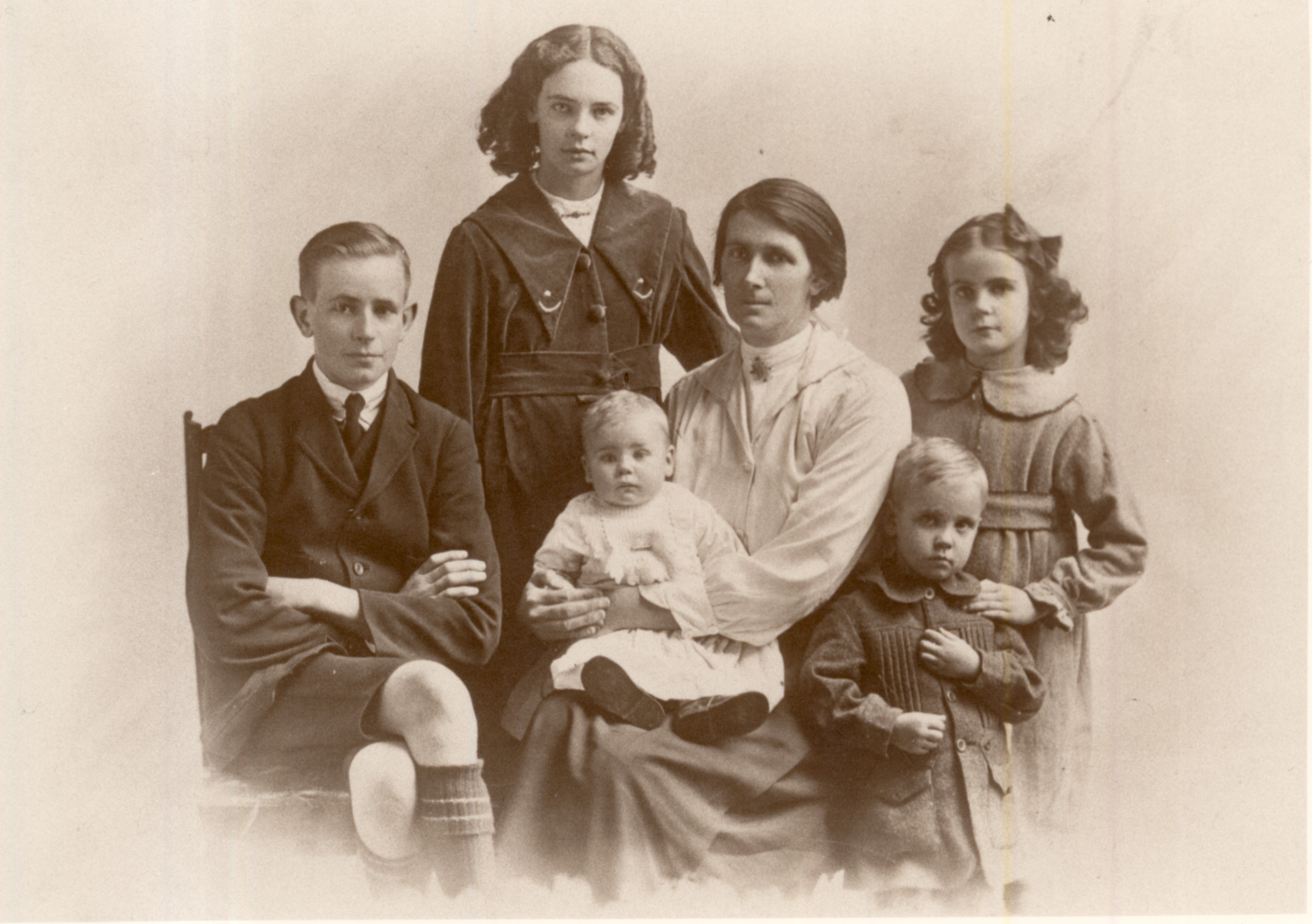
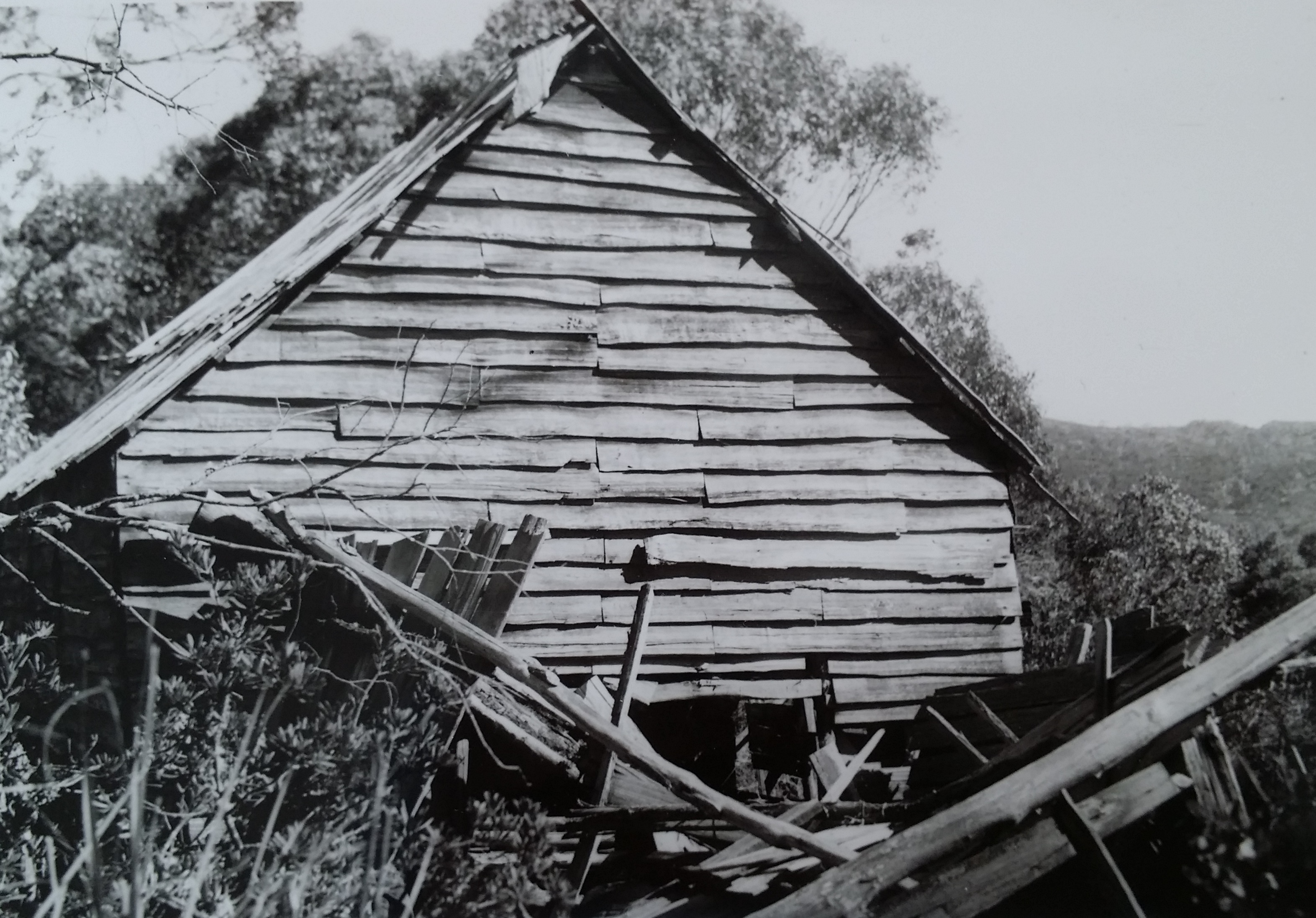
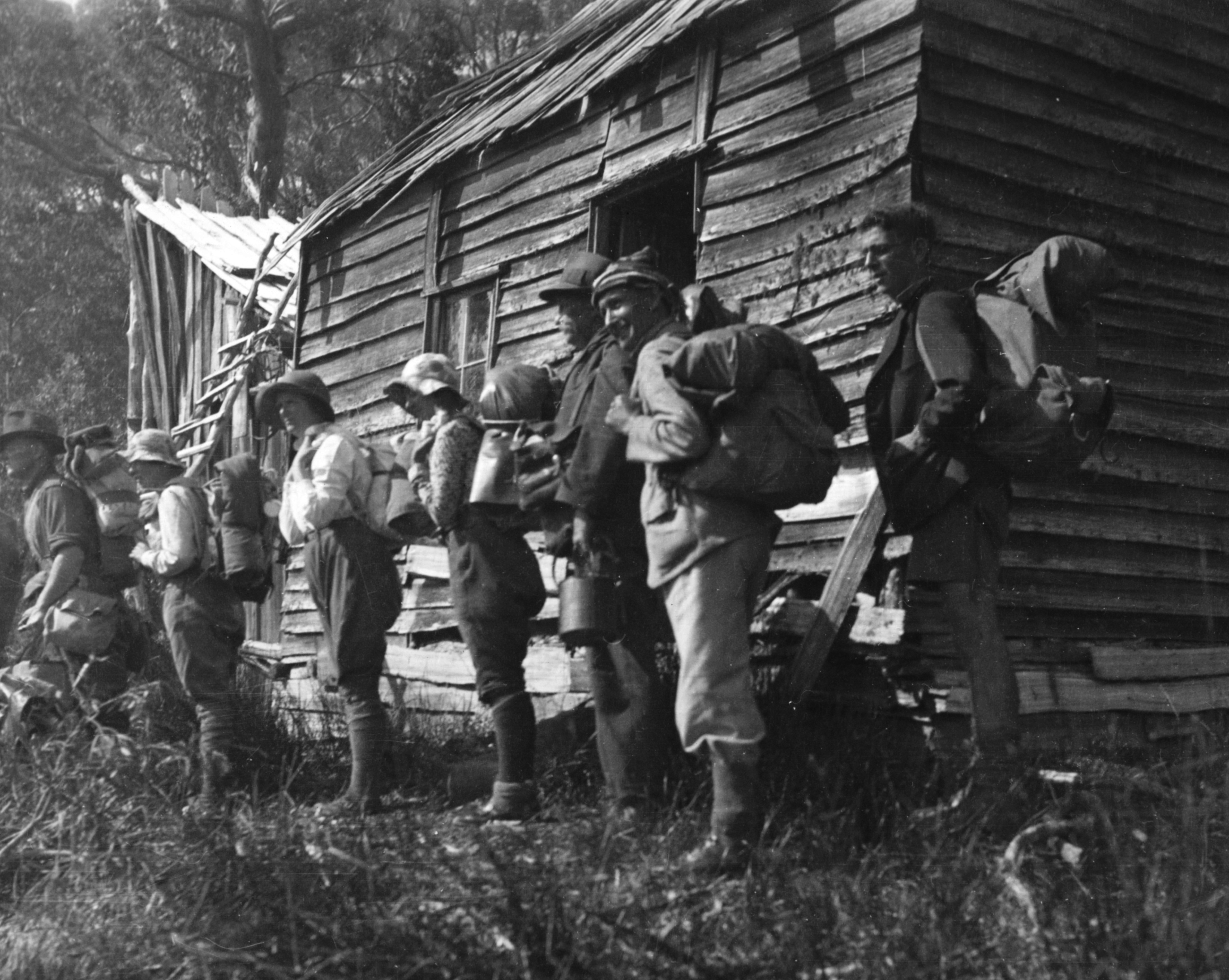
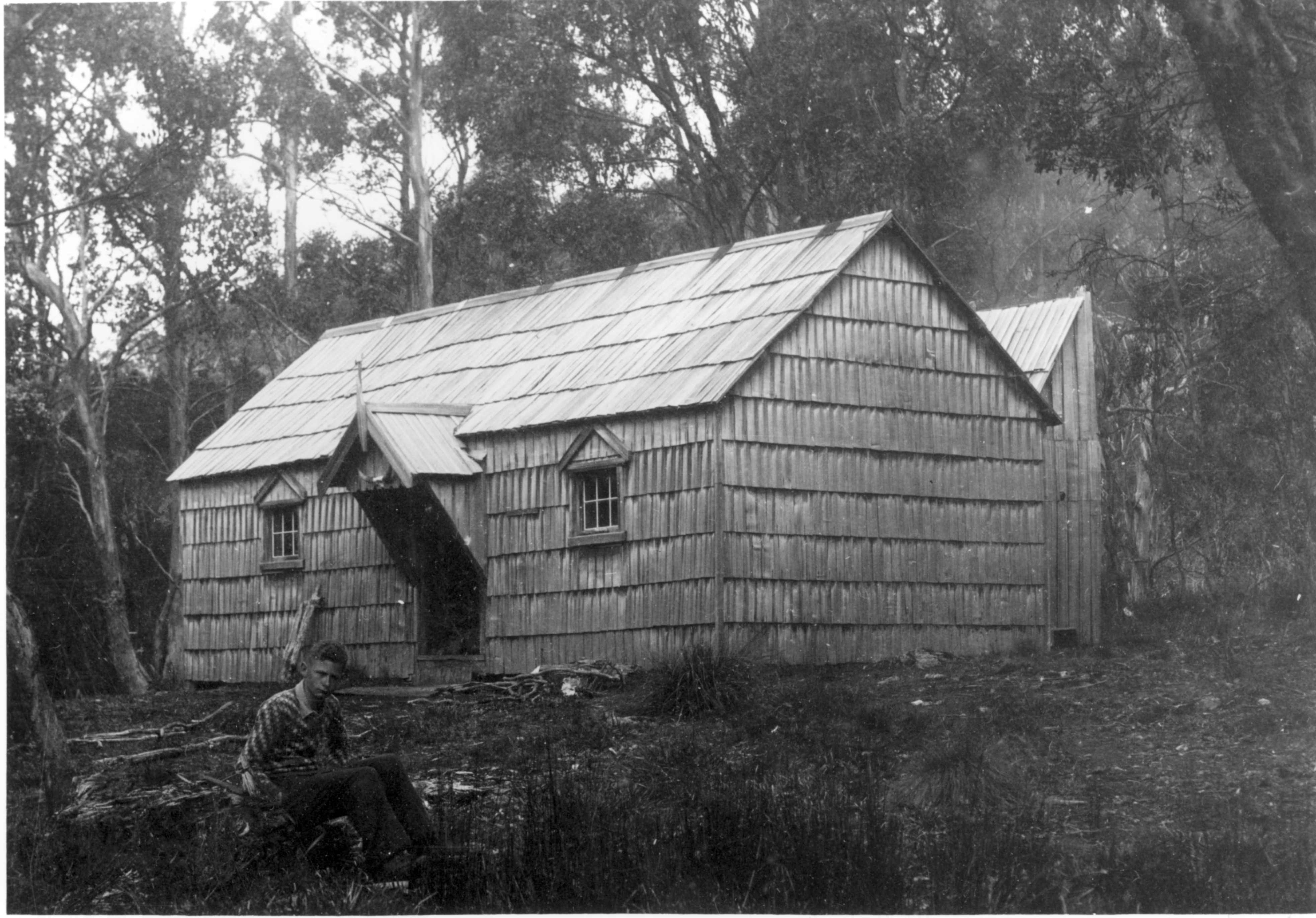
by Nic Haygarth | 27/11/16 | Tasmanian high country history
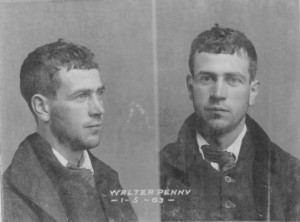
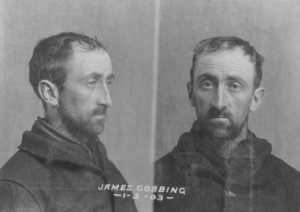
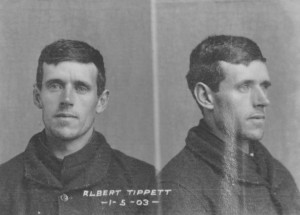
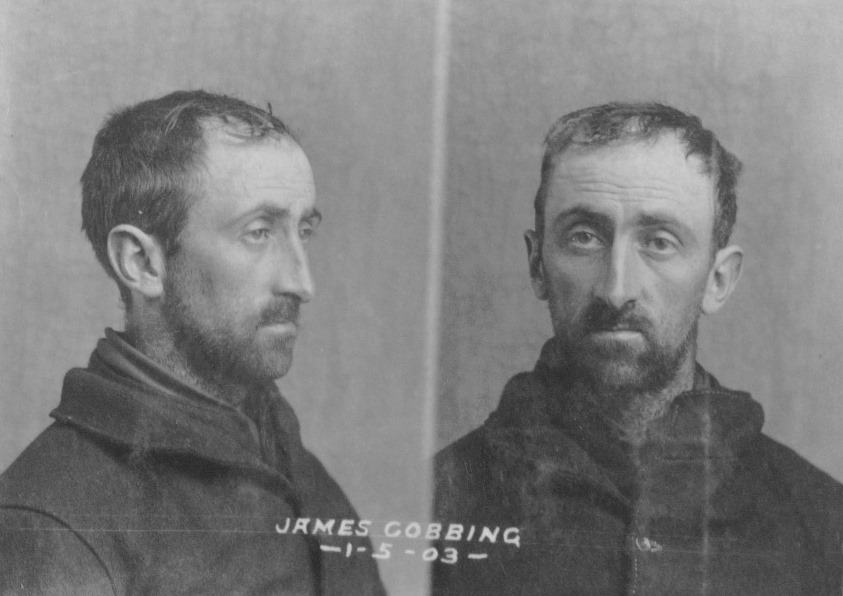
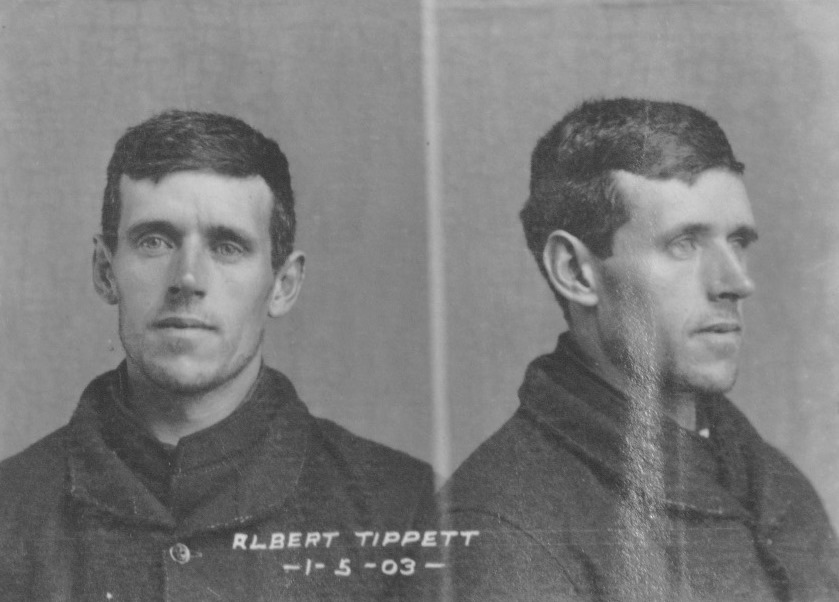
In 1903 three Waratah men—Walter Penney, James Cobbing and Albert Tippett—were gaoled for five years for receiving tin stolen from the Mount Bischoff Company. Yet the court case looked more like a showdown than a trial—the culmination of a 25-year feud between Ferd Kayser and his Cornish detractors. The three accused men worked the Waratah Alluvial plant on the Waratah River, which recovered tin lost into the water by the Mount Bischoff Co dressing sheds. They claimed that the tin they were accused of stealing had simply been retrieved from the bottom of the Waratah Alluvial dam on the river. The prosecution case was that the tin had been stolen directly from the Mount Bischoff Co dressing sheds earlier when Penney, Cobbing and Tippett worked there. At the dock, Kayser, the Mount Bischoff Co’s high profile general manager slugged it out with the canny Cornish tin dresser Richard Mitchell. Their on-going argument was ostensibly about the better ore processing method—German or Cornish. Yet in truth it was more about ego, reputation and the struggle to make a living.
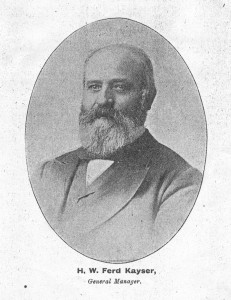
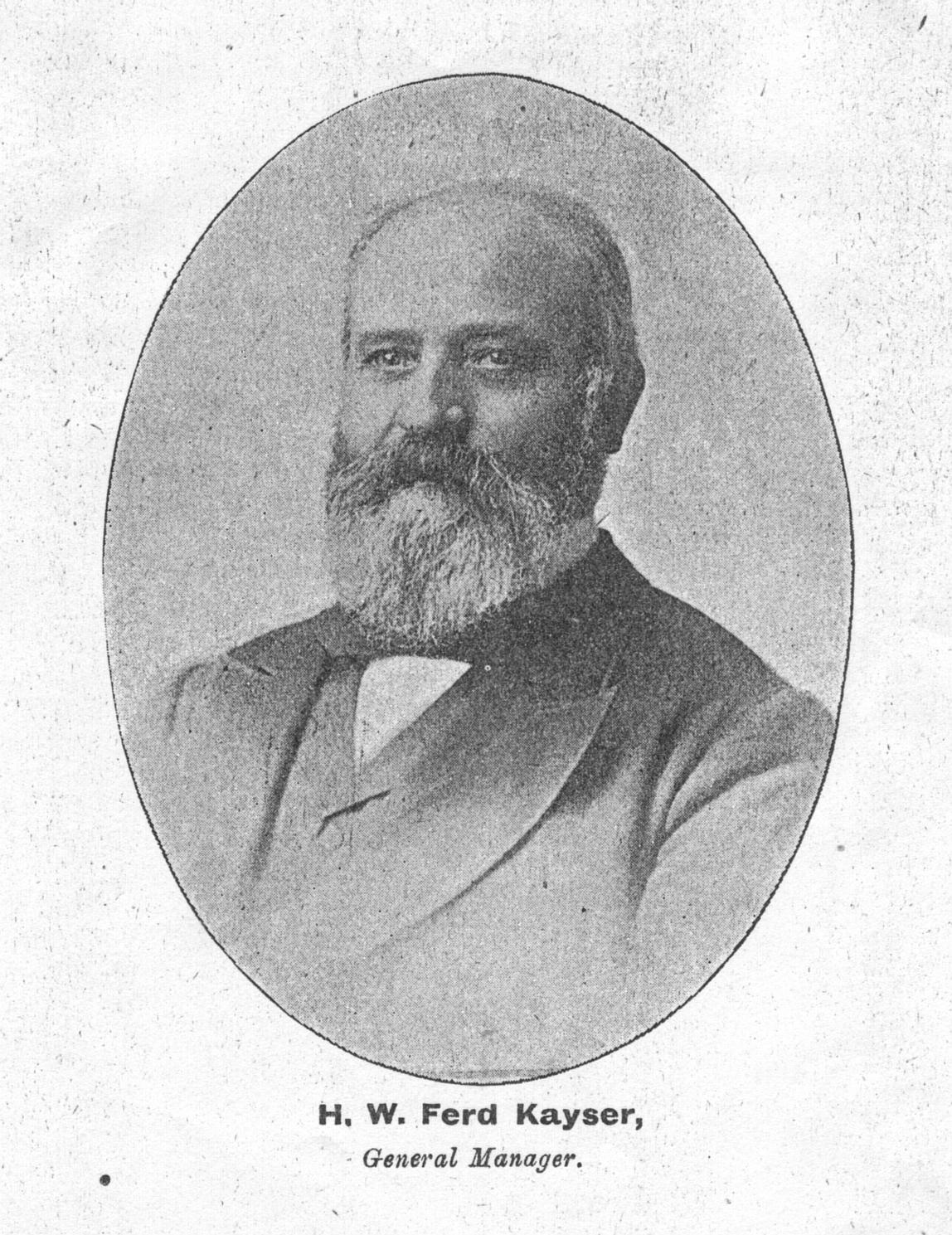
Mount Bischoff mine manager Ferd Kayser. Photo from the Australian Mining Standard, 1898.
The defence case rested on being able to show that the Mount Bischoff Co dressing sheds and its own tin recovery plants on the Waratah River were ineffectual, and that Mount Bischoff Co staff who had identified the stolen tin as being theirs were incapable of doing so. In speaking for the defence, Mitchell attacked Kayser’s ‘antiquated’ dressing machinery, claiming that his own plant (he was manager of the Anchor tin mine in the north-east) was ’50 years ahead of it’.[1] Laughably, Kayser failed to even identify Mount Bischoff Co dressed tin when it was placed in his hand at the dock. For five years he had been living away from the mine in Launceston as general manager, allowing John Millen to run the mine. Perhaps he was so out of touch that he had forgotten the appearance of the dressed tin he had produced for 23 years.
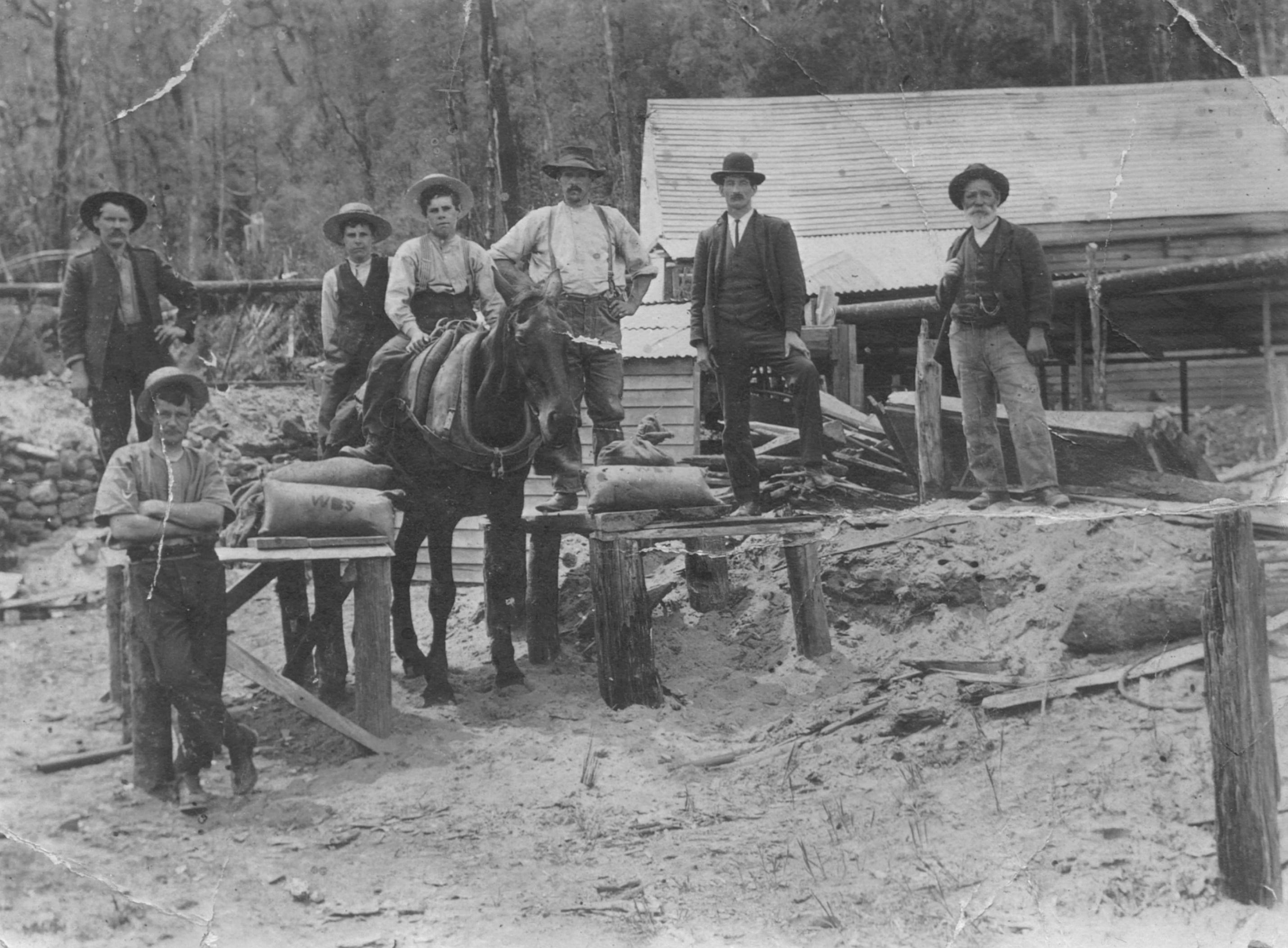
A succession of Cornish miners had been nipping at his heels throughout that time. Cornish miners asserted their superiority as hard-rock miners, exploiting their Cornish ethnicity as an economic strategy.[2] Being Cornish was their ‘brand’. Cornish miners were famous for their instinctive, canny style of management. They grew up mining from childhood, learning their craft on the job, without a formal mining education.[3] At Mount Bischoff Cornishmen they had tried to enhance this reputation by operating small retrieval plants, ‘lifting the crumbs from the rich man’s table’, that is, they had realised that the richest material on their leases was not lode tin or alluvial tin but escaped Mount Bischoff Co ore. The first to recognise this was the Waratah Tin Mining Company (Waratah Tin Co). Tailings from the Mount Bischoff Co sluice boxes emptied into a creek which ran through the Waratah Tin Co property into the Waratah River. In about 1878 that company’s Cornish tin dresser, Richard Mitchell, switched from working its tin lode to extracting ore from the creek.[4] Other Cornish tin dressers—ASR Osborne, William White and Anthony Roberts—followed suit. Their plants, the East Bischoff Company, Bischoff Tin Streaming Company, Bischoff Alluvial Tin Mining Company/Phoenix Alluvial Company and Waratah Alluvial Company, bore nicknames that suggested they were ‘shearing’ the Waratah River—the ‘Catch ‘em by the Wool’, ‘Shear ‘em’, ‘Shave ‘em’, ‘Hold ‘em’ and the ‘Catch ‘em by the Wool no. 2’ respectively.
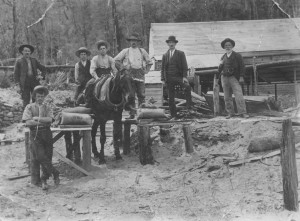
Cornish tin miner Anthony Roberts (right) operating a later tin mine, Weir’s Bischoff Surprise, in the North Bischoff Valley. Photo courtesy of Colin Roberts.
To many, Cornwall was a byword for simplicity, economy and improvisation. However, to Kayser, a champion of technology, Cornwall, the so-called ‘cradle of the Industrial Revolution’, was a ‘Luddite’. Antiquated Cornish mining methods were his favourite hobbyhorse. One of his first actions on taking over the management in 1875 was to sack the Mount Bischoff Co’s Cornish ore dresser Stephen Eddy, whose improvised appliances, he said, included ‘the hand-jigger and all the old primitive appliances his great grandfather used’.[5]
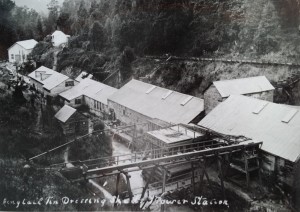
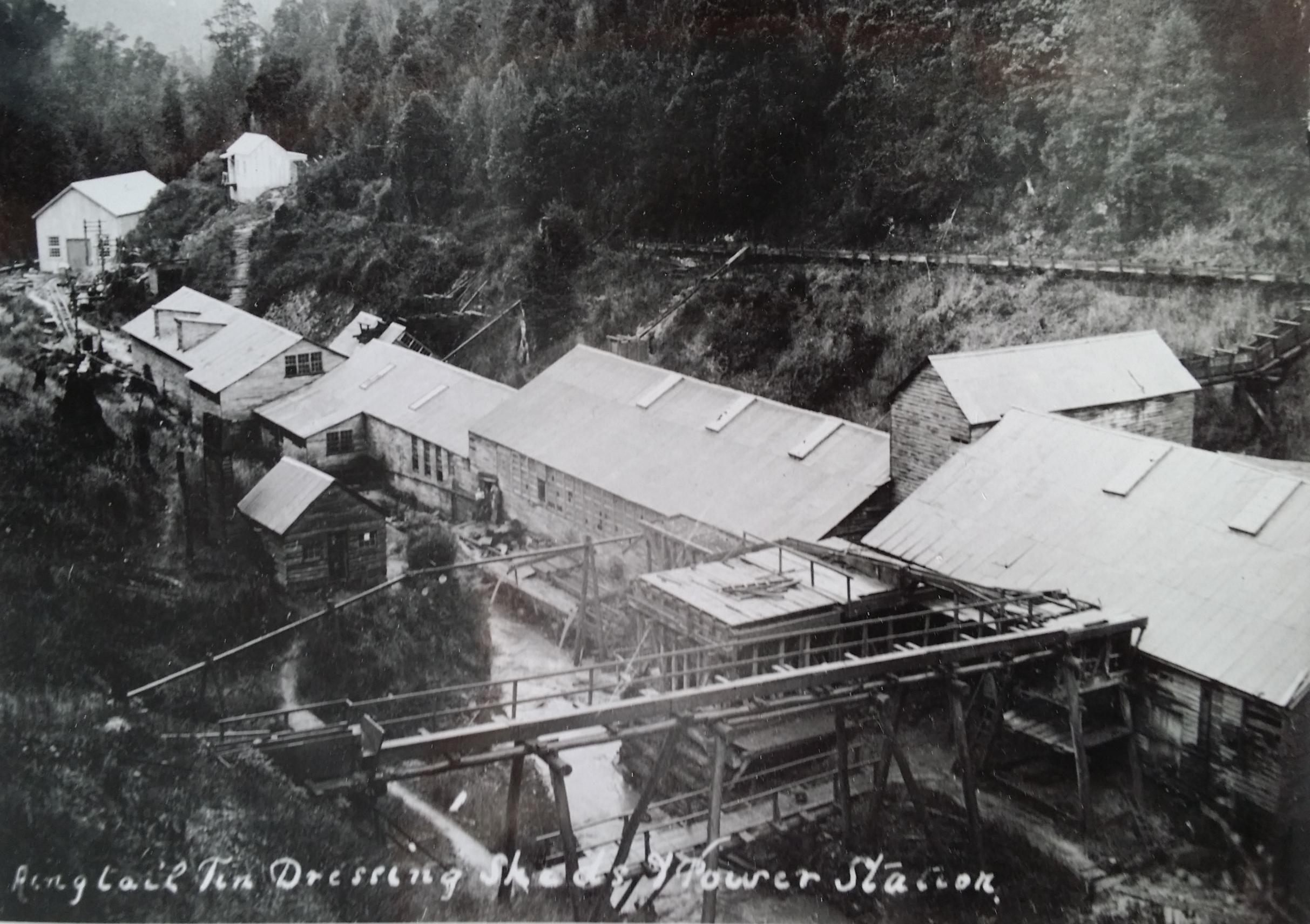
The Ringtail Sheds, in the period 1907-09, with the new power station below them at left. Stephen Hooker photo courtesy of the Tasmanian Archive and Heritage Office.
However, Kayser could not deny that there was plenty of ore for the Cornish tin dressers to retrieve. It has been estimated that the Mount Bischoff Co dressing sheds alone lost 22,000 tons of metallic tin into the Arthur River system up to 1907—30,000 tons by 1928. To put that in perspective, the Mount Bischoff Co produced about 56,000 tons of metallic tin, meaning that about one-third of the tin ore mined at Mount Bischoff ended up not in smelted bars for shipment to London, but in the Arthur River system. After deriding his Cornish rivals for years, in 1883 Kayser established the first of two tin recovery plants of his own on the Waratah River. The Ringtail Sheds at the base of the Ringtail Falls on the Waratah River stood on the old Waratah Tin Co block, where Richard Mitchell had set up the very first tin recovery operation five years earlier. Well-graded access tracks to the Ringtail Sheds were constructed from both sides of the Waratah River, the track on the western side being used to pack the ore out from the sheds.[6] These formed a loop by meeting at a foot bridge across the river just above Ringtail Falls, the site of the sheds. They are still used today to visit the Mount Bischoff Co Power Station which was afterwards built below the sheds. However, so much tin remained in the Arthur River system that in the 1970s the idea was entertained of dredging not just the river but coastal deposits outside the river mouth.[7]
(The mugshots above are from GD63-1-3, Tasmanian Archive and Heritage Office.)
[1] ‘Alleged theft of tin ore’, Daily Telegraph, 22 April 1903, p.8.
[2] Philip Payton, Cornwall: a history, Cornwall Limited Editions, Fowey, Cornwall, 2004 (originally published 1996), p. 234; Ronald M James, ‘Defining the group: nineteenth-century Cornish on the North American mining frontier’, in Cornish studies: Two (ed. Philip Payton), University of Exeter Press, Exeter, 1994, cited by Philip Payton, Cornwall: a history, p.234.
[3] Geoffrey Blainey, The rush that never ended: a history of Australian mining, Melbourne University Press, 1978 (first published 1963), p.244.
[4] HW Ferd Kayser, ‘Mount Bischoff’, Proceedings of the Australasian Association for the Advancement of Science, no. IV, 1892, pp.350–51.
[5] HW Ferd Kayser, ‘Mount Bischoff’, p.346.
[6] ‘Alleged theft of tin ore’, Daily Telegraph, 21 April 1903, p .4.
[7] ‘Tin worth $45 million in Arthur River’, Advocate, 10 May 1973, p. 1.
by Nic Haygarth | 27/11/16 | Tasmanian high country history
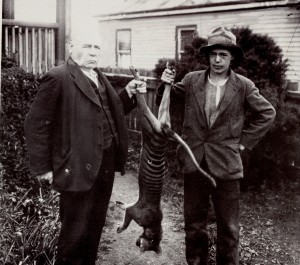
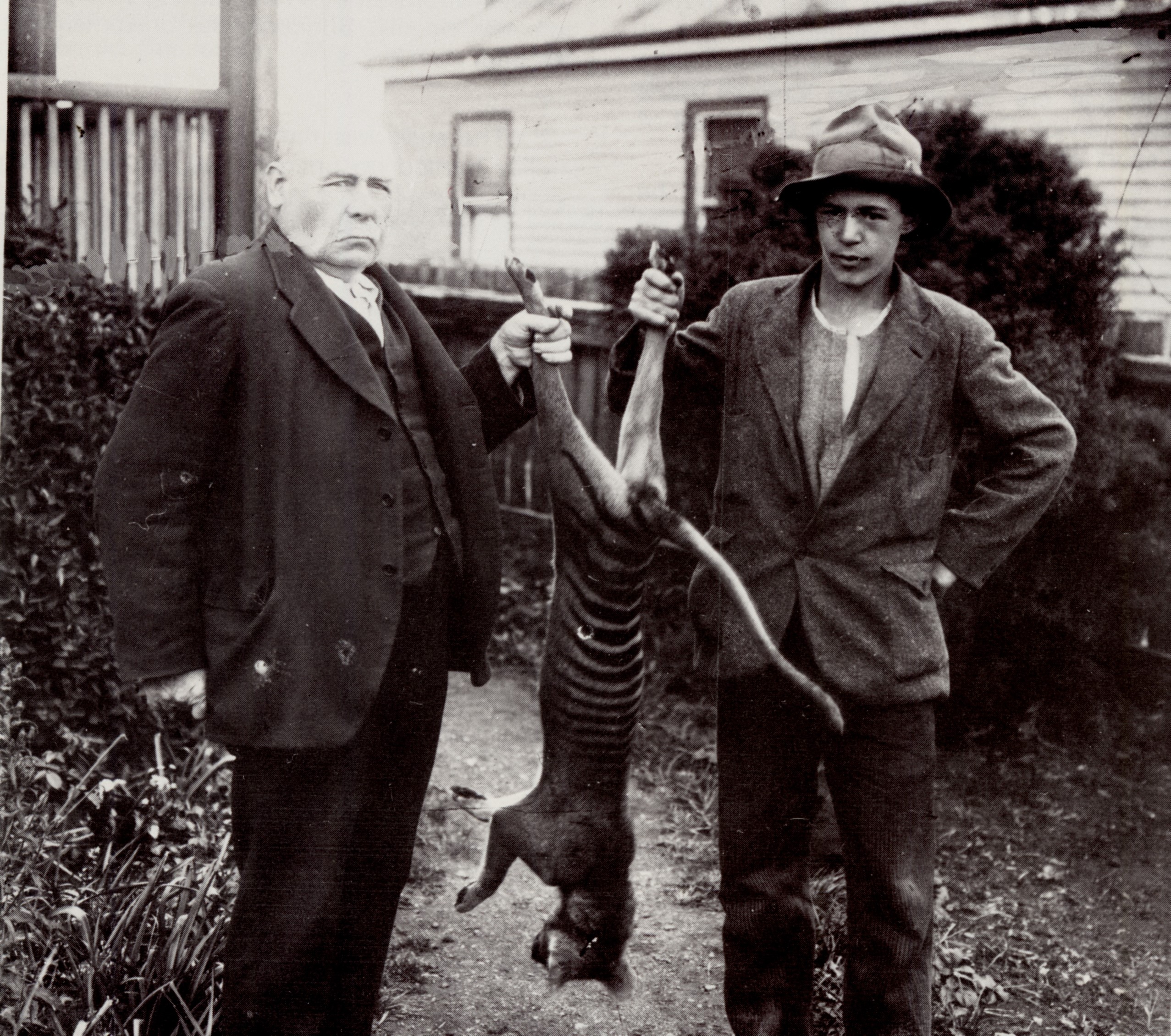
Clem Penney (right) and friends, Waratah, 1924. Probably a JH Robinson photo. From the Weekly Courier, 17 January 1924, p.26.
In 1924 seeing a thylacine was a rare event for most people. A few lingered in zoos. Tasmanian hunters like Luke Etchell occasionally took one in a necker snare set for wallabies, but their numbers were so few that the state government bounty scheme had long since been abandoned. The money was in living specimens. James Harrison, the Wynyard marsupial wrangler, offered a very useful £25 for a live tiger for supply to zoos.[1] When WJ Mullins captured a live mother and cubs they were such a novelty that he turned them into an exhibit doing the rounds of the agricultural shows—and Burnie’s New Year’s Day Sports, where amateur naturalist Ron Smith saw them. He recorded in a letter:
‘The young ones were nearly as big as full grown rabbits; two of them were sucking for all they were worth, and the other was asleep. The mother was about as big as an ordinary collie, but slenderer. Large brown eyes, and the face in front of the eyes narrower than a dog’s. Fur more like a possum’s than a dog’s. Altogether a very pretty animal’.[2]
On the very same day as Smith’s caged encounter, Clem Penney met a tiger family in the wild. Sixteen-year-old Penny, born and bred in Waratah, was in the North Bischoff Valley near the Arthur River when he heard a muffled bark. Turning quickly, he saw a two thylacines—a large male, and a small, young female—advancing towards him.
A few thylacines had been seen in this area over the years by miners. However, Penney’s tiger tale, told by a third party, seems somewhat exaggerated. It is unlikely that Penney, as was suggested, carried an automatic pistol simply out of fear of meeting tigers. Certainly it was normal for a man in a rural area to carry a firearm, and young Penney produced his and took a shot at the leading animal. When the pistol failed to discharge, he had time to reach for a tree limb—suggesting that the thylacine advance was far from menacing. This was a pair of animals with their young, which they were probably defending. ‘Grasping this excellent club’, Penney’s chronicler wrote,
‘he stood on guard. The female tiger was in the lead and was crawling forward. When about 6ft away she sprang full at him. He met her fairly with a sweep of his heavy club, knocking her backwards on to the ground, and followed up with a killing assault on her neck. Straightening himself instantly, the bushman found the male in the air from a mighty leap. Again the trusty club proved true, and the tiger was knocked to the ground. Gathering himself up, the animal dashed into the scrub on three legs, a foreleg being apparently broken, whimpering like a wounded dog.’[3]
How easy it was to destroy a family unit of what would be recognised belatedly as a critically endangered species.
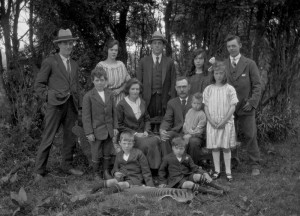
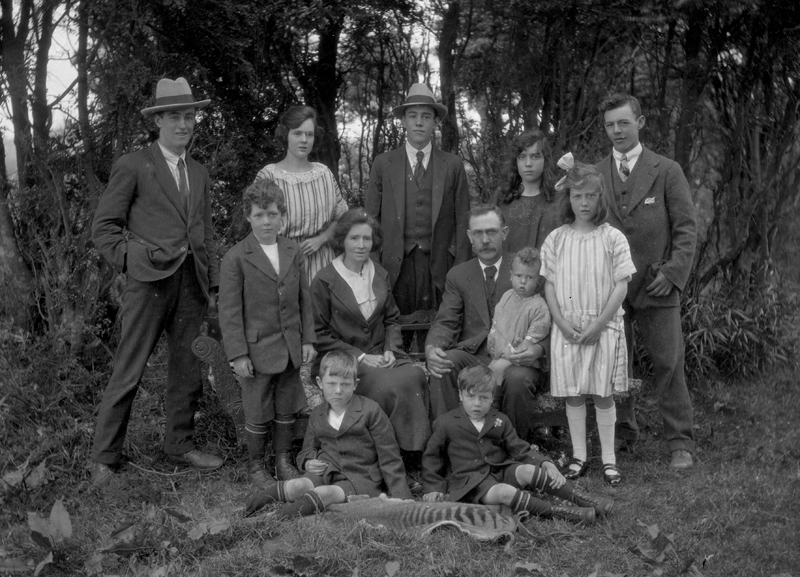
Penney family, Waratah, Tasmania, mid-1920s, with thylacine killer Clem Penney far right at back, and his stripy doormat in the foreground. JH Robinson photo courtesy of Tasmanian Museum and Art Gallery.
Penney returned home to Waratah with the carcass of the small female, which he displayed for the camera—probably that of the Weekly Courier’s regular contributor, JH (Jackie) Robinson. What happened to it after that? Another Robinson photo—of a Penney family group—seems to answer that question. While some thylacines skins were used as rugs, it looks like Clem Penney clubbed himself a stripy doormat.
[1] ‘Wanted’, Advocate, 19 June 1920, p. 5.
[2] Ron Smith to Gustav Weindorfer, 5 January 1924, p.132, LMSS150/1/1 (TAHO, Launceston).
[3] ‘A Waratah Resident’, ‘Fight with native tigers’, Weekly Courier, 17 January 1924, p.46.
by Nic Haygarth | 13/11/16 | Britton family history, Circular Head history
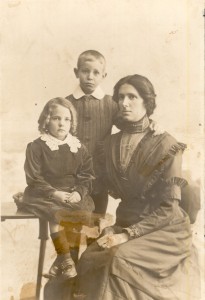
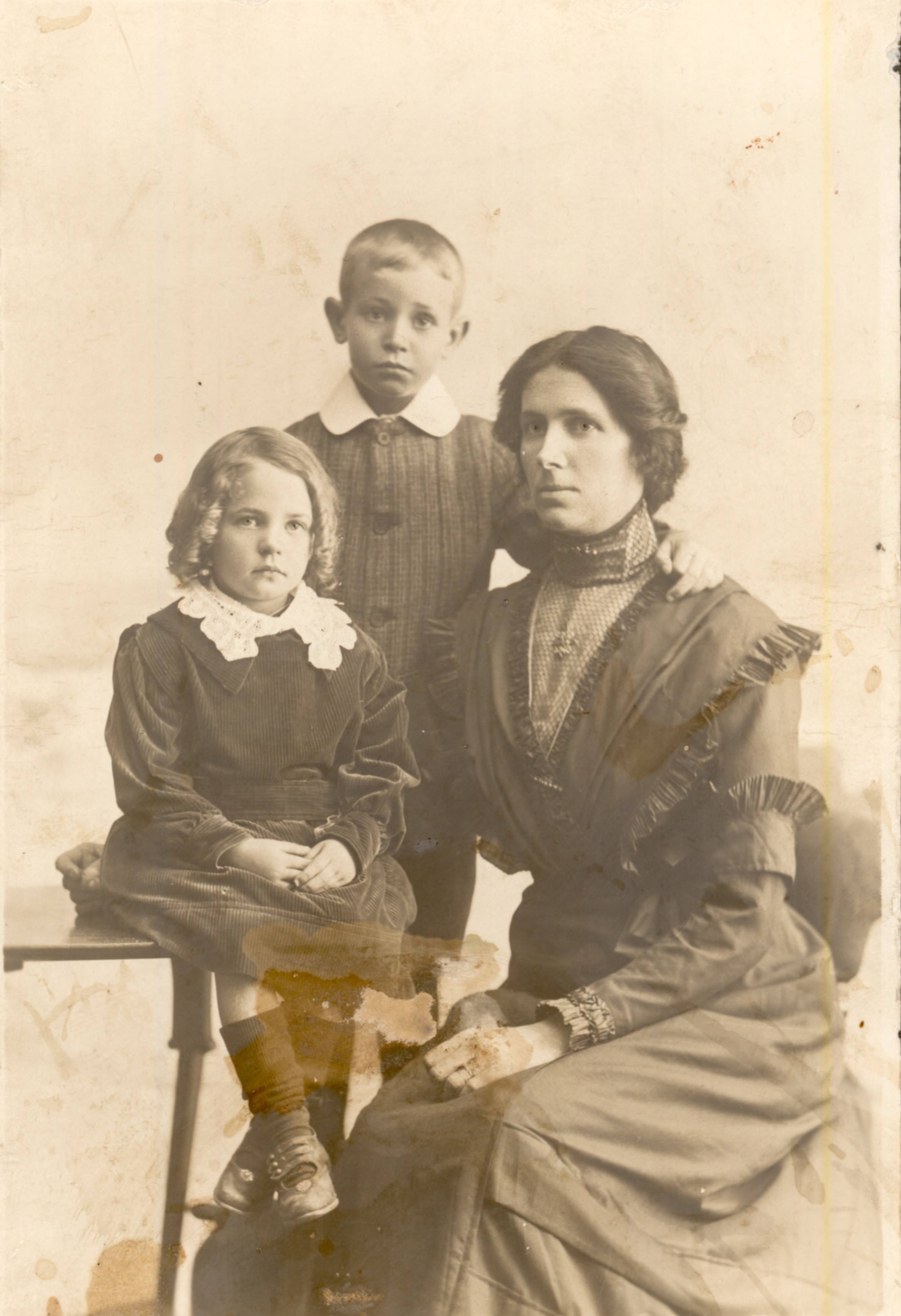
Annie Britton with Lorna (left) and Phil (centre) c1913. Yeomans and Co photo, Melbourne.
After a couple of years at Christmas Hills, in about 1912 the Brittons sold their little farm to Charlie Wells and moved to a vacant mill worker’s cottage about four kilometres away next to their mill at Brittons Swamp. This was their home for a decade as the business was established.
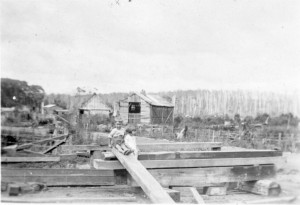
The loco shed (centre) near the mill, with the old chaff house and the hut known as Buckingham Palace to its left in the background.
The big social events of the year for people in the Christmas Hills area were the Boxing Day Picnic, New Year’s Day and, from 1923, the Easter Sports. The Boxing Day Picnic in Tommy Rowe’s paddock featured children’s foot races, tugs-of-war and a concert or theatrical performance by the kids of the school. The real competition, however, was between the ladies, trying to outdo each other with their hams, poultry and Christmas pudding spread under a huge marquee. People came in jinkers (two-wheeled carts for two or three passengers), buggies (two- or four-wheeled carriages for two people drawn by one or two horses), spring carts (two-wheeled carts without sides), on horseback or on foot. Often the road had to be cleared of fallen trees ahead of the event. No alcohol was available, but, almost as sinfully, dancing was indulged in till next morning.[1] Many a courtship began in that paddock. One young couple from Smithton set tongues wagging by disappearing hand-in-hand into the nearby forest for several hours. For kids the lolly scramble was a highlight:
Tommy Hine, the life of all picnics and parties, would take a huge tin of boiled sweets and bang loudly on the side, calling for the kids to rally round. Then he’d throw handfuls of sweets into the crowding children for them to pick up as many as they could find.
The New Year’s Day outing began well before sun-up, when Annie began to organise the whole family:
The cows would have to be milked and sent out, fowls fed, and the horse which was harnessed in the jinker and packed with our picnic basket had to be caught. The fire had to be lighted [lit], and breakfast prepared before we could start the journey to Smithton … the corduroy over the Mowbray Swamp always [being] taken at walking pace.
They had to reach Smithton by 6 am to catch Bill Boote’s motorboat down the Duck River to Seven-mile Beach.[2] Lorna remembered this as
a great adventure to us children as the boat was skillfully guided around the river’s winding watercourse. The air smelt of salt, and the water rushing by was constantly changing, colours of green and blue with white wings [being] flung up by the prow as the ship encountered opposition from the incoming tide.
When a sandbar was reached near the mouth of the river, preventing further progress, a dinghy was brought alongside the vessel to ferry the women and children ashore:
It was not an easy task for the ladies, who dressed in long frocks, but the men enjoyed helping the frightened ones (especially the pretty ones). Clasping them in their arms, they’d squeeze them more than was needed before they set them on terra firma …
The long beach was sheltered by boobyallas. AJ ‘Pelican’ Grey supplied lemonade and other cordials. He was so nicknamed because of his pelican brand lemonade bottles. These contained marble stoppers which had to be pushed into the neck of the bottle in order to release the liquid.
Sports events were held at the New Year’s Day picnic. One year when he was eleven or twelve Phil had a go at the foot running.
I had some bigger boys to compete against, but I came in first, to the amazement of others as well as myself. I seemed to have wings. The prize was only perhaps sixpence or a shilling but it was nice to beat the town lads who I knew only slightly. We lived in the bush with little or no contact with town life.[3]
Lorna remembered a small disaster that befell Annie one year on Seven-mile Beach:
One year Mother was dressed in a beautiful white dress, full length, nipped in at the waist with a waistband. She was wearing a beautifully engraved watch suspended from a gold chain around her neck. It was slipped into the waistband, the fashion at the time … Mother’s watch was a gift from her father, I think, and the pride and envy of many women … someone said to her, ‘There’s something on your neck’.
Mother, thinking in alarm that it could be a spider, rose quickly to her feet and banged her neck area. The watch broke loose and disappeared in the sand and, even with no effort spared, we failed to find it. Mother was inconsolable and, taking us with her, went for a walk along the beach to find shells which were pretty, as well as some to take home for the fowls (shell grit) in a bag. She also got a leech on her leg, a huge one. To get it off she pulled at it and, being full of blood, it burst, and her beautiful white dress was in a horrible state.[4]
Bringing home the meat
The link with the outside world was maintained by Phil and Lorna, who operated the ‘pony mail’ on Ante, a sturdy pony ‘black as coal’. Two or three days a week after school they collected the mail from the Christmas Hills Post Office (the Hine residence). On occasions, to fill in time while waiting for the mail to arrive, they visited the farm of Cornish immigrants the Rowe family, where Phil tasted his first Cornish pasty. Sometimes it would be 8.00 pm before Phil and Lorna arrived home:
The people who ran the carry mail service were wonderful to us, and would give us food and drink, and even bed us down for the night if they considered we were in danger of falling trees in a wind storm. One day the man of the house loaded us up with the usual meat load and any other provisions—two sugar bags tied together and slung over the pony’s neck as evenly as possible—and tossed us up behind, and I heard him say ‘Jee! Those Britton kids are tough. It’s as black as your hat outside.’ But we had Ante and, as he knew all the little side-tracks to avoid deep mud holes in the road, we were not very scared. The occasional branch or tree falling or a native animal jumping across the road (in my imagination only, perhaps) would make me shudder and cling more tightly to Phil up front.
There would be stops to open gates and deliver parcels, and sometimes they would take the shorter route down the tramway which, however, was dangerous in wet weather when the line might be submerged by water. A clever pony made them feel more secure:
I’ve known Ante to place his feet on the timber rails to avoid holes in the path as he smelt his way through. Ponies are very sensitive and clever really. He could push a wire fastener off a gate, open it, and turn around so that we could reach and pull the gate shut without getting off.[5]
Parcels of meat would be secured in saddlebags, but if a parcel was dropped in the dark it would be hard to find or re-secure. On one occasion Phil rode a draught horse named Boxer to school in order to bring a large cut of beef home after school. The meat was so big and heavy that it had to be lifted up to Phil on the back of the horse and balanced in front of him. But
it was a dark wet night. I was getting near home. The road was full of little holes and wet and slippery. The horse stumbled and I lost my balance. The meat fell off in the mud … My reputation was somewhat impaired, and so I gave Aunty [Kate, the Brittons’ housekeeper at the time] the horse and she had one of the men go out and get the meat out of the mud–all in a night’s work.[6]
Like nearly all early 20th-century bush farmers, the Brittons snared wallaby, pademelon and possum for extra income and, in the case of the wallaby or pademelon, extra meat. They pegged out the skins to dry on flat boards awaiting the visit of the skin buyer.
Other marsupials were less welcome. One night a quoll got into the lean-to which housed the meat safe, and when Elijah chased it, it ran into the sitting-room where the family was gather around the fire. ‘Mother grabbed me and rushed into the bedroom’, Lorna remembered. ‘She didn’t know if it was dangerous or not, I suppose’. Elijah battered it to death while it growled at him from the top of the organ.[7] Since the animals were regarded as fowl killers, no mercy was granted them.
Lorna and Phil thought they heard the ‘cough’ of ‘hyenas’ (Tasmanian tigers or thylacines) as they rode their pony home at night, although they never saw one.[8] In about 1917 Wynyard marsupial dealer James Harrison paid £5 each for three thylacine cubs secured by the Rowe brothers of Brittons Swamp after the mother thylacine had drowned while caught in a snare.[9] Lorna recalled that the Rowes had two fireside chairs backed with ‘tiger pelts’.[10]
Phil goes to finishing school
Phil was the first to go away to school. He was a sickly child, and Annie hoped his health would benefit from finishing his education with two years at Scotch College in Launceston.[11] This promoted Lorna to the front seat on Ante for mail and parcel collection. Annie was terrified of bushfires, and it was lucky that she was away settling Phil into boarding when a fire threatened the mill and the timber stacks. Lorna was returning down the tramway from the Christmas Hills with a parcel of meat when a fire fighter hurried out of the smoky gloom.
He shouted at me, as if I were to blame, as he rushed past, ‘The swamp’s on fire and before the night you will be lucky not to be burned out’. Nevertheless I was going home, fire or no fire.
Auntie Florrie had assumed control of the kitchen, feeding the fire fighters. The meat parcel suddenly looked meagre as Florrie and Lorna prepared a meal:
Uncle Mark [Britton] had collapsed, overcome by smoke in the thickest and most dangerous area, and he was brought in to rest a while. I got him a billy can of milk and water, his favourite drink, and he was soon ready for attack again. I remember him in his own way of saying thanks—‘Ah, good, this is the best drink, better than that old tea with tannin in it’. Lighting up his smelly pipe (which was full of nicotine, if he had thought about it), he gave me a cheeky grin and disappeared into the smoky area. We didn’t get burned out, but fires smouldered for days.[12]

Annie and the Britton kids, 1921. (Left to right): Phil (in Scotch College uniform), Lorna, Ken (on Annie’s lap), Annie, Frank, Eva.
Lorna’s first ride in a motor car was in 1921, when Annie took her children to visit her retired parents at Middle Brighton in Melbourne. Phil was at Scotch College, but three-year-old Frank Lindsay Britton (born 1918) and one-year old David Kenneth Britton (known as Ken, born 1920) made the trip. From Smithton they travelled to Burnie in Joey Morton’s twice-weekly Model T Ford service:
I was terrified … and held on tightly when the engine was started and away we sped, followed by a dog barking furiously. Joey Morton said not to worry as we would soon lose it when we got around on to the straight where we could do 25 miles [40 kilometres] per hour.
The return Bass Strait crossing on the Marrawah, the tiny Holymans steamer, filled both Lorna and Annie with apprehension. Annie was a poor sailor. Lorna thought, ‘Well, I’ll be able to help with the children anyway’, but soon both were seasick. Frank was sick on the toilet floor, whereupon, as Lorna recalled,
The stewardess, a harsh-tongued woman, shouted at me to clean it up, but as I had nothing excepting the toilet paper to do this I grabbed Frank and quickly retreated to our stuffy cabin.
Fresh air and calmer seas revived the Brittons next day, enabling them to watch the stevedoring work at King Island. Through the afternoon they passed Hunter and Three Hummock Island, and in the evening a full moon provided a silvery path to Stanley, where the ship berthed beneath the huge grey-black rock of the Nut. There was time next morning to explore the tiny town before Tommy Hine picked the family up with his fancy double-seated buggy and pair of lively horses. Back at Christmas Hills, Elijah had freshened up the cottage with the first spring bulbs—golden daffodils, eggs and bacon and tiny snowdrops. ‘It was so lovely’, Lorna remembered, ‘that tears filled my eyes, realising also that we were “home”!’ It was, however, only a temporary home. The permanent one at the mill was two years away.
Meanwhile, Phil remembered his two years at Scotch College (1920–21) as
the best years of my life. I was able to get out of the bush for a while and the Launceston air was good for my health, besides all the friends I made and learnt to play sport as well was education.[13]
Phil was missed at Scotch when he left. In February 1922 his friend Viv wrote from the school to say that the boys had a holiday in honour of Princess Mary’s birthday:
Dear Old Phip [sic]
I wish you were back here now. I miss you terrible much.
Davvy and I went rabbiting yesterday we saw 5 rabbits but we didn’t get any … I lost my fount-pen for about 5 minutes yesterday. It dropped in the river and when I found it only the top was to be seen. In another 2 or 3 minutes I reckon it would have sunk…
Love from Viv
PS Davvy and I went rabbiting to-day and we caught two. We are going to have them for breakfast to-morrow.
Shack sends his love to you[14]
A month later Les Acheson wrote, delighted that Youll from ‘Grammar’ might be joining Scotch College and that ‘Fordy’ might return to the school, increasing its chances of winning the cricket premiership.
There are a good few new chaps this term but nearly all nippers. I am in the 3rds at cricket. I suppose you drive the loco about.[15]
Phil wasn’t the loco driver, but there was plenty to keep him busy. Returning after those two years in Launceston, his first job was to fell all the dry trees which threatened to fall on the house, keeping Annie in a state of anxiety. Phil had ceased to be known by his second name, Raymond, while he was at Scotch. Now, as his sister Lorna recalled, the same change happened at home:
I considered ‘Ray’ was much too sissy for such a tree killer and he should be called by his first name. So he became Philip or Phil—Philip Raymond.[16]
[1] ‘The Holidays: In the Country: Christmas Hills’, Examiner 29 December 1916, p.6.
[2] Phil Britton notes, p.16.
[3] Phil Britton notes, pp.16–17.
[4] Lorna Britton notes 1983, pp.47–48.
[5] Lorna Britton notes 1983.
[6] Phil Britton notes, pp.14–15.
[7] Lorna Britton notes, 1983, pp.12 and 24; Phil Britton notes, p.11.
[8] Lorna Britton notes, 1983, p.23.
[9] ‘Proof of a tiger tale’, Advocate, 25 August 1977.
[10] Lorna Britton notes, 1984, p.23.
[11] In 1920 Phil Britton topped the Scotch College Fourth Form in Scripture (‘Scotch College Annual Speech Night’, Examiner 13 December 1920, p.3).
[12] Lorna Britton notes 1984.
[13] Phil Britton, Memories of Christmas Hills (Brittons Swamp), p.17..
[14] Viv to Phil Britton, undated (probably 27 February 1922).
[15] Les Acheson to Phil Britton 27 March 1922
[16] Lorna Britton notes 1984.
by Nic Haygarth | 13/11/16 | Tasmanian high country history
In May 1914 Ron Smith’s former Forth mate Ted Adams invited him to go hiking at Lake St Clair. Smith, who would be one of the major figures in the establishment of the Cradle Mountain-Lake St Clair National Park, could not make the appointed time.[1] He had business to attend to at Cradle Valley, but perhaps when that was done a cross-country short-cut would bring them together. ‘I thought … I could go overland to Lake St Clair to meet you there’, he told Adams.[2] It was perhaps in that instant that Ron Smith conceived the idea of the Overland Track between Cradle Valley and Lake St Clair. Ironically, it would take him another 27 years to walk it.
The opportunity finally came in late December 1940. Now fifty-nine years old and an invalid pensioner as the result of World War I service, Smith was also the secretary of the Cradle Mountain Reserve Board, a land owner at Cradle Mountain and the major documenter of the area’s European history, flora and fauna. The Overland Track, the southern section of which was roughly marked by Bert Nichols in 1931, had only become suitable for independent travellers in 1935–36 after additional track and hut work by Nichols, Lionel Connell and his sons.[3] Few people had then taken up the challenge of tramping a track that now attracts about 10,000 per year from all over the world.
Ron’s early trips from his home at Forth to Cradle Mountain were accomplished on bicycle and on foot, with stopovers at Middlesex Station, but in 1940 he was able to drive from his new home at Launceston to Waldheim Chalet, Cradle Valley, in less than five hours. From 1925 to 1936 the Smiths had had their own house at Cradle Valley, and they would have one again, Mount Kate house, from 1947.[4] However, in 1940 they were content to stay in the late Gustav Weindorfer’s Waldheim Chalet, then managed by Lionel and Maggie Connell. In fact it was almost a second home for the Smith family, since Ron’s oldest son, whom he called Ronny, and Kitty Connell, daughter of Lionel and Maggie, were courting. And yet, despite the stringencies imposed by the war raging in in Europe, people continued to enjoy the major holiday period of the year. On Christmas Day 1940 Waldheim was bursting at the seams with hikers, 50 guests in all. What a peaceful Christmas for head chef Maggie Connell! Ron slept on a sofa in the dining room, his sixteen-year-old son Charlie on the floor of the same room.
Ron Smith was always a formidable record keeper, and in his diary he recorded with typical precision that he and Charlie were on their way at 7.38 next morning, each of their knapsacks weighing 40 lbs (18 kg). After regular bouts of illness, Ron possibly doubted his own endurance. Two fit young men, Wally Connell and Ronny Smith, carried those heavy packs up to Kitchen Hut, sparing the hikers the full rigours of the tough climb up the Horse Track. After breakfast, Ron and Charlie continued alone, being passed by a party of five women who had started from Waldheim after them. Kitchen Hut was then only a three-sided shelter. There was no proper hut between Waldheim and Lake Windermere, making day one of an Overland Track trip a long and potentially dangerous one. Ron and Charlie reached Waterfall Valley before meeting their first fellow hikers—two young Sydney men—walking in the opposite direction (from Lake St Clair to Cradle Mountain, now prohibited).
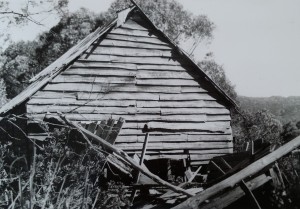
The old miners’ hut at Lake Windermere, 27 December 1940. Ron Smith photo courtesy of the late Charles Smith.
A Fred Smithies shot showing the rest of the old Windermere Hut, taken during an Overland Track tramp. Courtesy of Margaret Carrington.
Father and son reached the Connells’ new Windermere Hut at 4.23 pm, nearly nine hours after setting out from Waldheim. The party of five women camped outside, leaving the hut to the men—and two grey possums, which entered, in what became Windermere tradition, via the chimney in their quest for food. Next morning, Ron and Charlie visited the c1901 Windermere miners’ hut, now in ‘great disrepair; the chimney fallen down and the roof very leaky’. Ron had reached the old hut with Gustav Weindorfer in 1911 and 1914; it was the furthest south he had so far travelled on the route of what became the Overland Track.[5]
Day two, from Windermere along the watershed of the Forth and the Pieman, then around the Forth Gorge and through to Pelion Plain, was another tiring one. They boiled the billy for lunch on the edge of the forest at Pine Forest Moor, with the dolerite ‘organ pipes’ of Mount Pelion West looming large ahead of them. At New Pelion Hut they re-joined the party of five women, greeted a married couple called Calver who arrived from Lake St Clair, plus four Victorian men who were returning to Waldheim after climbing Mount Ossa. There were ten in the Connells’ new hut, which had two rooms so that men and women could be separated. For Ron every new meeting was noteworthy. Names and sometimes addresses were exchanged, and it was a chance to chat and learn. The leisurely experience was far removed from that of more recent times, when the two-way traffic could make the Overland Track feel rather like a scenic Hume Highway.
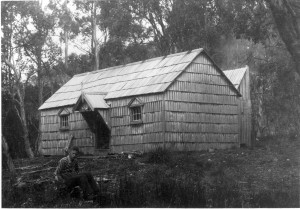
Flourishes of Federation Queen Anne and Arts and Crafts architecture in the Connells’ King Billy pine shingle New Pelion Hut, 28 December 1940, Charles Smith in the foreground. Ron Smith photo courtesy of the late Charles Smith.
With rain threatening, the Smiths decided to spend a day close to shelter at Pelion. Ron had now ventured further south than his departed friend, Gustav Weindorfer, who had taken the census at the Pelion copper mine and climbed Mount Pelion West in April 1921.[6] The mine manager’s hut (Old Pelion) and the workers’ hut from that period were both in good repair. Leaving these huts, Ron and Charlie crossed Douglas Creek and followed the southern edge of Lake Ayr until they met the Mole Creek (Innes) Track near the rock cairns and poles marking the then Cradle Mountain Reserve’s eastern boundary.
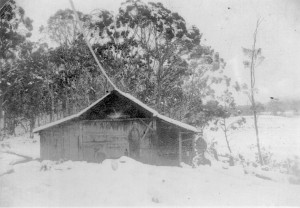
Tommy McCoy’s hunting hut near Lake Ayr. Photo courtesy of the McCoy family.
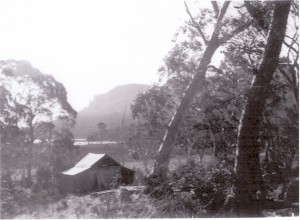
McCoy’s hut as it looked in 1951, with Mount Oakleigh and Lake Ayr for a backdrop. Photo courtesy of the McCoy family.
The reserve had been a bird and animal sanctuary since 1927. Yet, cheekily poised about 250 metres beyond the boundary, Tommy McCoy’s new hardwood paling hunting hut made his intentions clear. Hobart hikers would become conservation activists, puncturing McCoy’s food tins with a geological pick, when they came across his hut in 1948.[7] However, the Cradle Mountain Reserve Board secretary, a former possum shooter and a man of a different ilk, was much more respectful, leaving payment of threepence for a candle he removed from McCoy’s camp. Ron and Charlie also inspected the old post-and-rail stockyard near the western end of Lake Ayr on their way back to New Pelion. On their second night at Pelion propriety was dispensed with, as the Smiths and Calvers shared a room, leaving the other room for newcomers.
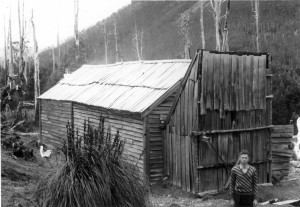
An unsympathetically cropped image of the two-room Du Cane Hut, 29 December 1940, with Cathedral Mountain omitted but Charles Smith in the foreground. Ron Smith photo courtesy of Charles Smith.
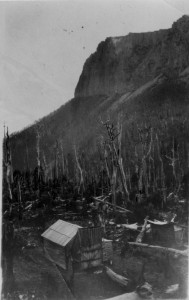
An earlier Ray McClinton or Fred Smithies shot of the original one-room Du Cane, taking full advantage of the view of Cathedral Mountain.
The party of five women motored past the Smiths on the climb up to Pelion Gap next day, marching right through to Narcissus Hut, a distance of about 27 km in a day. Ron and Charlie took a leisurely pace, visiting Kia Ora Falls and camping at Du Cane Hut (Windsor Castle or Cathedral Farm), Paddy Hartnett’s old haunt, which had been converted to a two-room building in keeping with New Pelion. Reflecting, perhaps, his reduced stamina, Ron elected to wait on the main track while Charlie viewed Hartnett Falls. The pair also made a diversion to Nichols Hut, the walkers’ hut Bert Nichols had erected beside his old hunting hut. For a man who in his younger days rarely left a bush setting or bush person unsnapped, Ron Smith was relatively parsimonious with his photos on this trip, neglecting these buildings, McCoy’s hut and the old Mount Pelion Mines NL huts. He appears to have been ignorant of the other hunters’ huts located near the track between Pelion Plain and Narcissus River.
Ron and Charlie were accompanied most of the way from Pelion to Narcissus Hut by the Robinsons, a Sydney couple they had first met at Waldheim. Crossing the suspension bridge over the Narcissus River, Mrs Robinson’s hat landed in the drink and disappeared, despite a group rescue effort. Narcissus Hut, the staging post for the motorboat trip down Lake St Clair, as it is today, replicated the situation at Waldheim, being full to the brim and beyond, with numerous tents being pitched outside. Among the hikers were the economist and statistician, Lyndhurst Giblin, and HR Hutchinson, Chairman of the National Park Board, the subsidiary of the Scenery Preservation Board which oversaw the Lake St Clair Reserve. Indeed, it must have seemed like the veritable busman’s holiday when the Cradle Mountain Reserve Board secretary met the Lake St Clair Reserve Board chairman on the Overland Track that united their realms.
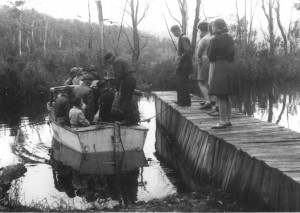
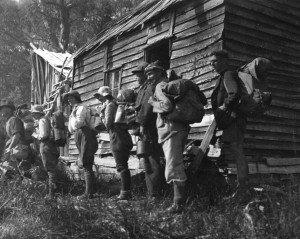
Bert Fergusson’s motorboat loading at Narcissus Landing, 31 December 1940. Seventeen to board, including the party of five women, and a tentative Charles Smith (fourth from right). Ron Smith photo courtesy of the late Charles Smith.
The trip was concluded in six days. It took 1 hour 45 minutes to traverse Lake St Clair in the famous Bert ‘Fergy’ Fergusson motorboat on New Year’s Eve, 1940. This seems extraordinarily slow progress—didn’t Paddy Hartnett row the lake faster than that 30 years earlier, against the wind?— until you realise how overloaded Fergy’s vessel was! Seventeen people were crammed aboard what was certainly not Miss Velocity. Ron and Charlie slept in Hut Twelve of Fergy’s tourist camp at Cynthia Bay, where a housekeeper, Mrs Payne, was also employed. From here Fergy operated a free ‘bus’ service (Jessie Luckman called it a ‘frightful old half bus’ sporting sawn-off kitchen chairs with basket-work seats) to Derwent Bridge, where the departing tourist joined one of Grey’s buses. The Lake St Clair tourist infrastructure of 76 years ago was surprisingly well organised. Charlie having departed with family members, Ron stayed on a day more and caught a bus back to Launceston via Rainbow Chalet at Great Lake and Deloraine, using a short stopover in that town to submit a butcher’s order for Fergy. All this recreational transport at a time when petrol was rationed for the war effort!
On 3 January 1941 Ron Smith rested at home, having at last completed the journey contemplated 27 years earlier. Perhaps the experience strengthened his belief in the need for a motor road from Cradle Mountain to Lake St Clair, thereby conferring universal reserve access.[8] Age may not have wearied him, but maybe at that moment his swollen right foot felt more comfortable on an accelerator than in a heavy boot.[9]
[1] See ‘Ron Smith: bushwalker and national park promoter’, in Simon Cubit and Nic Haygarth, Mountain men: stories from the Tasmanian high country, Forty South Publishing, Hobart, 2015, pp.132–59.
[2] Ron Smith to GES Adams, 15 May 1914, NS234/17/1/4 (TAHO).
[3] See Simon Cubit and Nic Haygarth, Mountain men, pp.122–27.
[4] See ‘Smith huts’, in Simon Cubit and Nic Haygarth, Historic Tasmanian mountain huts: through the photographer’s lens, Forty South Publishing, Hobart, 2014, pp.36–43.
[5] For the 1911 trip, see Ron Smith to Kathie Carruthers, 29 November and 1 December 1911, NS234/22/1/1 (TAHO). The pair’s arrival at the Windermere Hut in 1914 had scared the life out of its incumbent, miner/hunter Mick Rose, who feared he had been he had been nabbed engaging in out-of-season snaring.
[6] Gustav Weindorfer diary, NS234/27/1/8 (TAHO); ‘Mountain beauties: Tasmania’s charms’, Examiner, 6 January 1934, p.11.
[7] Interview with Jessie Luckman.
[8] See, for example, minutes of the Cradle Mountain Reserve Board meeting, 25 June 1947, AA595/1/2 (TAHO).
[9] This account of Ron and Charlie Smith’s walk on the Overland Track is derived from Ron Smith’s diary, NS234/16/1/41 (TAHO).
by Nic Haygarth | 11/11/16 | Tasmanian high country history
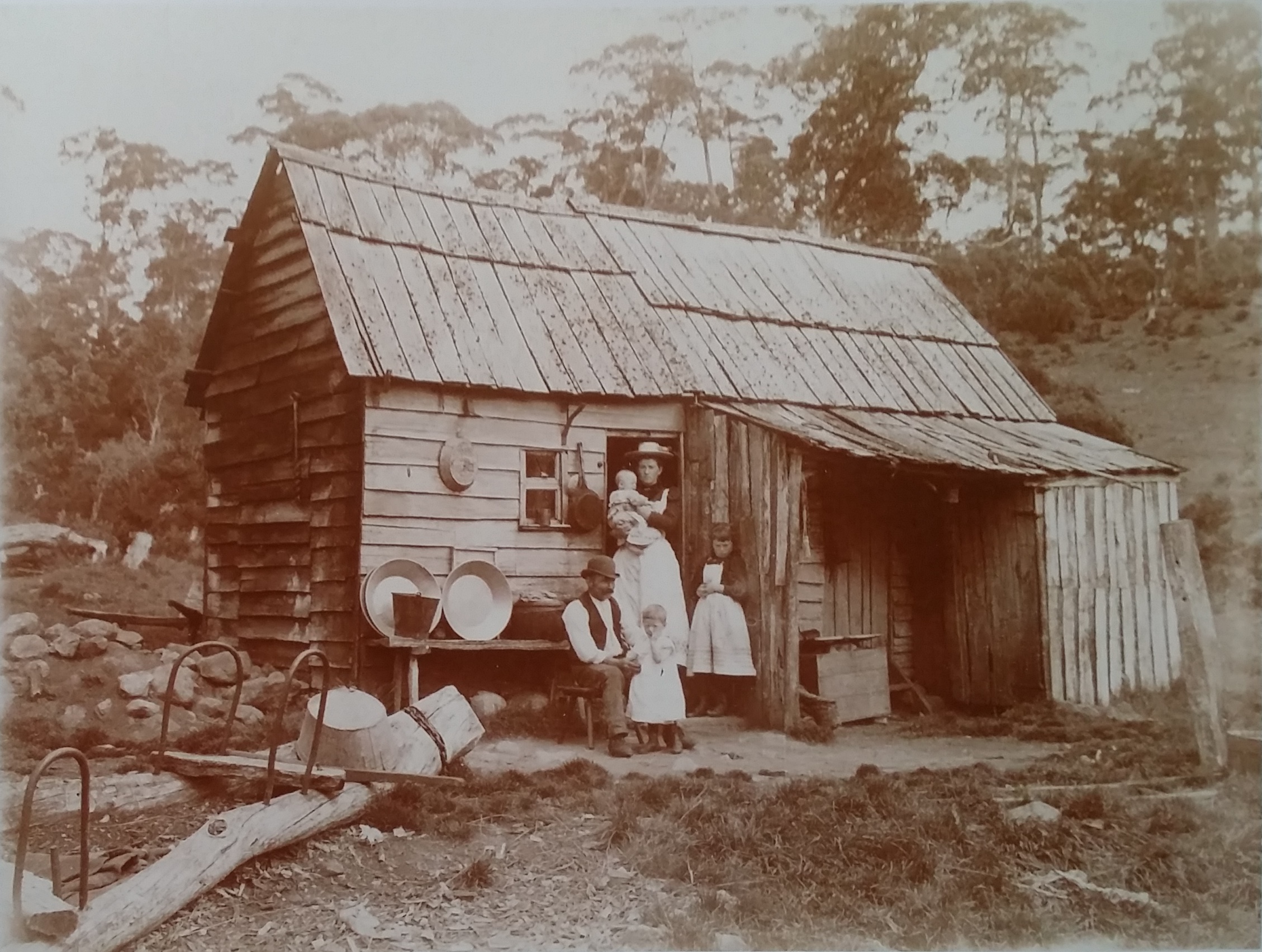
In Historic Tasmanian mountain huts, written with Simon Cubit, I told the story of a visit made to the Browns’ hut at Middlesex Station by the Anglican Bishop of Tasmania, Henry Hutchinson Montgomery and the Vicar of Sheffield, JS Roper, in February 1901.[1] Montgomery’s photo of the Brown family at their hut, featuring an eighteen-year-old Linda Brown with already two children, and the family turned out in Sunday best for the camera, tells us much about their isolated lifestyle, their social expectations and their pride.
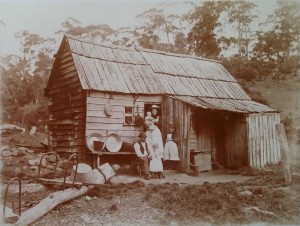
Henry Montgomery’s photo of Field stockman Jacky Brown and his wife Linda Brown at their hut, with children Mollie (the babe in arms) and William (standing with his father). The girl standing beside Linda is possibly from the Aylett family and fulfilling the role of maid. PH30-1-3836 (TAHO).
The underlying story in this photo is the decline of the Field grazing empire, which was becoming as rickety as the Middlesex hut. That empire had been established by ex-convict William Field senior (1774–1837) and his four sons William (1816–90), Thomas (1817–81), John (1821–1900) and Charles (1826–57). The death of John Field of Calstock, near Deloraine, in the previous year had closed those generations which had spread half-wild cattle from the Norfolk Plains/Longford area as far as Waratah, intimidating other graziers and dominating its impoverished landlord, the Van Diemen’s Land Company (VDL Co). The Fields were notorious for occupation by default, and they knew that legitimately occupying the VDL Co properties of the Middlesex Plains and the Hampshire and Surrey Hills would also allow them to occupy all the open plains of the north-western highlands gratis. The Fields’ power over the VDL Co increased as the company’s fortunes declined. In 1840 the Field brothers leased the 10,000-acre Middlesex from the VDL Co for 14 years at £400 per annum.[2] In 1860, after financial losses forced the VDL Co to retreat to England as an absentee landlord, they obtained a lease of the Hampshire and Surrey Hills plus Middlesex—170,000 acres in all—for the same price, £400.[3] The problem for the VDL Co was that few other graziers wanted such a large, isolated holding, and that any who did dare to take it on would have to first remove the Fields’ wild cattle. In 1888 the Fields screwed the VDL Co down further to £350 for the lot for the first two years of a seven-year lease, raising the price to £400 for the final five years.[4]
Nor were any of these negotiations straightforward. With every lease there was a battle to collect the rent, necessitating letters between the respective solicitors, Ritchie and Parker for the VDL Co, and Douglas and Collins for the Fields. Thomas or John Field would stall, demanding a reduction in rent for fencing, rates or police tax. On one occasion they requested the right to seek minerals, and to make roads and tramways on the leased land—and to take timber for the construction of this infrastructure.[5] Worse yet, in 1871 some of Fields’ wild cattle from the Hampshire or Surrey Hills got confused with VDL Co stock and ended up on the Woolnorth property at Cape Grim, and the VDL Co couldn’t figure out how to get rid of them.[6] Since Fields would soon ask to rent Woolnorth—and be refused—it was as if their advance guard had infiltrated the property ahead of a storming of the battlements.[7] The VDL Co’s solicitor told them that to shoot the offending animals would be to risk a Field law suit, leaving the company no option but to buy them from Fields and then weed them out for slaughter.[8]
However, now things were changing. By the 1890s reduced meat prices and natural attrition had taken their toll on the Field empire. John Field was the only one of the four brothers still standing. The VDL Co was now fielding offers from potential buyers of the large Surrey Hills block, as the company looked to land sales and timber for financial redemption. John Field’s final gesture in 1900 was to offer the VDL Co £75 per year for Middlesex.[9] The VDL Co wanted £125, and in the new year of 1901 the executors of John Field’s estate haggled for a concession. They wanted their landlord to offset some of the increased rental by paying for improvements to the station. ‘The place is greatly out of repair and the house would require to be a new one throughout’, WL Field told VDL Co local agent James Norton Smith. ‘The outbuildings are none and there is not a fence on the place’.[10]
We can see for ourselves that some of this, at least, was true. The unfenced, out-of-repair Middlesex ‘house’ in Montgomery’s photo had already undergone renovations, a chimney having been removed from its eastern end. However, Field was probably exaggerating a little. Perhaps there were no outbuildings, but Fields probably always kept a second hut at Middlesex for the stockmen who came up for the muster.
Silence spoke for the VDL Co. Receiving no reply to his request, WL Field agreed to the annual rental of £125 for seven years, with an option of seven years more at £150 per annum, noting that ‘we have the 10,000 acres of govt land adjoining it at a rental of £60 and I consider the block as good as the co’s and it will save a lot of fencing having both …’.[11]
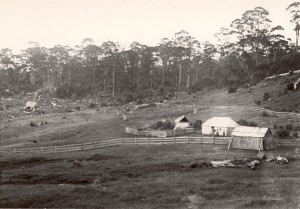
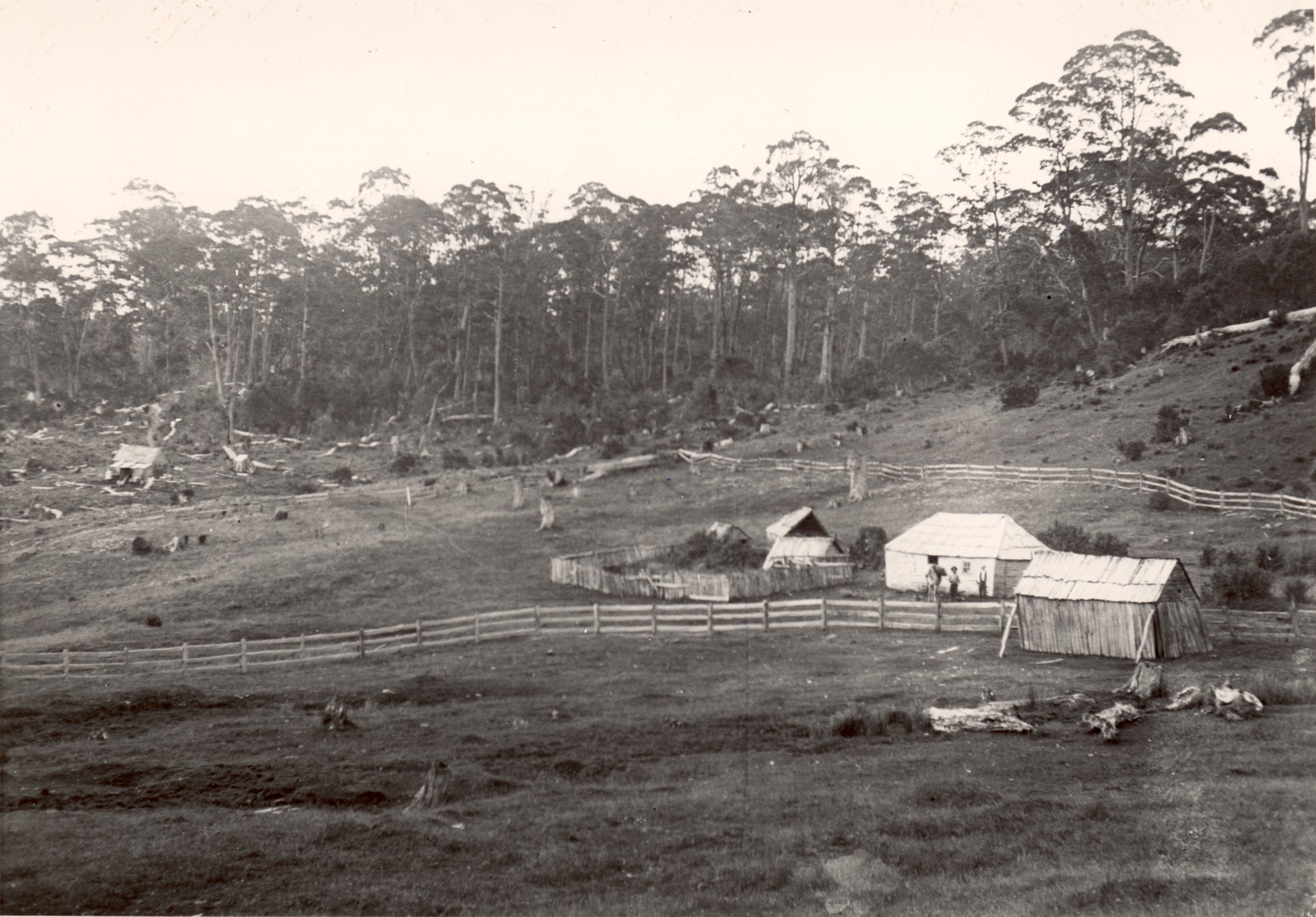
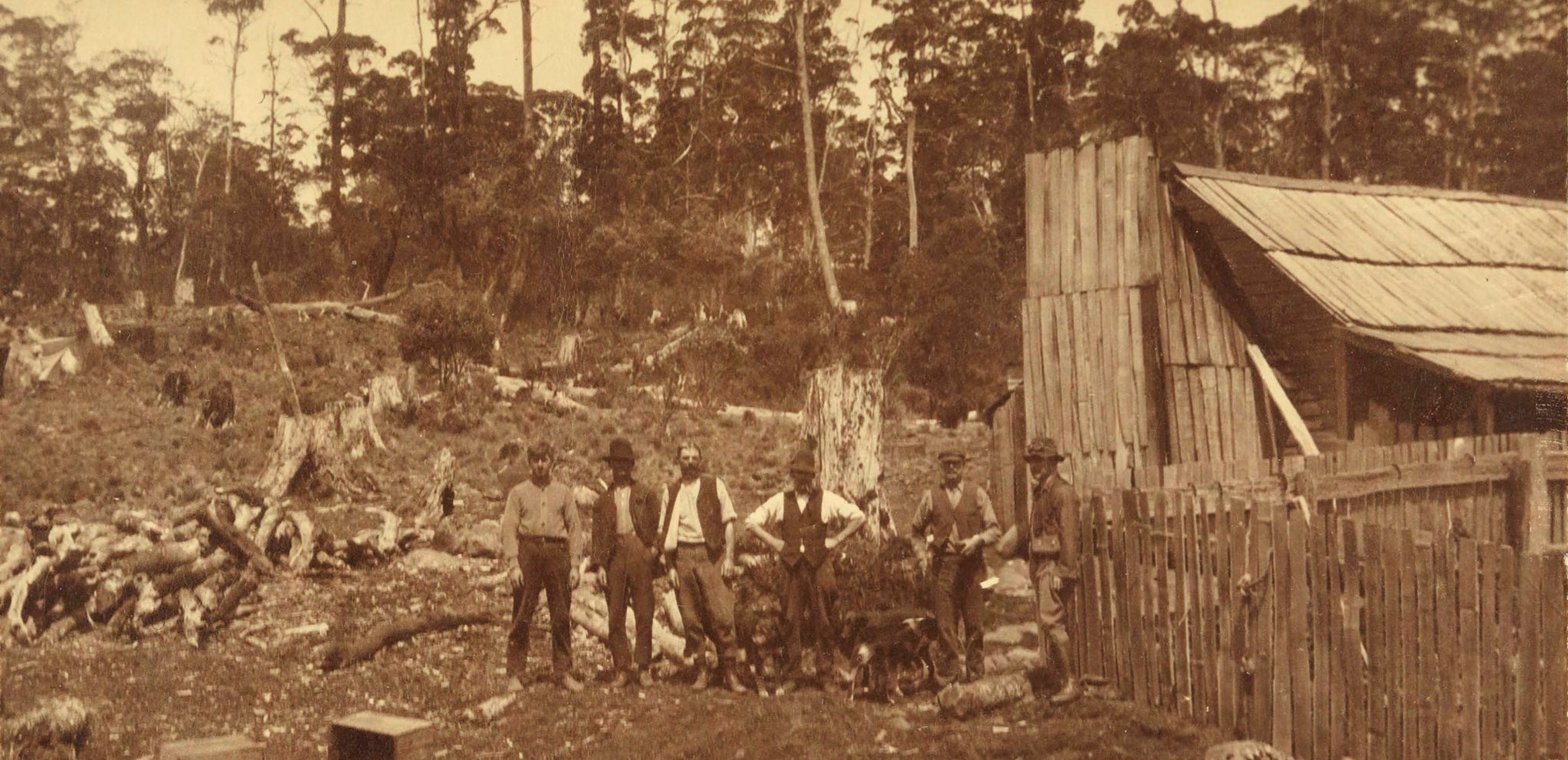
The Middlesex Station huts in February 1905, with Jacky, Linda Brown and two children standing in front of the second (mustering) hut. The hut occupied by the family can be seen at the extreme left in the left-hand photo, set well away from the others. The curl of smoke from the distant hut confirms the location of the chimney at its rear.
Ron Smith photo courtesy of the late Charles Smith.
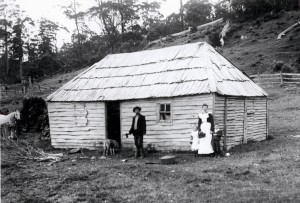
A close-up of the Browns in front of the mustering hut. Ron Smith photo courtesy of the late Charles Smith.
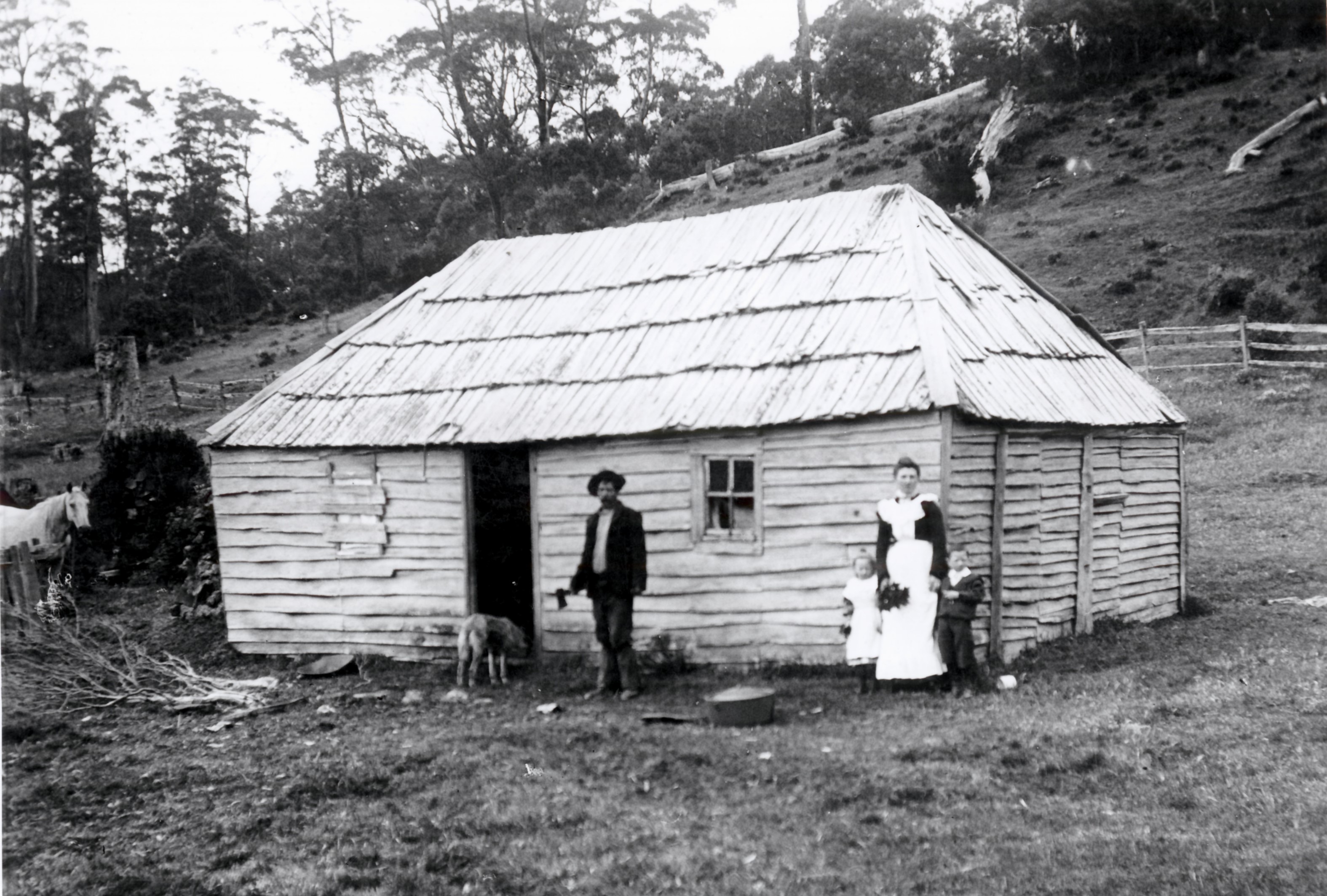
Perhaps the VDL Co did eventually submit to improvements. By 1905, when Jacky and Linda Brown were still in residence, there was a collection of buildings at Middlesex Station, including a ramshackle hut with a boarded-up window which was used by mustering stockmen and travellers. The main hut used by the Browns was set further east, away from these buildings, outside the House Paddock, which had now been fenced.
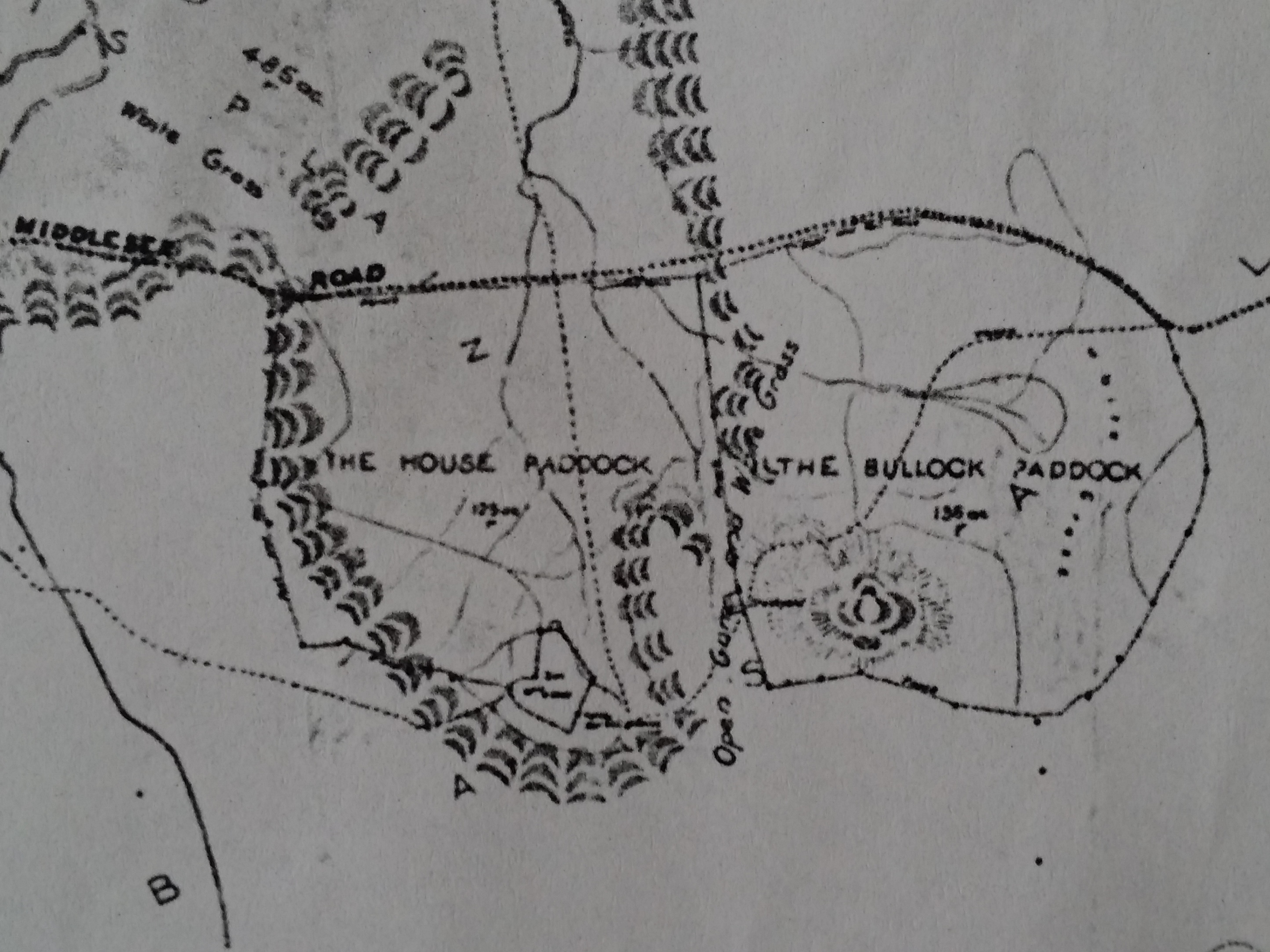
However, on the down side, the Fields were losing their unfettered reign over the highlands. A small land boom occurred in the upper Forth River country when a track was pushed through from the Moina region to Middlesex. The Davis brothers from Victoria tried to cultivate the Vale of Belvoir, and highland grazing runs were selected.[12] Frank and Louisa Brown were Fields’ Middlesex residents in November 1906 when Jack Geale, the new owner of the Weaning Paddock, asked new VDL Co agent AK McGaw to pay half the cost of fencing the eastern side of the Middlesex block, which would enable him to separate his herd from the Fields’.[13] McGaw sent surveyor GF Jakins with a team of men to Middlesex to re-mark the boundaries. The resulting survey shows the fenced paddock, the collection of buildings and the separate stockman’s hut.
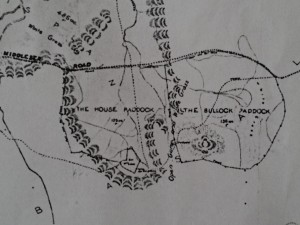
A crop from GF Jakins’ 1908 survey of the Middlesex Plains block, showing the House and Bullock Paddocks and the collection of buildings at the head of the House Paddock. From VDL343-1-359, TAHO, courtesy of the VDL Co.
Jakins also marked Olivia Falls (‘falls 300 ft’, ‘falls 60 ft’)—better known today as Quaile Falls—just outside the south-east corner of the Middlesex block. This casts doubt on the story of Quaile Falls being discovered by Roy Quaile while searching for stock.[14] The falls were probably known to the miners who worked the Sirdar silver mine nearby in the Dove River gorge from 1899—and were possibly given their present name in recognition of Wilmot farmer Bob Quaile’s visits there with tourists.[15] And what did the Aborigines call this ‘second Niagara’ long before that?
Perhaps it was knowledge of the ‘red’ pine growing on the south-western corner of the Middlesex Plains block that prompted Ron Smith of Forth to enquire about buying the block from the VDL Co.[16] That land owner would have enjoyed this attention. In 1908 Fields signed up for their second seven-year lease on Middlesex, at the increased rental of £150 per year. They had to agree to allow the VDL Co to sell any part of the Middlesex Plains block during that term excepting the 640 acres around the ‘homestead’.[17] As a regular visitor to Middlesex Station on his way to and from Cradle Mountain, Smith had no illusions about the standard of accommodation provided there. In January 1908 he and his party stayed in a new hut that had been built for the mustering stockmen. ‘We were very glad to do so’, Smith noted, ‘as the old hut was very much out of repair … ‘ It was a two-room hut with a moveable partition, so that it could be converted into one room as needed.[18]
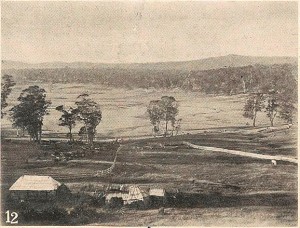
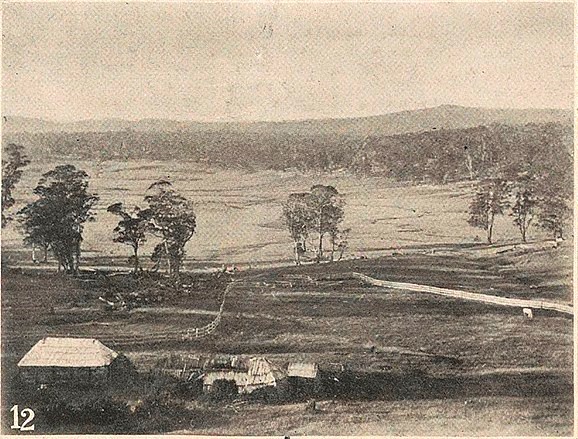
A collection of Middlesex buildings in December 1909 or January 1910. These seem to be the same buildings visible in the 1905 photo. The main hut further east is not shown here. Ron Smith photo from the Weekly Courier, 22 September 1910, p.17.
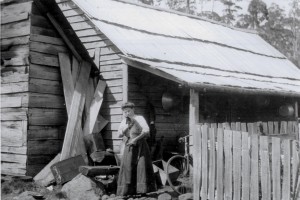
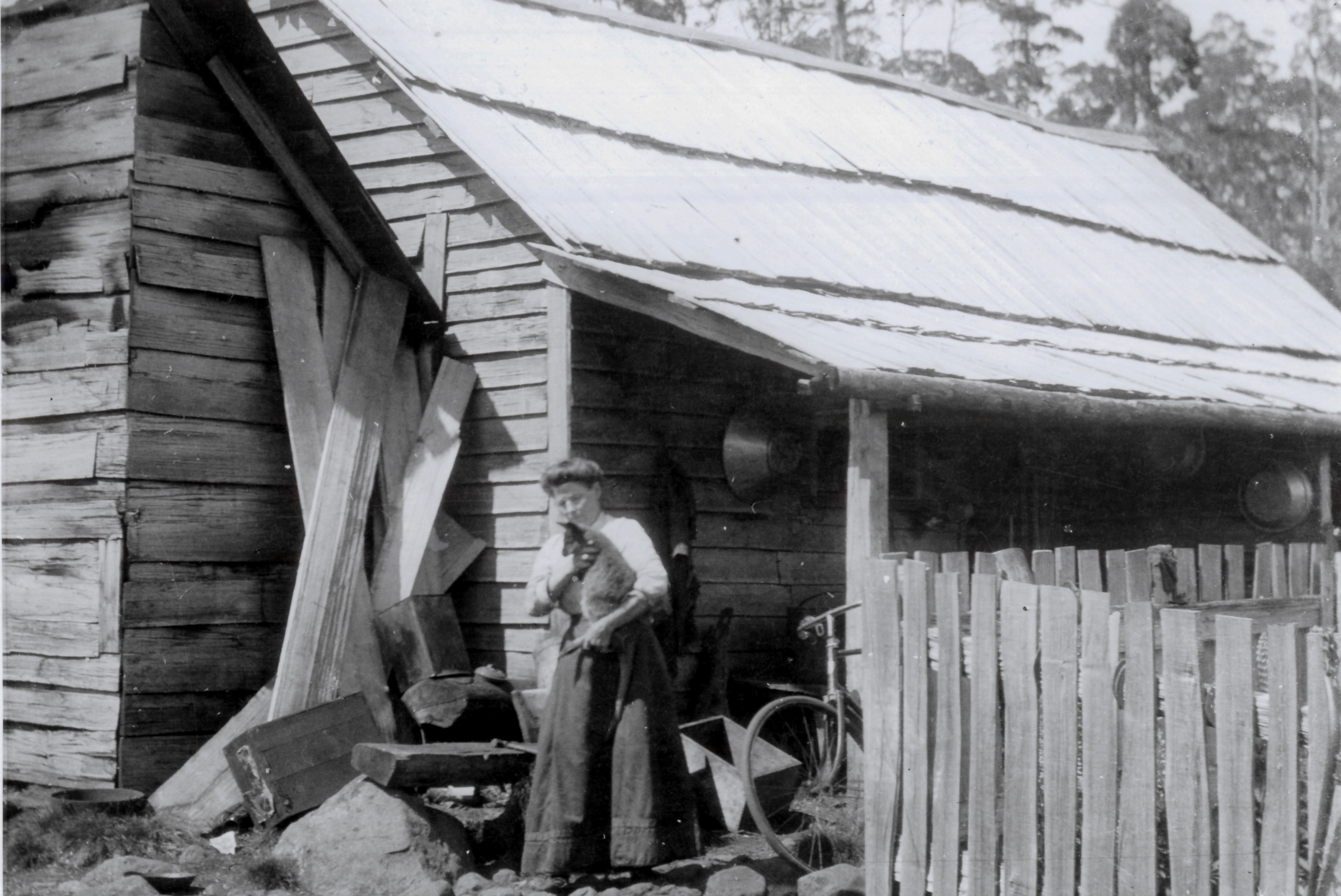
Louisa Brown with a pet wallaby, January 1910. This appears to be the same main hut photographed by Montgomery in 1901. Ron Smith photo courtesy of the late Charles Smith.
By December 1910 that hut was also in a state of disrepair. The Fields asked the VDL Co to renew or extend the two-roomed hut in time for the muster in the following month: ‘Up to now they have lived in the old house, but it is really unsafe. Mr Sanderson [VDL Co accountant] has seen the house that was built by us about four years ago, as he was there and stayed in it just after it was built. There is a man living there [Frank Brown] who would split the timber & do it’.[19]
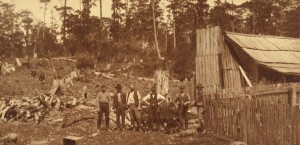
Main hut at Middlesex Station, Christmas 1920. The figure second from right appears to be Dave Courtney, with moustaches but as yet no beard.
Ray McClinton photo, LPIC27-1-2 (TAHO)
Such is the incomplete photographic record of Middlesex Station at the time that it is unknown whether the mustering hut was replaced. However, we can say more about the main hut used by the stockman. The hut shown in the 1901 and 1910 photos appears to have remained the stockman’s hut in 1920 when Ray McClinton snapped it, this time with Dave Courtney the resident stockman. The chimney had been rebuilt with a vertical arrangement of palings, and a skillion had been added at the back. A prominent stump standing beside the hut in this photo must have been just out of picture in Montgomery’s 1901 shot.
After Fields had rented Middlesex from the VDL Co for 82 years, in 1922 JT Field, son of the late John Field of Calstock, bought the block, ending the uncertainty about its future. However, the lone figure of 49-year-old stockman Dave Courtney was emblematic of the Fields’ dwindling presence in the highlands, and his long, flowing beard of the 1920s and 1930s would not have allayed the impression of a once vigorous enterprise slowly grinding to a halt.
[1] Simon Cubit and Nic Haygarth, Historic Tasmanian mountain huts: through the photographer’s lens, Forty South Publishing, Hobart, 2014, pp.24–29.
[2] Edward Curr, Outward Despatch no.215, 18 November 1840, VDL1/1/5 (TAHO).
[3] Inward Despatch no.291, 16 November 1857, VDL 1/1/6 (TAHO).
[4] Minutes of VDL Co Court of Directors, 16 February 1888, VDL201/1/10 (TAHO).
[5] Douglas & Collins to James Norton Smith, 16 April 1875, VDL22/1/5 (TAHO).
[6] John Field offered to settle the matter by selling the wild cattle to the VDL Co for £100. See Douglas & Collins to James Norton Smith, 7 July 1871. See also Douglas & Collins to James Norton Smith, 14 October 1871 and 3 September 1872, VDL22/1/4 (TAHO).
[7] Douglas & Collins to James Norton Smith, 16 February 1872, VDL22/1/4 (TAHO).
[8] Ritchie & Parker to James Norton Smith, 31 October 1871, VDL22/1/4 (TAHO).
[9] Minutes of VDL Co Court of Directors 3 October 1900, VDL201/1/11 (TAHO).
[10] WL Field to James Norton Smith, 19 January 1901, VDL22/1/32 (TAHO).
[11] WL Field to James Norton Smith, 30 April 1901 and 15 June 1901, VDL22/1/32 (TAHO).
[12] See Simon Cubit and Nic Haygarth, Historic Tasmanian mountain huts: through the photographer’s lens, Forty South Publishing, Hobart, 2014, pp.18–23.
[13] JW Geale to EK McGaw, 26 November 1906, VDL22/1/38 (TAHO).
[14] Leonard C Fisher, Wilmot: those were the days, the author, Port Sorell, 1990, p.150.
[15] See, for example, ‘The Cradle Mountain’, Examiner, 5 January 1909, p.6.
[16] AK McGaw to Ron Smith, 23 January 1905, NS234/1/18 (TAHO). The term ‘red pine’ was often used indiscriminately to describe both the King Billy (Athrotaxis selaginoides) and pencil (Athrotaxis cupressoides) pine timber.
[17] WL Field to AK McGaw, 24 September 1908, VDL22/1/40 (TAHO).
[18] Ron Smith, ‘Trip to Cradle Mountain: RE Smith and the Adams Brothers, January 1908’, in Ron Smith, Cradle Mountain, with notes on wild life and climate by Gustav Weindorfer, the author, Launceston, 1937, pp.67–77.
[19] WT and JL Field, writing on behalf of WL Field, to AK McGaw, 7 December 1910, VDL22/1/42 (TAHO).