by Nic Haygarth | 13/02/17 | Circular Head history, Tasmanian high country history
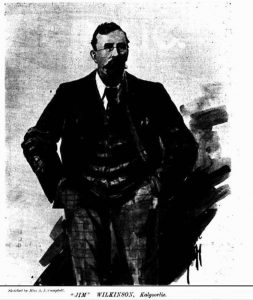
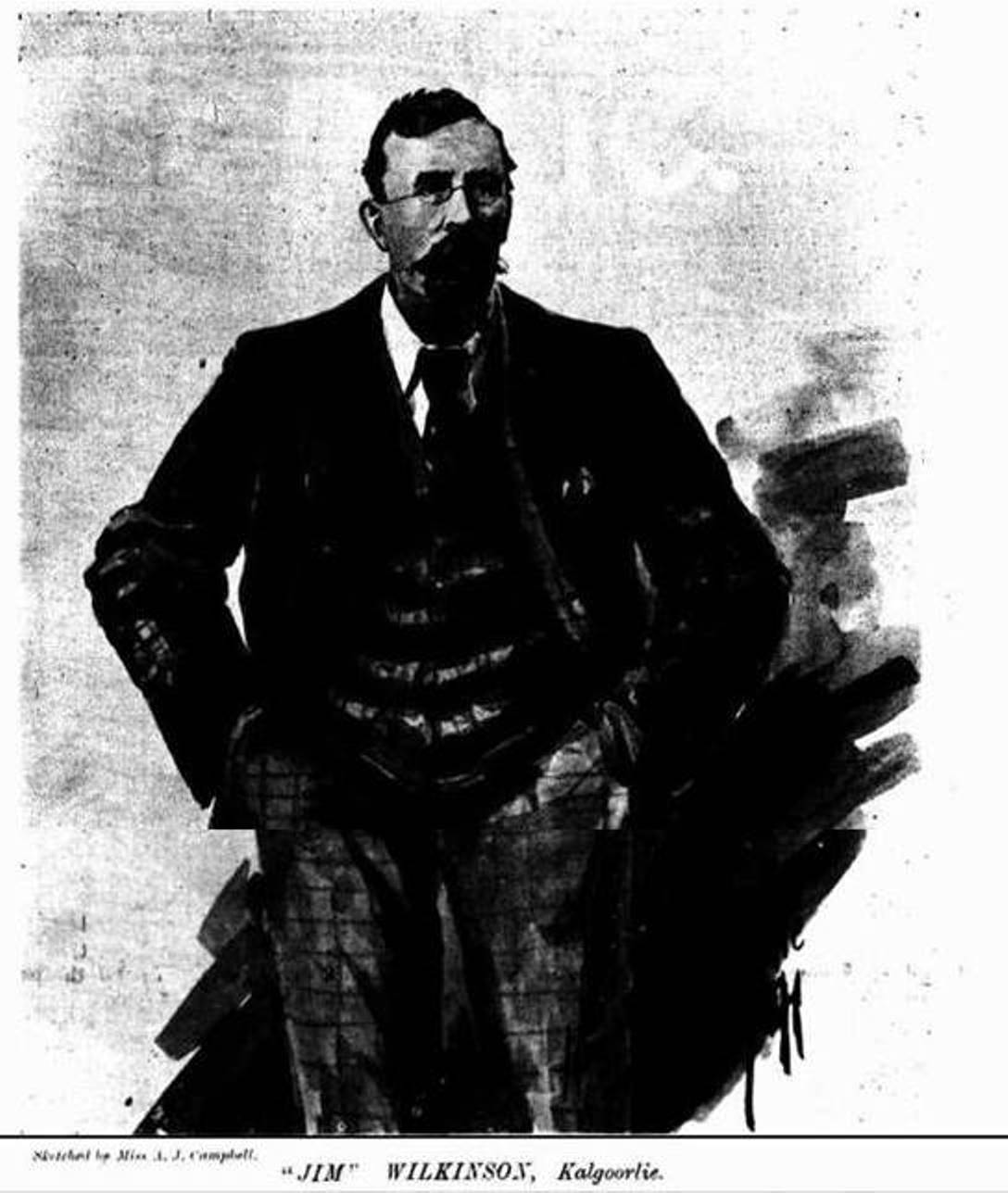
‘Big Jim’ Wilkinson, sketched by Miss AJ Campbell at Kalgoorlie in 1898. From Critic (Adelaide), 26 March 1898, p.5
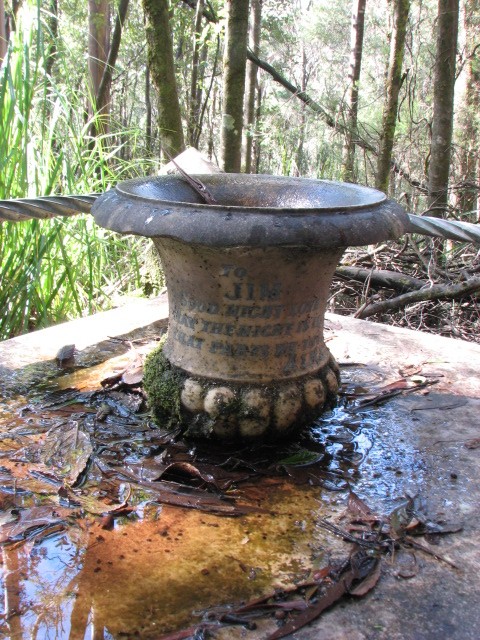
A heartbreaking dedication is inscribed on a ceramic vase on one of the four marked graves in the Balfour Cemetery:
To Jim
good night love
may the night be short
that parts we two
Alma
Big Jim Wilkinson stood almost 200 cm tall—6 foot 5 inches in the old measure. He was proof that even remote Tasmanian mining fields attracted not just local prospectors, labourers, miners, engine drivers and other skilled workers, but international adventurers, men who flitted between gold rushes and boom towns, revelling in the lifestyle, but who eventually settled into the more stable support industries that underpinned every mining field. Wilkinson, who supposedly counted Australia’s first prime minister, Edmund Barton, and the poet, Adam Lindsay Gordon, as friends, had been an imposing figure on the Kalgoorlie goldfield, being ‘a big power with the miners … He is one of the most popular men in Kalgoorlie, and deservedly so. He has a head like a Roman senator…’[1] He hadn’t quite made it into the Australian Senate, being defeated in two campaigns in Western Australia. He was also said to have made ‘a prodigious impression’ in Gormanston, ‘with his Uncle Sam beard, his diamonds, his earrings, and his accent which was very good American for a Victorian native!’[2] He had discovered gold on the Murchison field, kept livery stables and attained legendary status as a coach driver in the early days of the Silverton-Broken Hill silver field by keeping his passengers—or his horses, if he was carrying only freight—awake through the night with recitations of Gordon’s verses.[3] He had been a pearler, a guano dealer in south-east Asia, a race handicapper and a hotelier.[4]
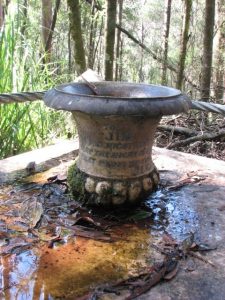
Alma’s inscription on Jim’s grave at Balfour.
Photo by Nic Haygarth.
However, none of that counted for anything at Balfour, where Wilkinson achieved another distinction entirely—he was the first interment in the cemetery, in January 1910, after only one month in town. He had come to Balfour to run a hotel for his brother-in-law, the ubiquitous jack-of-all-trades Frank Gaffney. Wilkinson arrived as a diabetic, in a shanty town that had no resident doctor.[5] Nor was there a minister to officiate at his grave. Like typhoid victims Haywood and Tom Shepherd before him, he died when there was no tramway from Temma. His grave relics—with their emphatic tale of loss and devotion—must have been hauled in from Temma by horsepower at least a year after his death. For more than a century, Big Jim Wilkinson, bright star of the boom-time, has rested in obscurity on one of Australia’s most obscure mining fields, leaving us to ponder the levelling power of death and the burning question—who was Alma?
*With thanks to Val Fleming.
[1] ‘Language freaks’, Critic (Adelaide), 26 March 1898, p.5.
[2] ‘Gormanston notes’, Zeehan and Dundas Herald, 27 October 1903, p.4.
[3] See, for example, Randolph Bedford, Naught to thirty three, Currawong Press, Sydney, 1944, pp.98–100.
[4] See, for example, ‘Death of Mr JJ Wilkinson’, Kalgoorlie Western Argus, 1 November 1910, p.15.
[5] ‘Resident doctor’, Examiner, 10 January 1910, p.5.
by Nic Haygarth | 31/01/17 | Tasmanian high country history
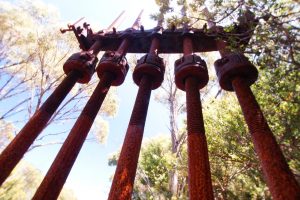
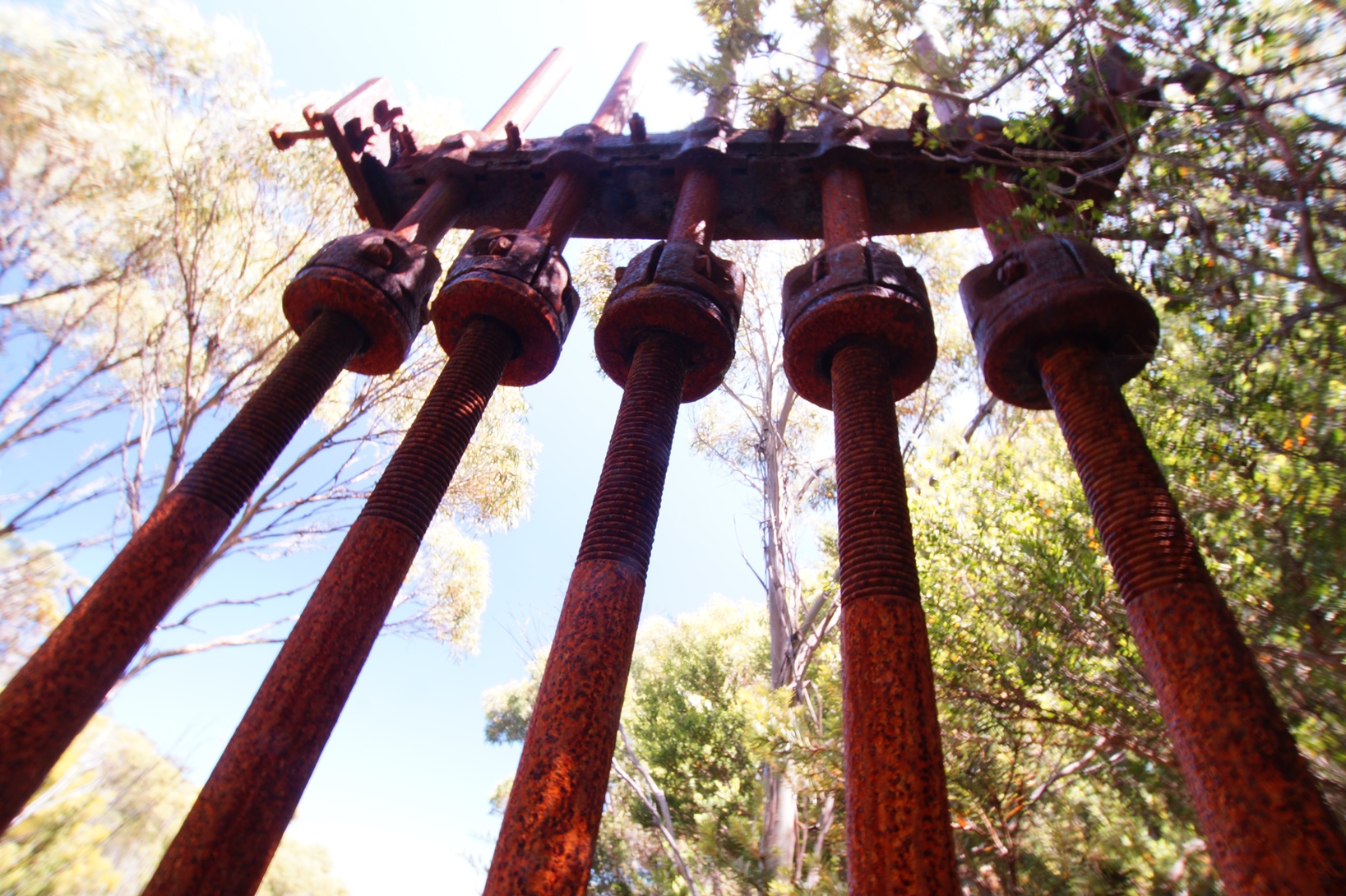
Five-head battery at the Carn Brea tin mine, the only battery remaining in situ on the Heemskirk field. Nic Haygarth photo.
A lode tin mining boom in western Tasmania followed Inspector of Mines Gustav Thureau’s poorly considered 1881 claim that ‘the Mount Heemskirk and Mount Agnew tin deposits appear to be … of grave importance to the Colony at large’ and that ‘their permanence has already been proved …’[1] As Thureau discovered, when he arrived there unwisely in winter, the difficulties of working the remote field were enormous. It was an exposed coastal area characterised by cold winters, driving rain, dense vegetation and steep terrain. There were no roads, and no useful supply routes. The closest thing to a port was Trial Harbour, a shallow inlet open to the winds which crashed the Southern Ocean onto the coast.
Tasmanians subscribed to the idea that Cornish miners were the model of practical, economical tin mining. Trained-on-the-job Cornish miners were in great demand at Heemskirk, and they encouraged their excited employers with ludicrous allusions to their homeland. In August 1881, for example, one of the Heemskirk mine managers, Robert Hope Carlisle, was said to be trying to trace the continuation of the famous Dolcoath tin lode from Cornwall across the oceans to Heemskirk.[2] However, their assertions that Tasmanian tin lodes would ‘live down’ like Cornish ones proved disastrous on a field where the deposits were actually small and inconsistent. Ironically, the fortunes of one novice Cornish miner, Josiah Thomas (JT) Rabling, in Tasmania suggest that Heemskirk was indeed the ‘Cornwall of the antipodes’, that is, it proved as hard to make a living on the Tasmanian tin fields as it was in the depressed Cornwall he had escaped.
Josiah Thomas Rabling
Rabling was the Cornishman chosen to work the Carn Brea Tin Mine at Heemskirk. He was born into a well-known Camborne, Cornwall mining family in about 1843, the fourth of eight children.[3] As the nephew of William Rabling senior, who had made his name and fortune in the Mexican silver mines, and also the nephew of Charles Thomas, manager of the famous Dolcoath Mine at Camborne, he was born with a mining pedigree.[4] Josiah’s father, Henry Rabling, mined in Mexico, but does not appear to have succeeded there, leaving effects to the value of less than £450 when he died in 1875.[5] The fact that Josiah Rabling was in the workforce at the age of seventeen suggests that his mining education was on the job, rather than in the class room—and there was no Camborne School of Mines until 1888. Rabling grew up at a time when England lagged behind countries like Germany and the United States of America in not having a mining academy system.[6] In 1861 young Rabling was a smith, in 1871 he was a mining clerk at Camborne, near the Great Flat Lode of tin mines and the Dolcoath Mine, which produced copper and tin for centuries.[7]
However, the crash of the copper price in the second half of the nineteenth century, the effect of the cost book system and Cornwall’s lack of a coal resource on its industrial economy, and additional failures in agriculture and fishing placed great stress on Cornish mine workers and labouring families. By 1873 the tin price was also falling, and 132 Cornish tin mines closed over the next three years.[8]
It is likely that the death of Rabling’s father in 1875 and the downturn in the local mining industry necessitated a search for work elsewhere. Competition to Cornwall from the Australian tin mines had begun with almost simultaneous discoveries on the New England tableland in northern New South Wales and at Mount Bischoff in Tasmania. Rabling arrived in Tasmania on the Argyle in 1876, perhaps being sent by British capitalists interested in Tasmanian mines.[9] During 1877 and 1878 he secured commissions to report on various mines, but by the following year was down on his luck. In August 1879, after making a little money by paling splitting, he forged a signature on a cheque which he presented in the town of Waratah (Mount Bischoff) to pay a small cartage fee incurred by a friend. He pleaded guilty to a crime committed in ‘such a childish manner’, according to a reporter for the Mercury (Hobart) newspaper, ‘with so little gain attached to it that it really looked as if he wanted to get into prison’.[10] Despite this being a first offence, Rabling was sentenced to twelve months’ imprisonment.[11] The effects of this experience are unknown, but one subsequent effort to make a living in Tasmania also landed him in trouble. In July 1881, along with three other men, he was tried in the Supreme Court, Hobart, on a charge of unlawfully conspiring to defraud Peter McIntyre to the tune of £400 by salting the Band of Hope Mine. Rabling and one other were found not guilty.[12]
Despite these events, such was the allure of the Cornish ‘practical miner’ that only a month later Rabling was one of two men engaged by the British Lion Prospecting Association to prospect on the Heemskirk tin field.[13] The Heemskirk tin deposits, like those of Mount Bischoff, occurred in granite—and who knew more about working tin in granite than Cornishmen?
A tributary of Granite Creek was the site of one of three Heemskirk sections leased by Rabling. The creek, he said, would be sufficient to drive machinery.[14] Even today the site, within a several hundred metres of the sea, is a remote one, three hours’ walk from shack settlements at Trial Harbour and Granville Harbour. It is hard to imagine what a young man from Camborne made of tent life exposed to the roaring surf of the Southern Ocean.
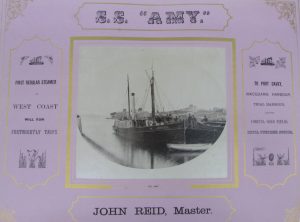
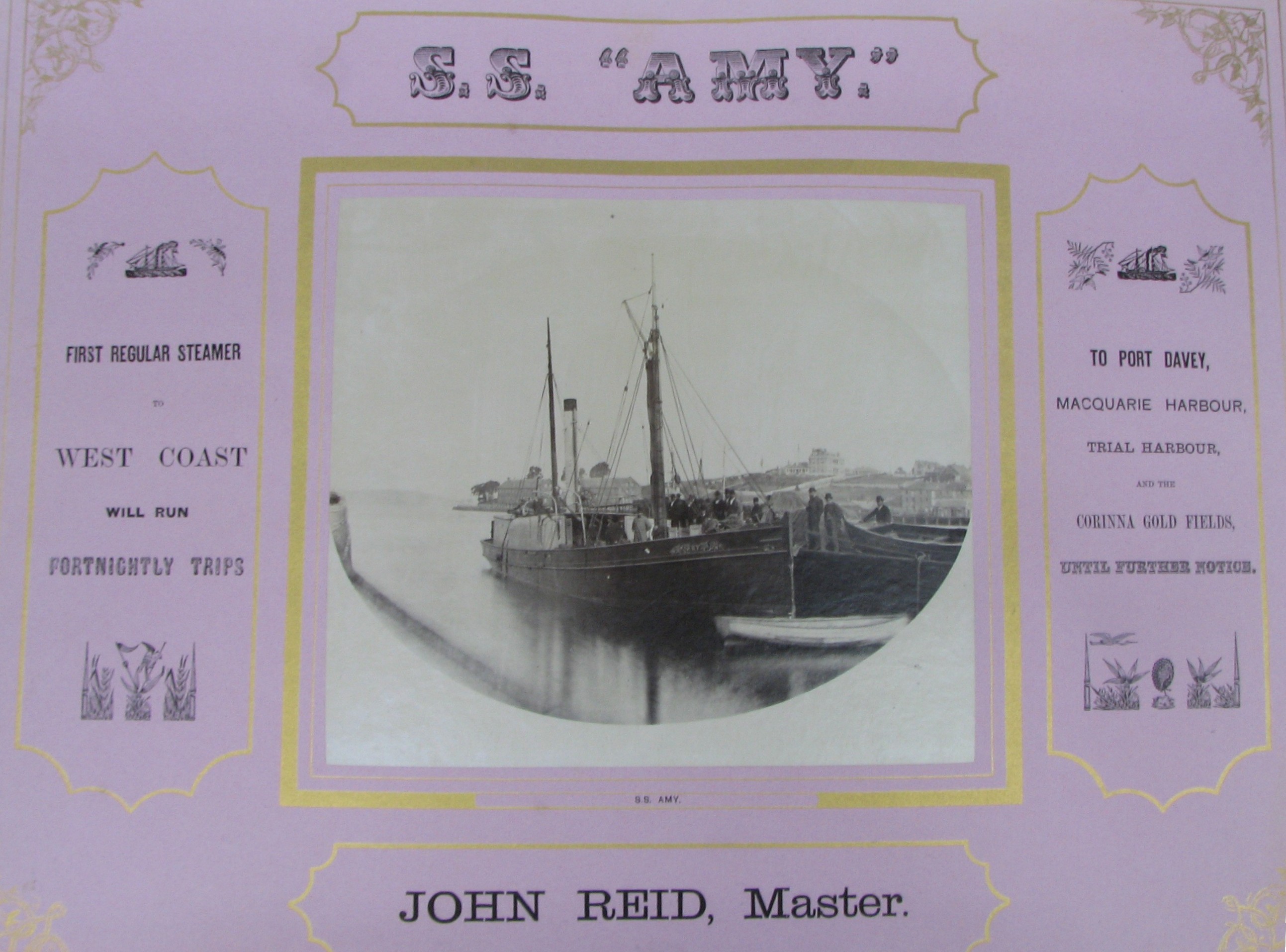
The ss Amy at dock.
Anson Brothers photo courtesy of the Tasmanian Archive and Heritage Office.
Even being delivered to the Heemskirk field was an endurance test. Rabling first ventured westward out of Launceston on the small steamer the ss Amy, which had begun to unload if not dock at Boat (later Trial) Harbour.[15] Seventeen passengers plus stores for the Pieman River goldfield were crammed aboard the tiny vessel, which took on further stores at Latrobe on the Mersey River during a five-day stopover. When the Amy got underway again, overloading had made it so unsteady that the bulk of the cargo had to be put ashore at the Mersey heads. Another layover occurred at the port of Stanley, in the far north-west, this time for bad weather. On the seventh day out of Launceston the steamer put in at the remote sheep and cattle station of Woolnorth, on the north-western tip, again delayed by buffeting winds, the passengers having enough time ashore to go rabbiting, inspect the bones of a stranded whale and hold a meeting in which they established their own west coast prospecting association! Reaching the Pieman River heads ten days out of Launceston brought good news —the dreaded bar was passable, for the first time in many days. So many vessels had come to grief on the Pieman River bar that a successful crossing was invariably met with an address of thanks to the captain and his chief officer and a hearty round of cheers. Passengers had time to develop an opinion on nearby gold workings before re-embarking for Heemskirk.[16]
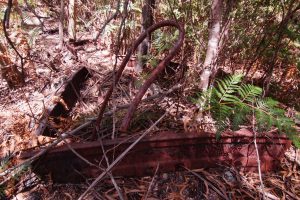
Sections of the metalwork of the overshot waterwheel remain on site next to the Carn Brea wheelpit today. Nic Haygarth photo.
Developing the Carn Brea Tin Mine
At the inaugural meeting of the Carn Brea Tin Mining Company, held in Hobart in January 1883, Rabling was appointed mine manager and promptly adjourned to the west coast with eight assistants. While publicly, at least, Rabling made no grandiose comparisons with the Cornish tin field, he did name the mine Carn Brea, after the hill that stands over his home town, Camborne, in Cornwall, perhaps a reflection of homesickness as well as an assurance of worth to cheer the shareholders. In February 1883 Carn Brea shareholders authorised a loan to pay for a battery and a 24-foot iron overshot waterwheel manufactured at WH Knight’s Phoenix Foundry in Launceston.[17] A road had to be built to North Heemskirk before the equipment was delivered by steamer at the dangerously exposed port of Trial Harbour.[18] However, when the machinery came to be hauled up the road by horse team the carters ran out of horse feed, causing further delay.[19] When visiting the Carn Brea Mine, the Mercury newspaper’s ‘special’ reporter Theophilus Jones was only able to inspect the stone cutting and wheel pit prepared for its reception, Rabling’s 84-foot drive and 20-foot winze and a lode said to be four to five feet wide. He was reassured by the manager serving him steaming Royal Blend tea, preserved meat and ‘excellent’ bread and butter. Furthermore, Rabling had
‘pitched his camp in a snug corner formed by the junction of two banks above a small creek. He has not wasted the shareholders’ money by erecting large and substantial houses, stable and blacksmith’s shops, with a store and a post office thrown into the bargain, but has contented himself with putting up tents, and cutting chimneys and fireplaces in the bank’. [20]
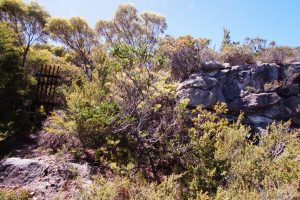
The battery and a rock face that appears to have been cut away to accommodate a work site, Carn Brea tin mine. Nic Haygarth photo.
The most settled weather in western Tasmania is in February and March, but many water-powered mines found it too dry to operate in those months. April, May and the winter and spring months would normally provide abundant rainfall, but the west coast weather would then be bracing, to say the least. Rabling would have had no choice but to stay put and do his shareholders’ bidding by preparing the claim for crushing as soon as possible, much of his time being spent huddled in a sturdy tent.
The fatal first crushing
The first half-yearly meeting of the Carn Brea Tin Mining Company in July 1883 glowed with a happy anticipation. Neither the £1800 advance on machinery, nor the six calls on shares, had disturbed the shareholders’ equanimity. Stone assaying a payable 7.5 to 14% had been paddocked awaiting the crusher, demonstrating the admirable ‘energy and skill’ of the company’s mining manager.[21]
The Carn Brea was one of nine mines on the Heemskirk field to erect a battery during the boom period. In all, 75 or 80 head of stampers were raised.[22] By October 1883 Thomas Williams was ready to crush at the Orient tin mine.[23] The Cliff and Carn Brea were almost ready to crush, the Montagu and the Cumberland were erecting machinery and mine manager George Lightly of the West Cumberland was preparing to receive machinery.[24]
However, the failure of the Orient crushing one month later threw ‘a great damper … on lode tin mining at Mount Heemskirk …’[25] Confidence in the field evaporated. The Carn Brea Tin Mining Company kept going until at its second half-yearly meeting in March 1884 it was revealed that, although assay results from the first shipment of 30 bags of crushed ore were not yet available, directors regarded mining operations as a failure. Not surprisingly, expenditure due to work delays and heavy freight costs had far exceeded Rabling’s estimates. Work had been suspended, and many shares in the company had been forfeited. One of the directors, Grubb, condemned Rabling’s management, and several disputed that he had secured any tin from the mine. Eventually, shareholders voted to accept Rabling’s offer to take the mine on tribute (that is, working the company’s lease for a percentage of the value of ore won, so at no cost to the shareholders), the unknown value of the 30 bags of tin being taken as part payment for the wages the company owed him.[26] All work seems to have been abandoned soon after. No further substantial work appears to have taken place at the Carn Brea Mine.
Although Trial Harbour would enjoy a brief resurgence as the port for the Zeehan–Dundas silver-lead field, the Heemskirk tin field would never fulfil early expectations. Former Peripatetic Tin Mine manager Con Curtain estimated that at least £100,000 were spent at Heemskirk 1880–84 for a return of about 70 to 100 tons of dressed tin.[27] By 1962 total production on the field had not progressed substantially, amounting to a mere 668 tons of metallic tin.[28]
[1] Gustav Thureau, West coast, Legislative Council Paper 77/1882, p. 27.
[2] ‘Mt Heemskirk’, Mercury (Hobart), 5 October 1881, supplement, p. 1.
[3] Census for England 1851 and 1861.
[4] ‘Miss Eliza Rabling’, Cornishman, 19 January 1889, p. 2; Sharron P Schwartz, Mining a shared heritage: Mexico’s ‘Little Cornwall’, Cornish–Mexican Cultural Society, England, 2011, pp. 51–52.
[5] England and Wales Probate Calendar, 1858–1966.
[6] Rod Home, ‘Science as a German export to nineteenth century Australia’, Working Papers in Australian Studies, no. 104, London, 1995, pp. 7–11, 17.
[7] Census for England 1861 and 1871.
[8] Philip Payton, Cornwall: a history, pp. 215–20; Allen Buckley, The story of mining in Cornwall, p. 140.
[9] ‘Gold news’, Launceston Examiner, 3 March 1877, p. 5.
[10] ‘Our Launceston letter’, Mercury, 4 October 1879, p. 3.
[11] Conduct record, CON37/1/11, p. 6063 (Tasmanian Archive and Heritage Office, Hobart [hereafter TAHO]).
[12] ‘Second Court’, Mercury, 28 July 1881, p. 3.
[13] ‘Mining’, Mercury, 30 August 1881, p. 3; ‘Tin’, Launceston Examiner, 31 August 1881, p. 3.
[14] ‘Mining’, Mercury, 27 April 1882, p. 3.
[15] ‘Tin’, Launceston Examiner, 31 August 1881, p. 3.
[16] ‘The west coast goldfields’, Mercury, 17 September 1881, p. 2.
[17] ‘Heemskirk’, Mercury, 23 October 1883, p. 3; ‘Tin’, Launceston Examiner, 9 March 1883, p. 3.
[18] ‘Mount Heemskirk’, Mercury, 8 May 1883, p. 3.
[19] ‘Managers’ reports’, Mercury, 30 June 1883, p. 2.
[20] ‘Our Special Reporter’ (Theophilus Jones), ‘The west coast tin mines’, Mercury, 31 May 1883, p. 3.
[21] ‘Mining’, Mercury, 1 August 1883, p. 3.
[22] According to Con Curtain and LJ Smith, companies which installed batteries included the Carn Brae (JT Rabling; 10 heads, from .H Knight’s Phoenix Foundry, Launceston), Orient (John Williams; Thomas S Williams; 10, Salisbury Foundry, Launceston), Cliff (John Hancock; William Williams; W Thomas; PT Young; Edward Perrow, 5), the West Cumberland (George Lightly; 5), the Wakefield (5), Cumberland (AB Gallacher; 10), the Montagu (Alex Ingleton; 15), the Victorian-registered Cornwall Tin Mining Co (Mark Gardiner; 10, WH Knight), and Peripatetic (Con Curtain; 10). Companies which did not install machinery included the Montagu Extended (Robert Hope Carlisle), Prince George (John Addis), St Clair (James Henry Nance), Champion (WG Hensley), Mount Heemskirk and Agnew (John Greenwood), Heemskirk River (Edwin Tremethick) and the St Dizier (Nicholas St Dizier). The Empress Victoria (Thomas Fowler) had a steam hoisting plant but no treatment plant. See Con Henry Curtain, ‘Old times: Heemskirk mines and mining’, Examiner, 27 February 1928, p. 5; and LJ Smith, ‘South Heemskirk tin mine’, Advocate, 11 August 1928, p. 14. Curtain claimed there were 75 heads of stampers on the field, but Smith’s list of batteries added up to 80 heads.
[23] Con Henry Curtain, ‘Old Times: Heemskirk Mines and Mining’. There is a five-head battery at the Carn Brea mine today.
[24] ‘Heemskirk’, Mercury, 23 October 1883, p. 3.
[25] Editorial review of 1883, Launceston Examiner, 1 January 1884, p. 2.
[26] ‘Mining’, Mercury, 3 April 1884, p. 3.
[27] Con Henry Curtain, ‘Old times: Heemskirk mines and mining’.
[28] AH Blissett, Geological survey explanatory report, One Mile Geological Map Series, Zeehan, Department of Mines, Hobart, 1962, p. 112.
by Nic Haygarth | 22/01/17 | Tasmanian high country history, Tasmanian landscape photography
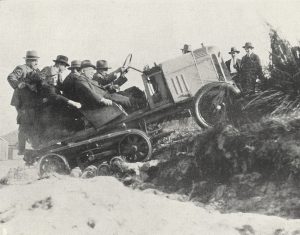
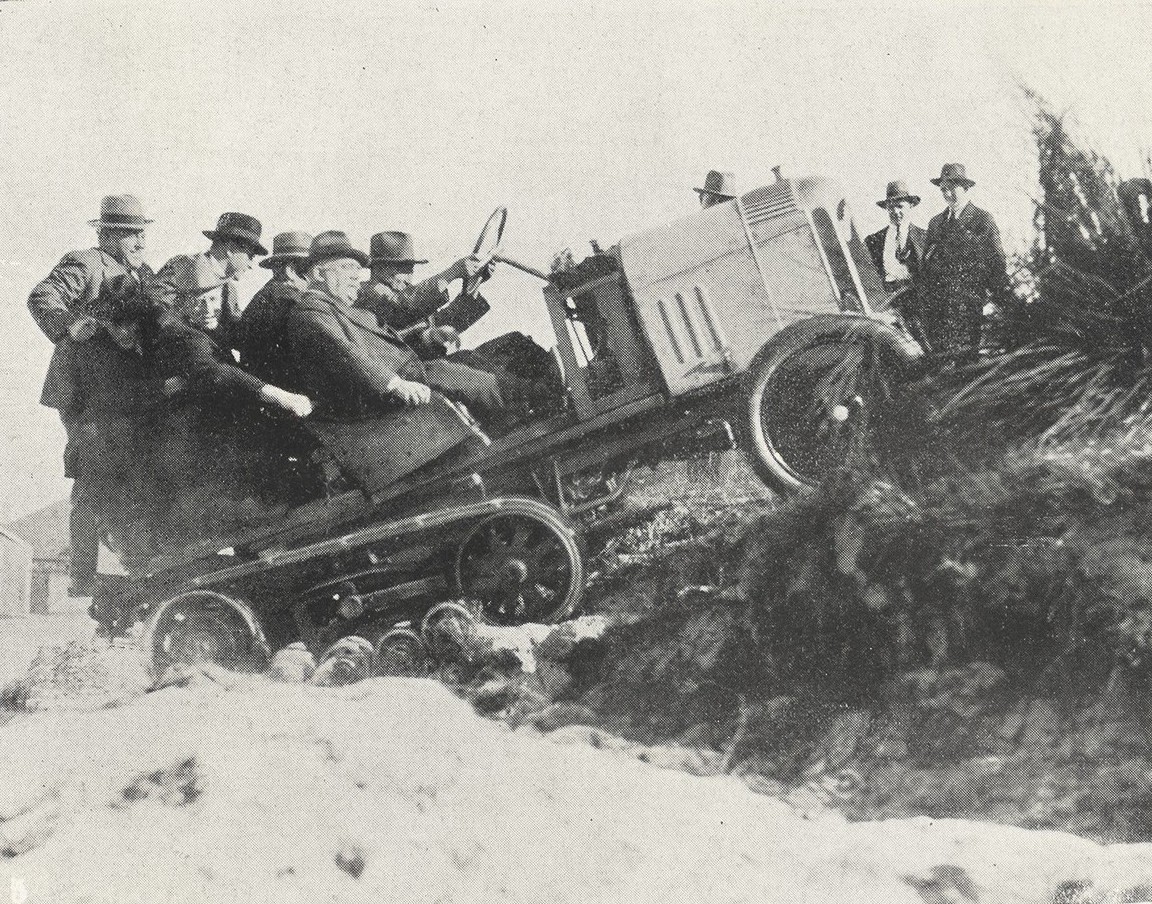
Up one side … a Citröen-Kegresse on the Kensington Sandhills near Sydney. From the Weekly Courier, 27 September 1923, p.23.
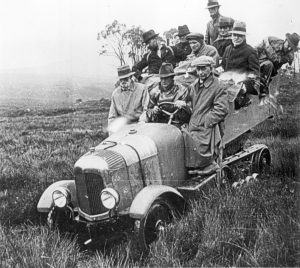
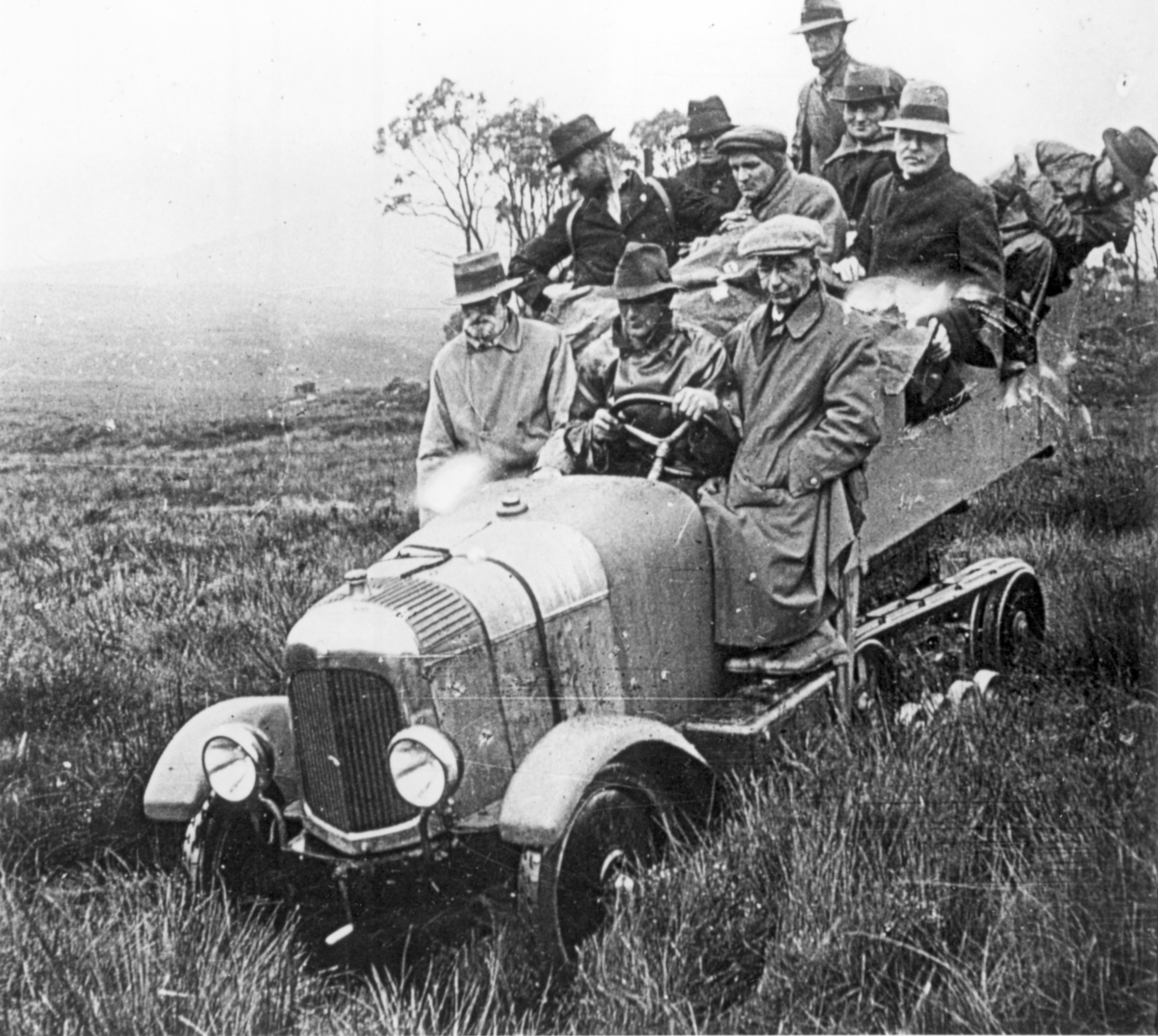
Down the other …. the Citröen-Kegresse prototype on its way to Waldheim, 1924. Stephen Spurling III photo courtesy of Anton Lade.
They don’t make Citröens like that anymore. Gustav Weindorfer of Waldheim Chalet, the highland resort at Cradle Valley, beat the snow by shooting for meat on skis when he began living there in isolation in 1912.[1] At around the same time, Tsar Nicholas II of Russia understandably ordered a grander hunting vehicle for snow conditions—with caterpillar tracks for back wheels. Hannibal’s elephantine passage through the Alps to surprise the Romans had nothing on the Citröen-Kegresse, the assault vehicle which resulted from the meeting of French car manufacturer André Citröen and the Tsar’s resourceful mechanic, Adolph Kegresse, after the Russian Revolution.[2]
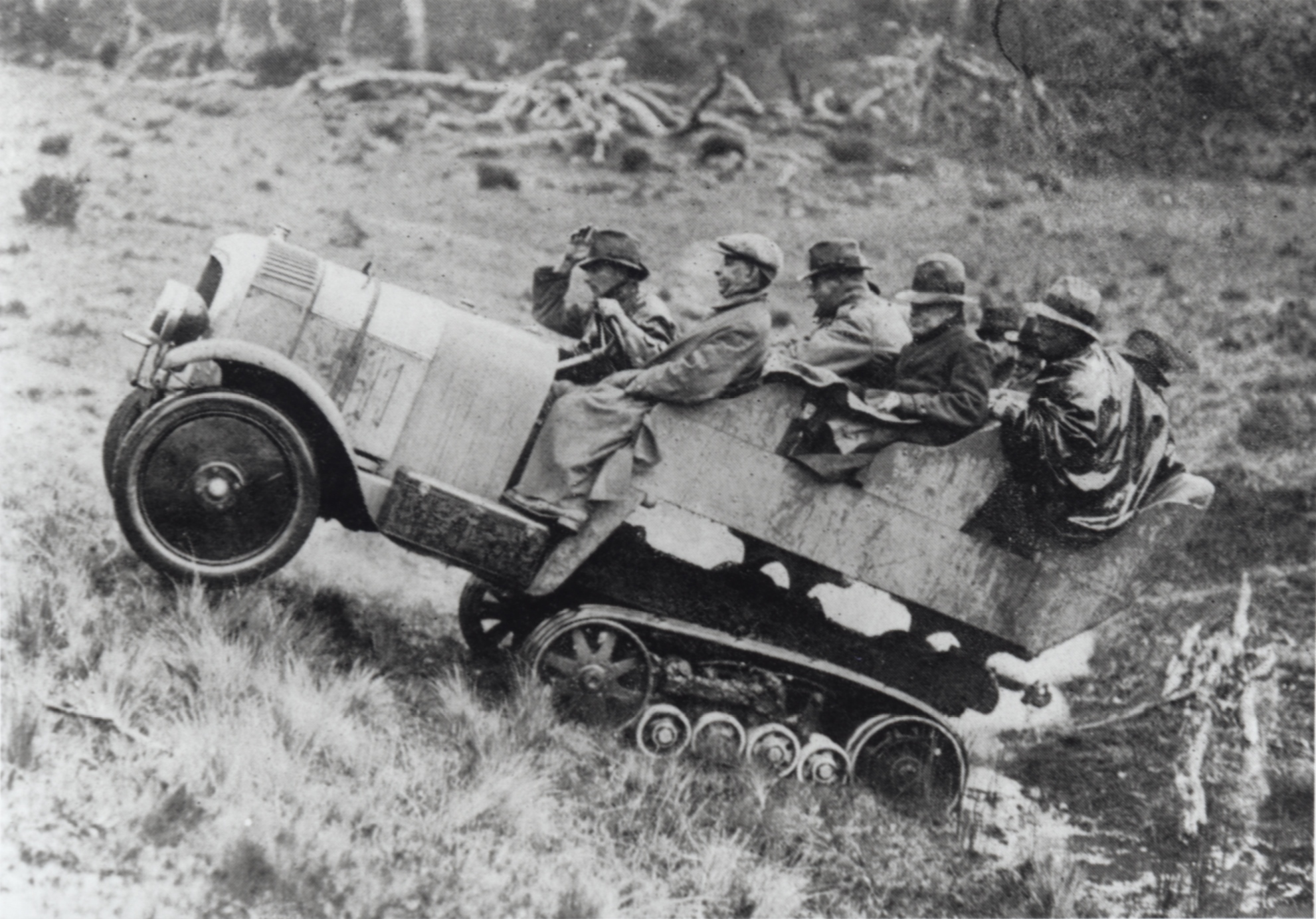
The Tsar’s caterpillar-tracked hunting technology now drove a prototype that breached the Himalayas en route to China and crossed the Sahara to Timbuktu. It also took a crack at Cradle. In 1924 Latrobe garage owner William Lade publicised his acquisition of a Citröen-Kegresse in Wynyard, Penguin, Latrobe and Devonport, being fined in the last town for demonstrating its ability to climb the steps of the Seaview Hotel.[3] There were fewer rules and few police in the highlands. Rearing over hills and plummeting down the other side, Lade’s vehicle roared up to Waldhiem with ten people aboard close to midnight on 12 April 1924.[4] Launceston’s Daily Telegraph newspaper had high expectations of the Citröen-Kegresse trip:
‘It had been expected that the machine would attempt the last 1½ miles [from Waldheim] to the [Cradle Mountain] summit, but as the rain continued to fall throughout the whole of Sunday the attempt had to be abandoned’.[5]
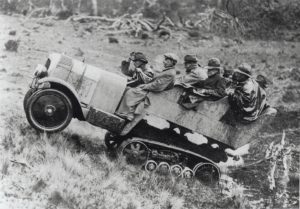
‘An obstacle surmounter on its hind legs’. The prototype on the inaugural Cradle trip. Don’t forget to pack a newspaper. Stephen Spurling III photo courtesy of the St Helens History Room.
The effect of this visitor on Weindorfer, who may have imagined himself awakened from years of isolation from tourists and supplies, can also be imagined. In preparation for the following summer’s business, Lade then built a shed to house the Kegresse at Moina, about three-quarters of the way to Cradle Valley, the idea being to use conventional transport to bring passengers from the coast that far, swapping to the Kegresse only for the challenging final section. The prospects for tourism seemed rosy. At the time, Weindorfer’s friend Ronald Smith was building a family shack on his own land at the edge of Cradle Valley. ‘Have you finished your place?’, Weindorfer, who called the Kegresse the ‘platypus motor’, asked Smith in October 1924. ‘There might be some business for you’.[6]
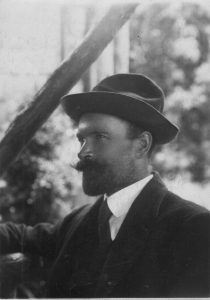
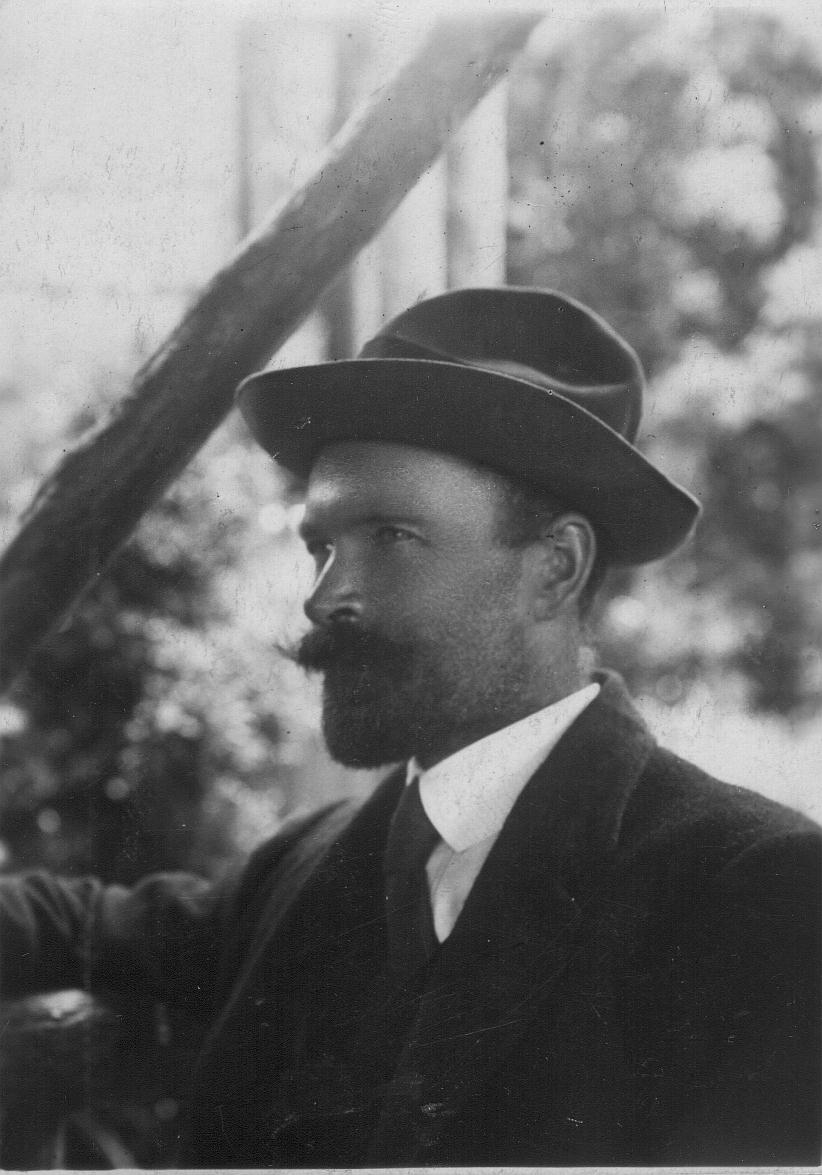
Gustav Weindorfer. Photo by Ron Smith courtesy of Charles Smith.
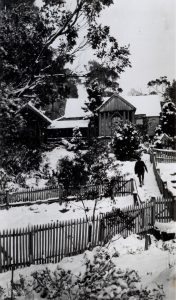
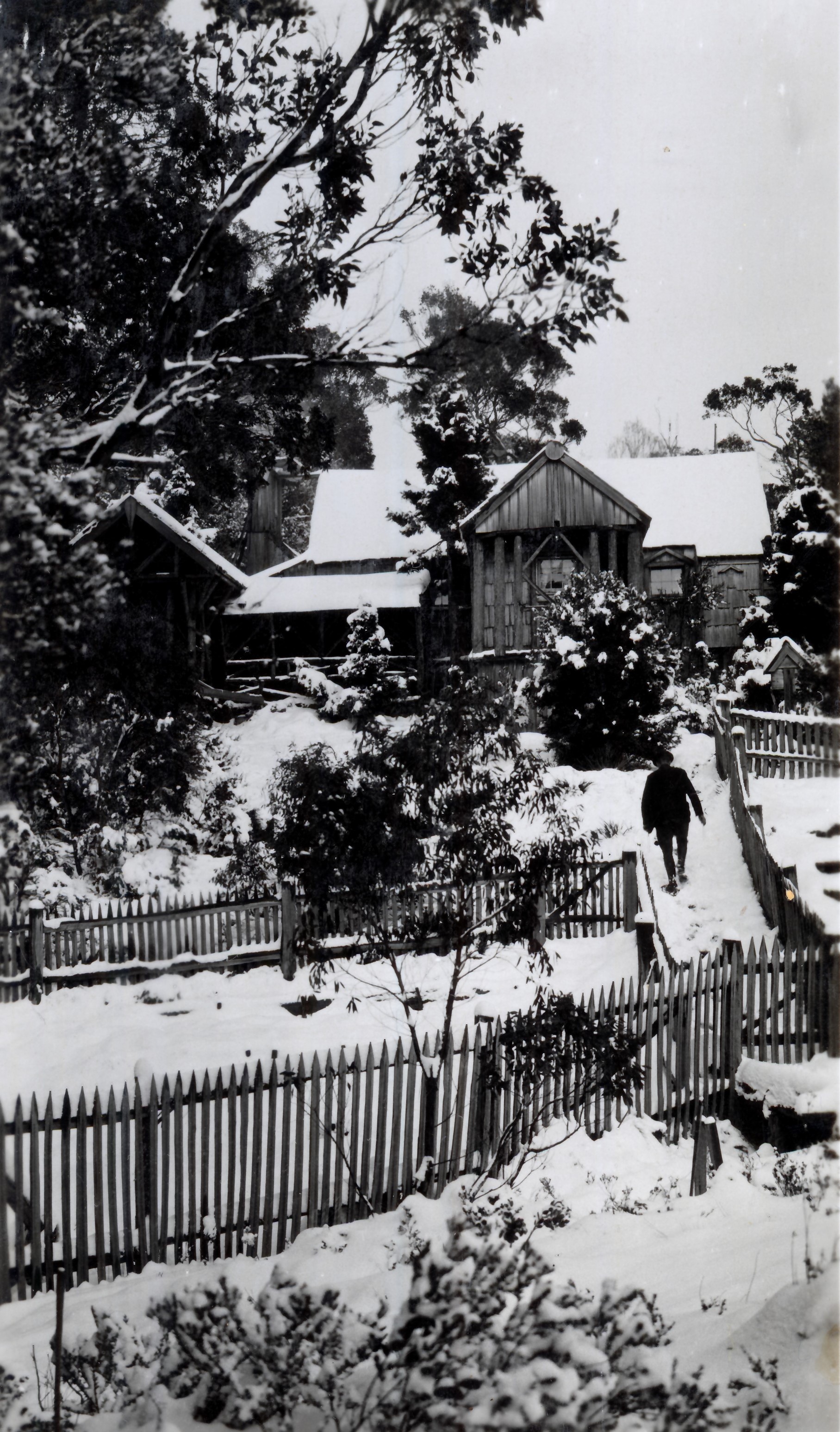
Waldheim Chalet in the snow during the Weindorfer era. CF Monds photo courtesy of DPIPWE.
The ‘platypus motor’ made four further trips to Cradle in the period January–March 1925. However, tank technology did not take root on the slopes of Cradle Valley or on the road to Cradle. Snowfalls were too inconsistent to attract skiers, and the Citröen-Kegresse disappeared from service after only one further trip, in December 1927.[7] Weindorfer stuck to his skis and joined the Indian corps instead. In 1931 he acquired an Indian Scout motorcycle, meaning that, for the first time, he could motor to and from Cradle Valley at will.
At least, that was the theory. Weindorfer was found dead next to his Indian half a kilometre from Waldheim in May 1932. It appeared that he had suffered a heart attack while trying to kick start the machine.[8] Cradle’s isolation had finally silenced him.
[1] Gustav Weindorfer diary, 17 July 1914, NS234/27/1/4 (Tasmanian Archive and Heritage Office [hereafter TAHO]).
[2] See, for example, John Reynolds, André Citröen: the man and the motor cars, Alan Sutton, 1996.
[3] ‘Motor demonstrations’, Advocate, 9 April 1924, p.2.
[4] Gustav Weindorfer diary, 12 April 1924 (Queen Victoria Museum and Art Gallery [hereafter QVMAG]).
[5] ‘To Cradle Mountain by tractor’, Daily Telegraph, 19 April 1924, p.16.
[6] Gustav Weindorfer to Ronald Smith, 2 October 1924, p.141, LMSS150/1/1 (LINC Tasmania, Launceston).
[7] Gustav Weindorfer diary, 13 December 1927 (QVMAG).
[8] See Esrom Connell to Percy Mulligan, 20 September 1963, NS234/19/1/22; and the coronial enquiry into Weindorfer’s death, AE313/1/1 (TAHO).
by Nic Haygarth | 21/01/17 | Tasmanian high country history, Tasmanian landscape photography, Tasmanian nature tourism history
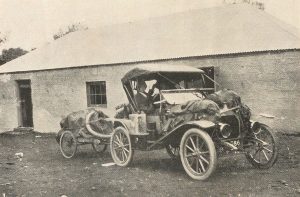
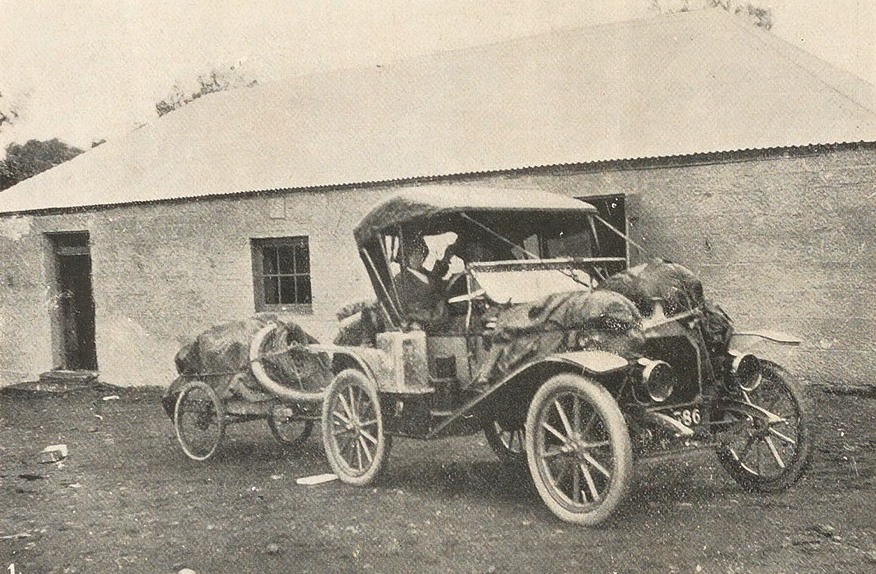
Starting out from the Ouse River in the Hupmobile, 1914-15 trip. Ray McClinton photo from the Weekly Courier, 28 January 1915, p.18.
It was the first motor trip to Lake St Clair. In 1915 pioneering motor tourers Ray and Edith McClinton mounted a two-week expedition from Launceston to the highland lake, with ‘Nina’, social pages and women’s editor of the Weekly Courier newspaper, as their guest. The Hupmobile party, towing an additional 120 kg of motor boat engine and luggage, battled rocks, ruts, rain and button grass up the Derwent Valley, breaking their trip at Ouse, the Ellises’ house near the Dee River, Weeding’s at Marlborough and Pearce’s at the Clarence River.[1]
McClinton, a San Francisco dentist who with his wife lived in Launceston 1904–28, would soon become one of Tasmania’s great tourism ‘boosters’.[2] Like fellow Launceston rev-heads Stephen Spurling III, Fred Smithies and HJ King, McClinton worshipped both nature and technology. He wanted to crash deep into the highlands, breaking down the physical and virtual isolation with carburettors and cameras. He was also imbued with fervour for worthy objects and the nineteenth-century tradition of public education that made him a consummate lantern slide lecturer on anything from x-raying teeth to colour photography.[3] Soon he would turn those skills to promoting Tasmania’s scenic wonders. Visiting Lake St Clair was one of the foundation stones of his eventual campaign in support of plans for a Cradle Mountain-Lake St Clair national park.[4]
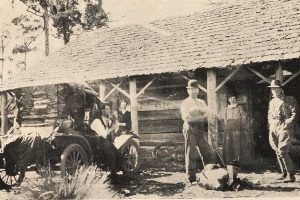
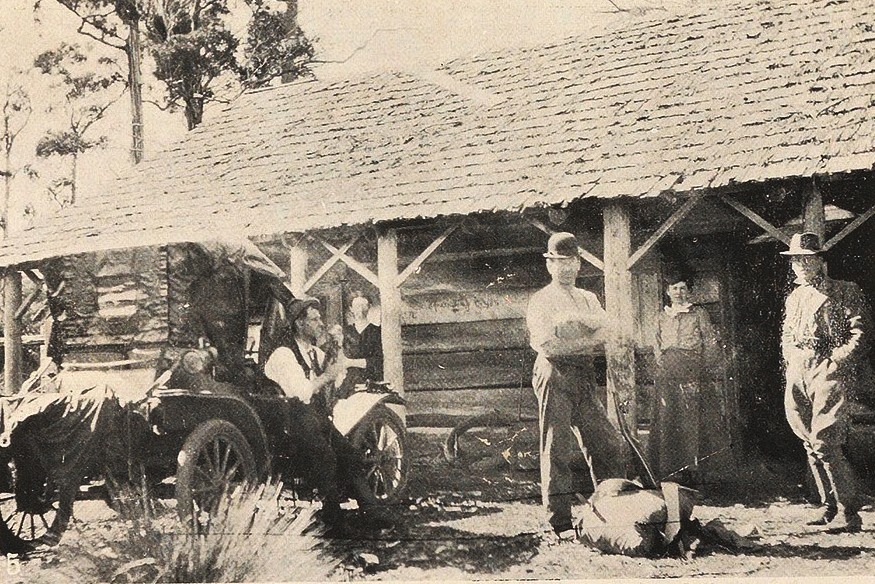
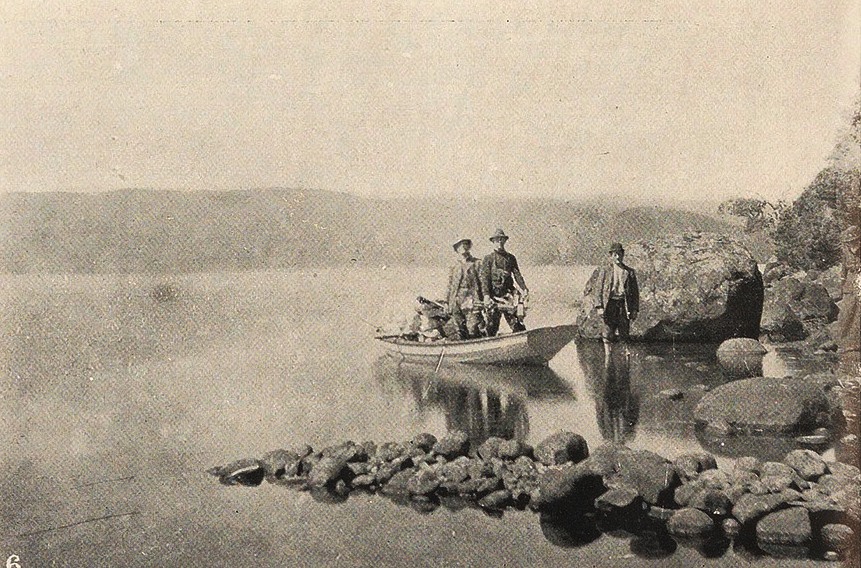
The Hup party at the government log cabin, Cynthia Bay, Lake St Clair, 1914-15 trip, with the unmistakable figure of Paddy Hartnett closest to the camera. Ray McClinton photo from the Weekly Courier, 28 January 1915, p.18.
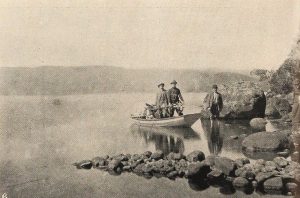
The motorboat and Paddy Hartnett in the lake, 1914-15 trip. Ray McClinton photo from the Weekly Courier, 28 January 1915, p.18.
Already there was rudimentary infrastructure at the lake. The Hup party took advantage of the government-built three-room log cabin at Cynthia Bay. On foot at last they crossed the Cuvier River on a rustic bridge. McClinton attached his engine to the boat at the lake, enabling communication with the Perrin party —a pedestrian party—camped near the Narcissus at the northern end of the lake. Highland guide Paddy Hartnett had led them to Lake St Clair via the Mersey River.[5] ‘Nina’ marvelled at the reflections in the Narcissus River and the gambolling of a platypus. She made even the ‘perfume of petrol’ mingle poetically with the ‘sweet scent of the woods’, as the first propeller churned the waters of Lake St Clair. A storm disrupted the return journey down the lake but, with the aid of axe, saw, lamp and candles, McClinton soon fashioned ‘Nina’ a comfortable bower in the forest:
‘Imagine myrtle trees towering over a hundred feet high, and their branches interlaced, so that only patches of sky could be seen above, and only glimpses of the lake between. Then picture tree-ferns all around, and green moss for a carpet. Add to his a vision of remnants of fallen trees of age untold, coated with moss inches thick, like green plush. The imagine crystal streams trickling down the mountain side … The whole scene was fairyland …’[6]
But who was ‘Nina’? She was an outstanding journalist called Kate Farrell, better known by her pseudonyms ‘Nina’ and ‘Sylvia’. Her literary career spanned 33 years and included both Launceston dailies, the Daily Telegraph and the Examiner, plus their respective weekend newspapers, the Colonist and the Weekly Courier.[7] The scale of her anonymity can be tested quite easily by searching the Trove digital database: during her literary career c1894–1927 the name Kate Farrell has only 7 hits, while ‘Woman’s World’ by ‘Sylvia’ occurs 1933 times.[8] ‘Woman’s World’ was generally frocks, recipes and home hints. In 1914 Farrell published her 96-page Sylvia’s cookery book.[9] During World War One she turned her attention to bringing comfort to those at the front, and she was also a ‘booster’, penning tourist guide The charm of the north in 1922.[10] Farrell had been motor touring with the McClintons for years, having accompanied them to Lake Sorell in their Winton Four and on Edith McClinton’s one-woman non-stop run from Launceston to Richmond in the Hupmobile. [11] Farrell preceded Ray McClinton as a tourism ‘booster’, and at Lake St Clair she quickly got into her stride:
‘The beauty of the scene is inexpressible. One can imagine the crowds of tourists who would visit Lake St Clair if the road were made. A number of small chalets built, with a caretaker in charge, and a motor boat available for the use of visitors, would help matters along considerably. I hope it will not be long before such dreams come true’.[12]
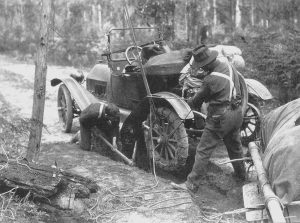
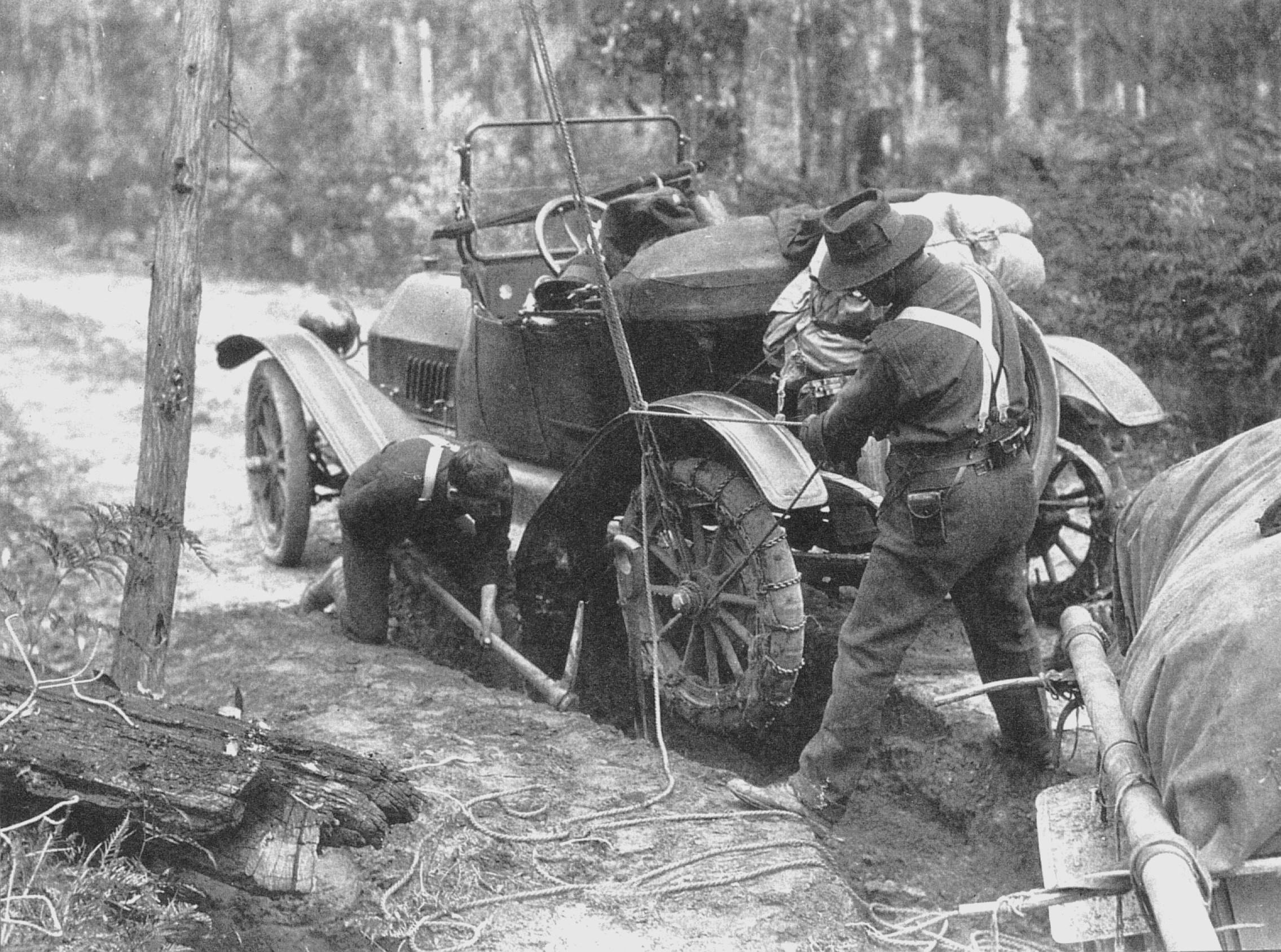
Stuck in a wash-out near Ellendale, 1916-17 trip, King and McClinton in action. HJ King photo courtesy of Daisy Glennie.
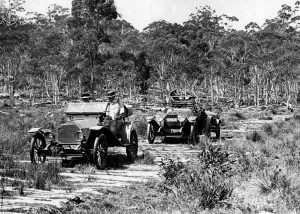
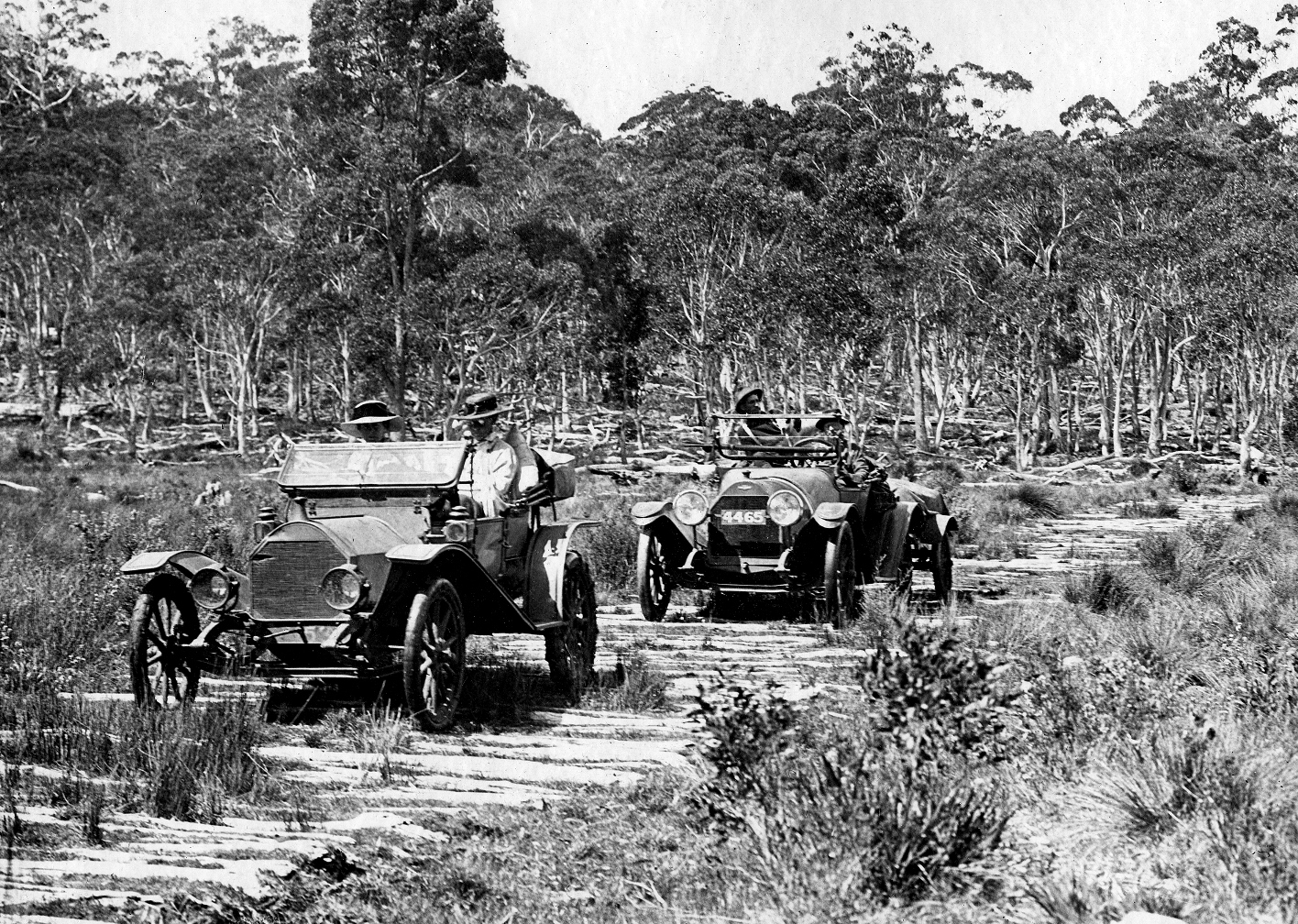
The Hupmobile, containing the two ladies, and McClinton in the ‘Baby Grand’ Chevrolet, posed as if tackling the corded track, 1916-17 trip. HJ King photo courtesy of Maggie Humphrey.
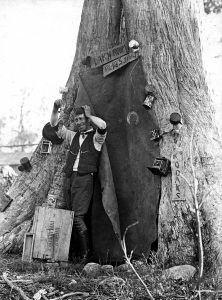
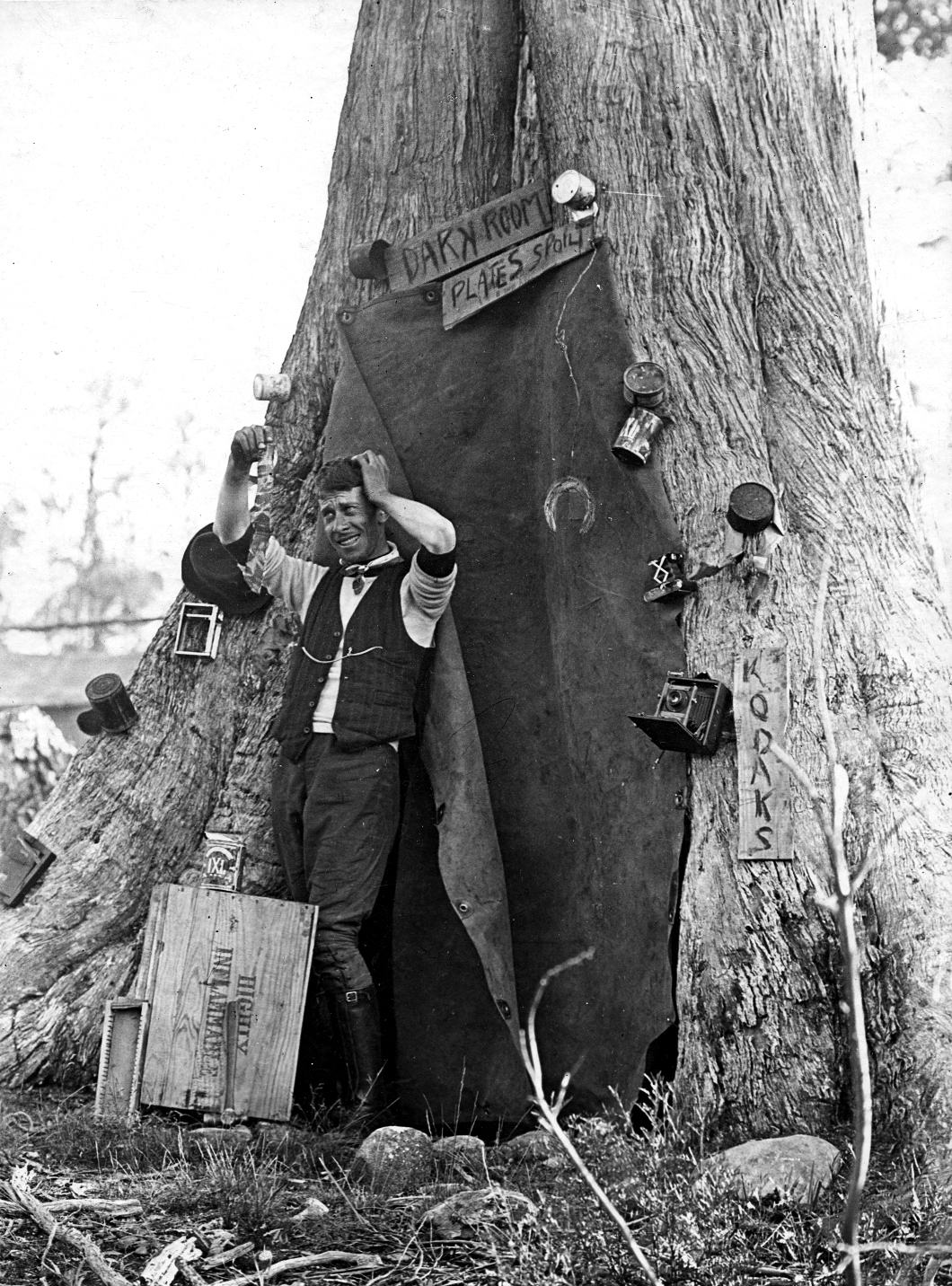
‘The darkroom at Lake St Clair’, HJ King despairs over the photographic facilities, 1916-17 trip. HJ King photo courtesy of Maggie Humphrey.
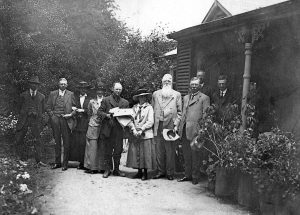
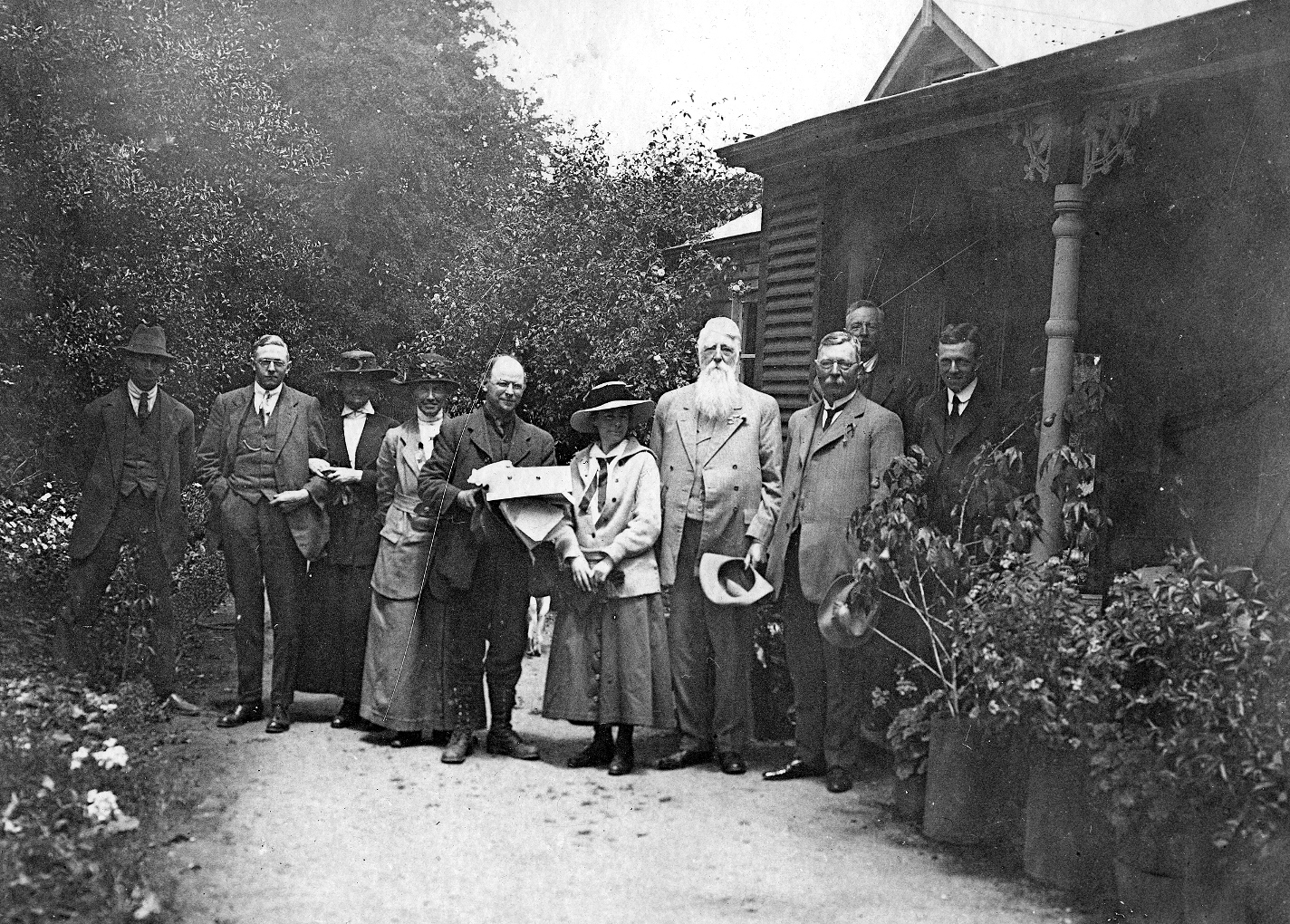
The 1916-17 party at Bushy Park, Sir Philip Fysh with the white beard, the McClintons at centre, with Kate Farrell fourth from left. Bushwalker and park administrator WJ Savigny is second from left. HJ King photo courtesy of Maggie Humphrey.
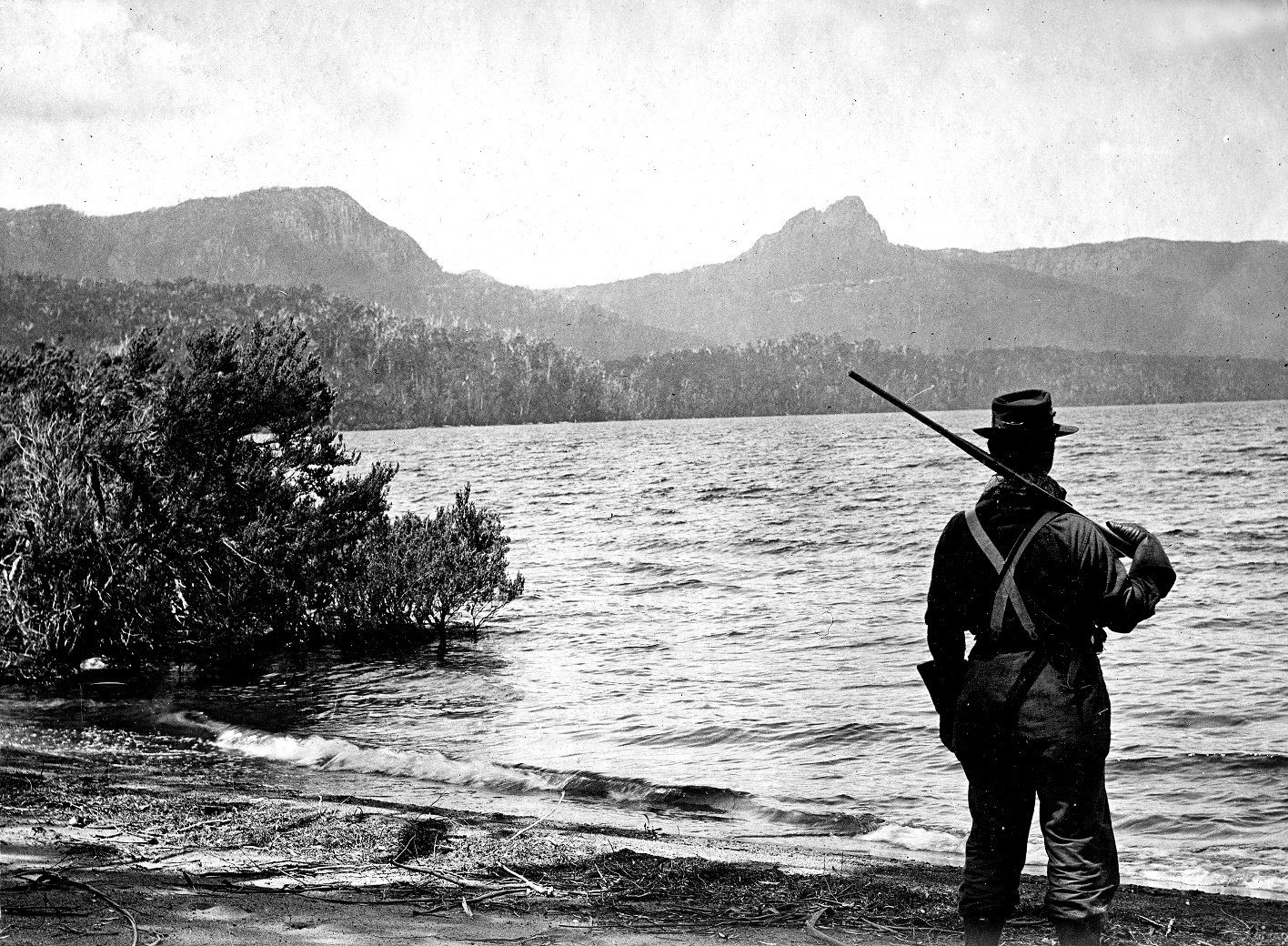
The McClintons and Farrell repeated their Lake St Clair excursion two years later, this time with the established amateur photographer HJ King. While King drove McClinton’s faithful old Hupmobile (registration number 586), the dentist was at the helm of his new ‘Baby Grand’ Chevrolet (number 4465). Both vehicles survived—but, in the true tradition of motor touring, it was a near thing for much of the way. The government accommodation house had been destroyed by fire in the intervening two years. However, rather than repeat herself, Farrell minimised her tourism boosting and concentrated on describing the route taken and the social pleasantries of a visit to former premier Sir Philip Fysh’s Bushy Park estate.[13] The real reporter was King. McClinton deferred to the superior shutterbug, allowing him to be the official tour photographer, and many King photos from this trip appeared in the Weekly Courier during 1917, including his light-hearted ‘Lake St Clair Darkroom’.[14] King’s keen eye captured the logistical difficulties of the corrugated track, with block and tackle deployed near Ellendale, some pick and shovel work on the Sandhill at Lawrenny and rescue by a bullock team near Derwent Bridge. McClinton also appears to have had a long stint with a hand saw clearing a fallen tree. One of the most interesting images from the trip was McClinton, the ex-patriate American, recalling his military training by posing with a gun upon his shoulder, as if guarding the beauty of Lake St Clair.[15] How far they were from the European War (King was a conscientious objector, McClinton effectively neutral), yet the connection remained even here.[16]
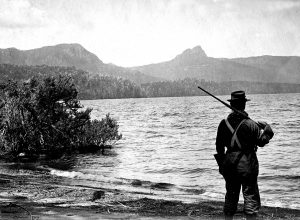
Ray McClinton posed militarily in front of Mount Ida, 1916-17. HJ King photo courtesy of Maggie Humphrey.
‘To Lake St Clair with car and camera’ became one of first outings of the McClinton–King lantern lecturing team.[17] Later, with Fred Smithies, they would add Cradle Mountain and the Pelion region to their lecturing repertoire. At her retirement in 1927 Kate Farrell was ‘Launceston’s senior press woman’ and the last of the Weekly Courier’s original staff. [18] The McClintons were there to farewell her, just ahead of their departure from Tasmania.[19] Farrell died in 1933, after a long battle with illness, leaving only King to enjoy the road they had craved, the ‘missing link’—forerunner of the Lyell Highway—between Marlborough and Queenstown.[20] By then Lake St Clair was well on its way to becoming a tourism hub.
[1] See ‘Nina’ (Kate Farrell), ‘A trip to Lake St Clair’, Weekly Courier, 21 January 1915, p.29; 28 January 1915, pp.27–28; 4 February 1915, pp.28 and 29; and 11 February 1915, p.28.
[2] Edith McClinton actually left Tasmania for Honolulu in June 1927 (‘Social notes’, Daily Telegraph, 22 June 1927, p.2), Ray MClinton joining her there in November 1928 (‘Dr Ray McClinton’, Mercury, 8 November 1928, p.11).
[3] See, for example, ‘X-rays and the teeth’, Examiner, 18 June 1925, p.5.; and ‘Local and general’, Daily Telegraph, 5 July 1923, p.4. For Launceston rev-head photographers generally, see Nic Haygarth, The wild ride: revolutions that shaped Tasmanian black and white wilderness photography, National Trust of Australia (Tasmania), Launceston, 2008.
[4] McClinton and Smithies had visited the Du Can Range area in 1913, and may have visited Lake St Clair at that time, but that was a pedestrian trip.
[5] See ‘The adventures of Paddy’s Gang: an account of a Perrin family trip to Lake St Clair guided by Hartnett over the Christmas–New Year period in 1914–1915’, diary in possession of Bessie Flood.
[6] ‘Nina’ (Kate Farrell), ‘A trip to Lake St Clair’, Weekly Courier, 28 January 1915, p.28.
[7] ‘Miss K Farrell’s death’, Examiner, 4 July 1933, p.9. Thanks to Ross Smith for identifying ‘Nina’.
[8] The Weekly Courier is not yet indexed on Trove, making it impossible to search on ‘Social notes’ by ‘Nina’. Propriety of the time contributed to this disparity, insisting that she be referred to simply as ‘Miss Farrell’ throughout her life.
[9] ‘Social notes’, Daily Telegraph, 25 May 1927, p.2. The full details are K Farrell, Sylvia’s cookery book: tested recipes and items of interest, Launceston, 1914.
[10] K Farrell, The charm of the north, Launceston City Council, Launceston, 1922.
[11] ‘Nina’ (Kate Farrell), ‘Camping at Interlaken’, Weekly Courier, 21 January 1909, p.29; ‘Exhaust’, ‘Motor notes’, Daily Telegraph, 9 November 1911, p.11.
[12] ‘Nina’ (Kate Farrell), ‘A trip to Lake St Clair’, Weekly Courier, 11 February 1915, p.28.
[13] ‘Nina’ (Kate Farrell), ‘A trip to Lake St Clair’, Weekly Courier, 11 January 1917, p.27. The trip was also written up by ‘Spark’ (Charles George Saul), ‘Motoring’, Examiner, 13 January 1917, p.4. Thanks to Ken Young for identifying ‘Spark’.
[14] See Weekly Courier, 11 January 1917, p.17; 18 January 1917, p.18; 25 January 1917, p.17; 1 February 1917, p.17; 15 February 1917, p.17; 22 March 1917, p.20; 5 April, pp.17, 20 and 21; 31 May, p.21; 13 September, p.17; 18 October 1917, p.17; and 1 November 1917 (Christmas issue), p.22.
[15] Ray McClinton performed military training 1900–02 in California, film no.981549, MF4:2, National Guard Registers v.61, 1st Infantry, 2nd Brigade, Enlisted Men, 1883–1902, California, Military Registers, 1858–1923.
[16] McClinton supported the Allied war effort, but America did not enter World War One until April 1917.
[17] See ‘Spark’ (Charles George Saul), ‘Motoring’, Examiner, 3 February 1917, p.4; ‘Plug’, ‘Motor notes’, Daily Telegraph, 13 February 1917, p.6.
[18] ‘Journalist honoured’, Examiner, 24 May 1927, p.7, ‘Social notes’, Daily Telegraph, 25 May 1927, p.2.
[19] The McClintons’ names were accidentally omitted from the Examiner’s story of this event. See the correction, Examiner, 25 May 1927, p.7.
[20] ‘Miss K Farrell’s death’, Examiner, 4 July 1933, p.9.
by Nic Haygarth | 14/01/17 | Tasmanian high country history, Tasmanian landscape photography, Tasmanian nature tourism history
‘The darkroom at Lake St Clair’, HJ King despairs over the photography facilities, 1917. HJ King photo, courtesy of Maggie Humphrey.
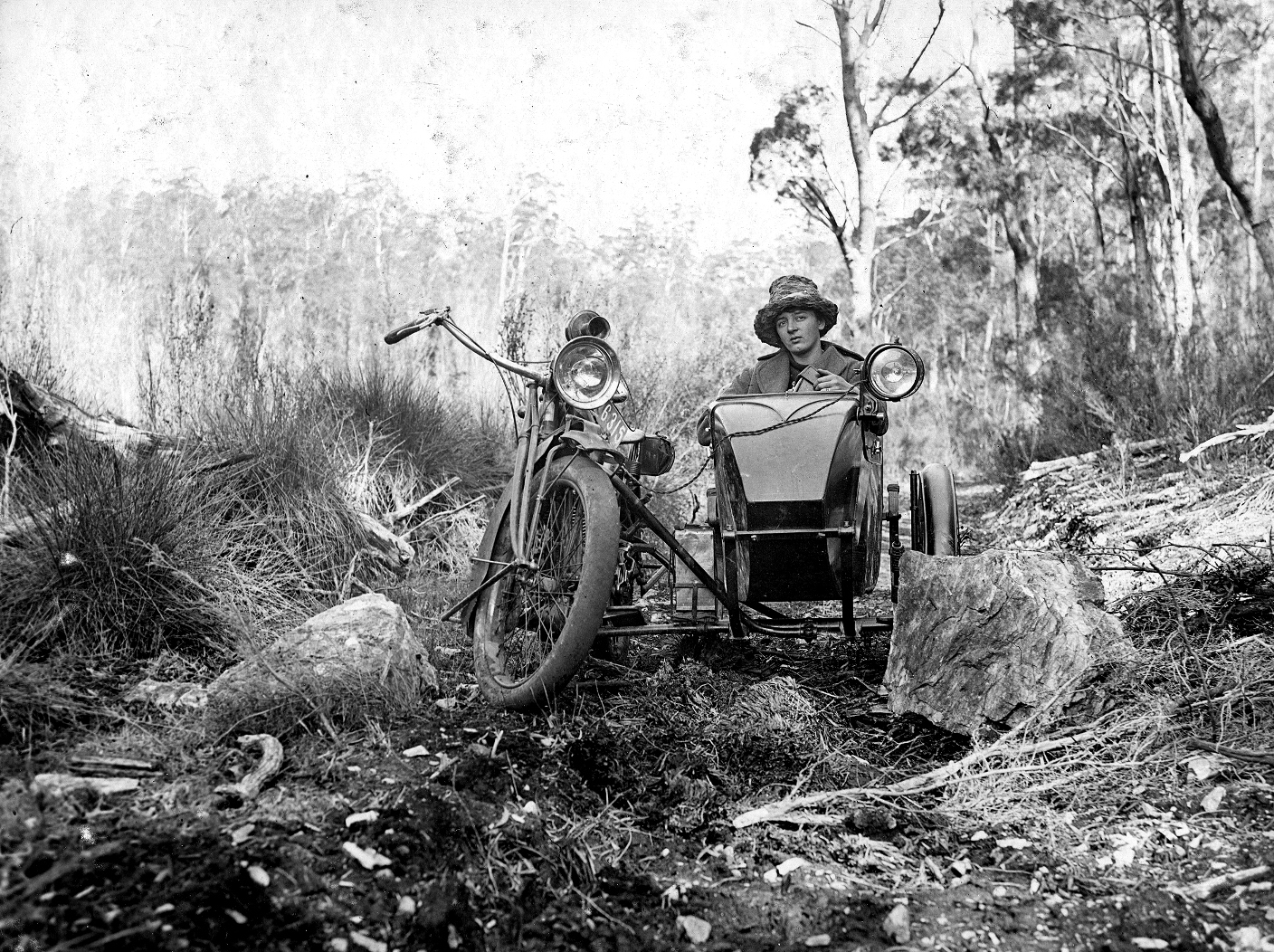
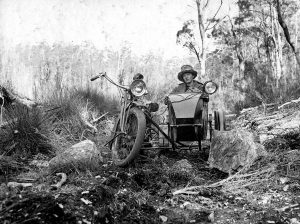
The young Herb (HJ) King was a rev-head with an artist’s eye, a man beguiled by cameras and carburettors. The frontage of his father’s motorcycle shop, John King and Sons, which he eventually took over, remains a landmark of the Kingsway, off Brisbane Street, Launceston, long after it closed. In 1921 the rival Sim King’s motorbike shop at the other end of Brisbane Street ran an advert for machines with ‘double-seated’ sidecars: ‘Take her with you!’[1] That is exactly what Herb King was already doing, the sight of his wife Lucy in the sidecar of his Indian motorbike becoming a signature of his photography in the period 1919–25.
It was perhaps King’s conservative Christadelphian faith that determined that he marry young, have children and place the role of family man before all else. He married Lucy Minna Large in Hobart in December 1918. Lucy recalled that King drove her father from Hobart to Launceston. Alighting from the car, Charles Large said ‘Oh, my boy, it’s a long way’, to which King replied, ‘Yes, Charles, what about letting Lucy and I get married at Christmas, instead of waiting?’ She was eighteen years old. He was 26.[2]
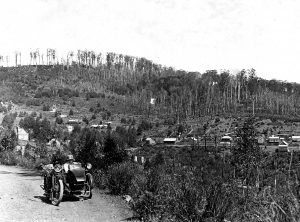
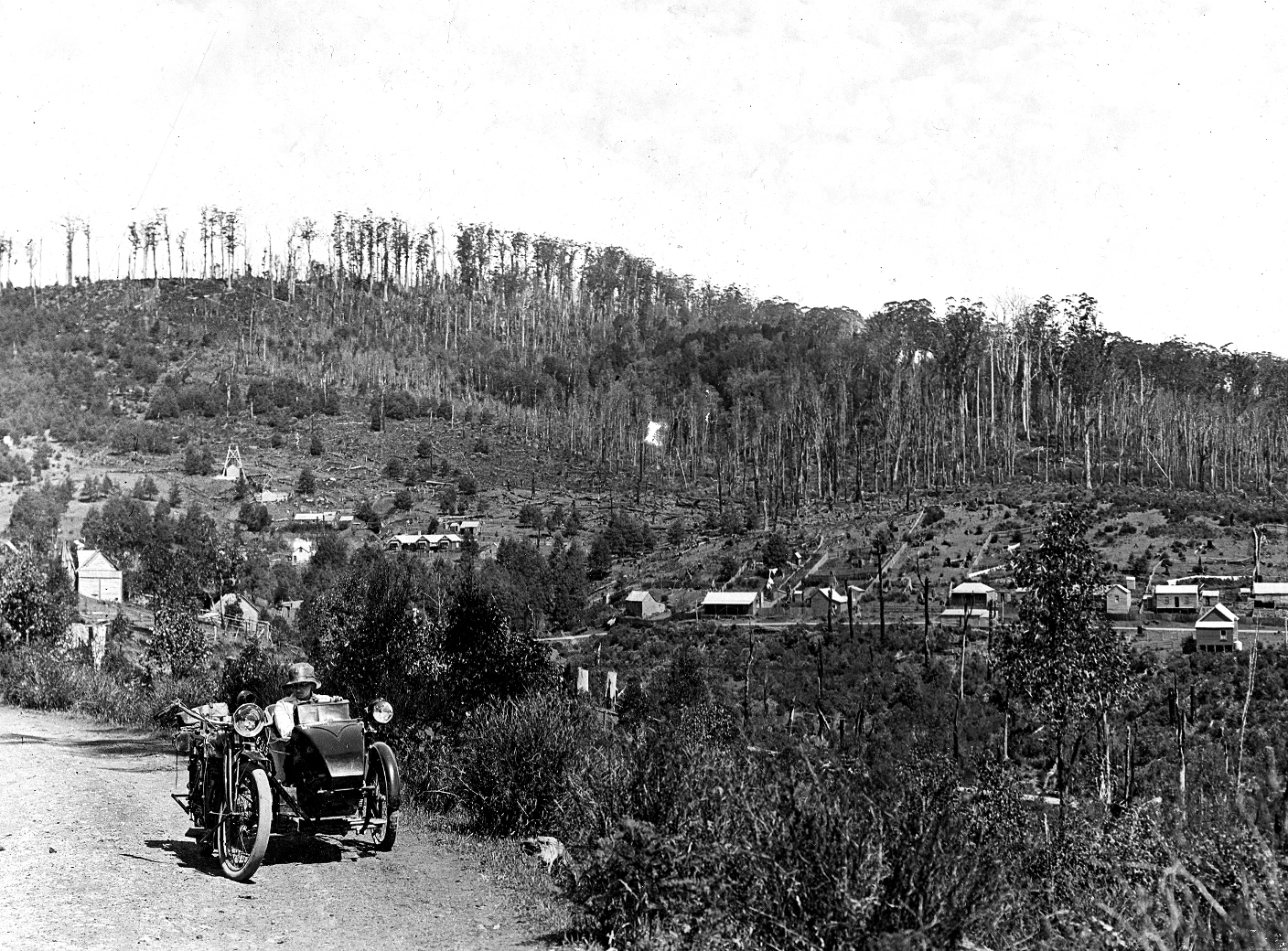
Lucy in the sidecar at Moina, just off the Cradle Mountain Road, 1919. HJ King photo courtesy of Maggie Humphrey.
After this, before their first child was born, Lucy was a feature of King’s photography, accompanying him on most of his photographic trips. King got to Cradle Mountain slightly ahead of his nature-loving friends Fred Smithies and Ray McClinton. In December 1919 Herb, Lucy, her sister and a friend started for Cradle on motorbike and sidecar. After staying a night at Wilmot, they had Christmas dinner at Daisy Dell, Bob Quaile’s half-way house, with Lucy making a success of her first Christmas pudding. The track from Daisy Dell across the Middlesex Plains to Cradle Valley was so rough that Quaile bore most visitors along it on various horse-drawn wagonettes. Lucy recalled that on this occasion he was equipped with a two-seater:
‘He could only take one passenger and himself, and he had a horse for other people to ride. I had grown up on a farm and I was happy to ride, but my sister wouldn’t get on, and my husband got on one side and got off the other, and said ‘That’s all I’m having’. We arrived at Cradle Mountain with pounds of sausages around someone’s neck because it had rained and washed the paper off … ‘[3]
This was King’s first meeting with Gustav Weindorfer, the proprietor of Waldheim Chalet at Cradle Valley, who was then campaigning to establish a national park at Cradle Mountain. Weindorfer guided the Kings to the summit of Cradle, and it was there, with numerous peaks and Bass Strait spread out before him, that King’s plan to map the country by aerial photography was developed. ‘It was a glorious day’, King recalled, but the ‘progressive’ man of machines was impatient with foot transport:
‘ … as the afternoon was now getting on, we made a laborious descent over the great boulders and across the plateau to Waldheim. How slow the travelling was!—nearly three hours to cover a short three miles—but amidst such scenery we made light of it. We said to ‘Dorfer’ (as he afterwards became known to his friends): ‘Just fancy; if we had a ‘plane we could do the distance in under three minutes …’ Afterwards we talked as we sat inside the great fireplace of the possibilities of preparing an aerodrome in Cradle Valley, and of landing in Lake Dove with a seaplane’.[4]
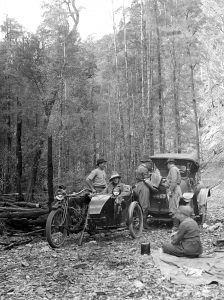
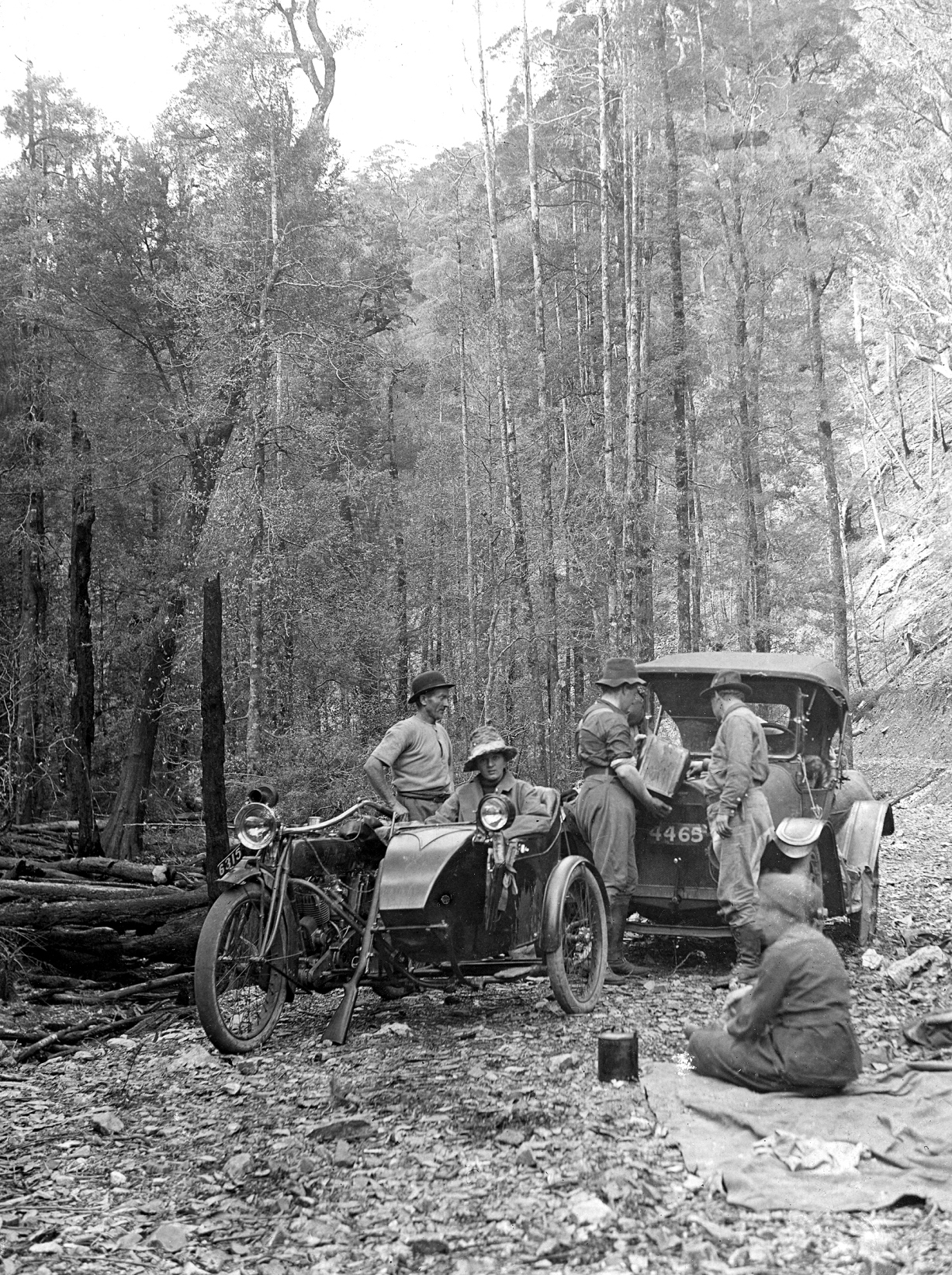
Car trouble for McClinton on the road to the Wolfram mine, Easter 1920, with (left to right) Paddy Hartnett and Fred Smithies helping out; Lucy King ensconced in the Indian sidecar; and either Ida Smithies or Edith McClinton blurred in motion in the foreground. HJ King photo courtesy of Maggie Humphrey.
Lucy looking distinctly unimpressed on the road to Pelion at Easter 1920: was it the rough ride or the close attention that dismayed her? HJ King photo courtesy of Maggie Humphrey.
Lucy’s passive role in King’s photos belies that she could not only ride a horse, but was the first Hobart woman to own a motorcycle driver’s licence. She proved her mettle as a walker, too, when at Easter 1920 the Kings visited Pelion Plain and the upper Mersey River, with Fred and Ida Smithies, Ray and Edith McClinton, and Paddy Hartnett as a guide. This was the first time motor vehicles—that is, McClinton’s Chevrolet and King’s Indian—had entered the valley of the upper Forth River. The steep, rutted climb out of Lemonthyme Creek defeated the car until Hartnett cut wooden blocks to support the wheels. The guide also cleared a large tree off the track next day, after the party had spent a night at ‘the Farm’, that is, Mount Pelion Mines’ hut and stables near Gisborne’s Farm. The ‘Bark hut’, 3 km north of the Lone Pine wolfram mine (aka the Wolfram mine), was the terminus for the vehicles. Only Hartnett’s ingenuity and McClinton’s kit bag of cross-cut saw, axe and shovel got them that far. Now they started on foot for the mine and beyond that the Zigzag Track to the copper mine huts at Pelion Plain, a pack horse carrying much of their gear.[5] Lucy recalled walking
‘eight miles in the pouring rain and when he reached the hut at the top nobody had a dry stitch. Fortunately for the ladies there were two trappers there, and they obligingly said, ‘You come into the hut where this fire is, and get yourselves dried out, and the men will go to the other hut and make a fire for the same purpose’. The next morning when we woke up it was one of the most beautiful sights that was possible. There wasn’t a blade of grass that wasn’t covered in snow’.[6]
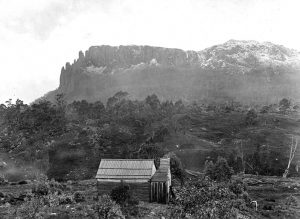
Mount Oakleigh and Old Pelion Hut, still with their dusting of snow, Easter 1920. HJ King photo courtesy of Maggie Humphrey.
That view included Mount Oakleigh, which Herb King photographed. Members of the party visited Lake Ayr and the head of the Forth River Gorge before starting on the return journey.[7]
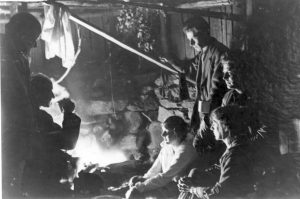
‘The huntsman’s story’, taken in the mine workers’ hut at Pelion Plain, with (left to right) Ray McClinton, Paddy Hartnett, Lucy King, HJ King, Ida Smithies and Fred Smithies. HJ King photo courtesy of Maggie Humphrey.
Although Paddy Hartnett never used the media, he was equally significant as Weindorfer in the development of a Cradle Mountain‒Lake St Clair National Park. Hartnett’s Du Cane Hut, also known as Cathedral Farm and Windsor Castle, was effectively his Waldheim, a tourist chalet among the mountains. King’s treks to Cradle Mountain and Pelion with their respective guides were transformational in the sense that, although he never became a hardened bushwalker like his fellow photographers Spurling, Smithies and McClinton, he did become a promoter of the Cradle Mountain-Lake St Clair National Park proposal. McClinton photos from this trip appeared in the Weekly Courier, and he, Smithies and King lantern lectured about the proposal.[8]
A slide survives of King promoting himself as a nature photographer, suggesting that he toyed with the idea of turning professional. Presumably, he decided it would not pay. The Kings were a very conservative family. His grandmother, said to be the first Christadelphian in Tasmania, was reputedly disgusted by King’s spending on photographic materials. Perhaps family influenced his choice of career. It is possible that the family motorcycle business seemed a safer bet, or that he felt obliged to follow in his father’s footsteps. Ultimately, people, family and faith meant more to King than any machine or any gadget. It was probably not just for artistic purposes—the compositional need for a foreground—that he placed Lucy in so many of his images. It signalled that she was foremost in his thinking.
[1] See, for example, Sim King advert, Examiner, 2 July 1921, p.14.
[2] Lucy King, transcript of an interview by Ross Case, 18 March 1993, OH18 (Queen Victoria Museum and Art Gallery [hereafter QVMAG]).
[3] Lucy King, transcript of an interview by Ross Case, 18 March 1993, OH18 (QVMAG).
[4] HJ King, ‘A flight to the Cradle Mountain’, Weekly Courier Christmas Annual, 3 November 1932, p.12.
[5] ‘Motors, cycles and push bikes’, Daily Telegraph, 17 April 1920, p.5.
[6] Lucy King, transcript of an interview by Ross Case, 18 March 1993, OH18 (QVMAG).
[7] ‘Motors, cycles and push bikes’, Daily Telegraph, 17 April 1920, p.5.
[8] See Weekly Courier, 15 July 1920, p.24. McClinton’s photos of the Easter 1920 trip with the Kings, Smithies and Hartnett was used here to illustrate part one of George Perrin’s account of a January 1920 trip into the same country with his wife, Florence Perrin, their friend Charlie MacFarlane and Hartnett (‘Trip to Tasmania’s highest tableland’, Weekly Courier, 8 July 1920, p.37).